Cockpit voice recorder transcript

LEVEL 3 Final report

Based on the investigation authority's final report.

Date
Show source
Occurrence
Runway excursion during takeoff
Location
Runway 34R, Denver International Airport, Colorado
Show source
Operator
Continental Airlines
Show source
Aircraft
Boeing 737-500
Show source
Registration
N18611
Show source
Route
Denver to Houston George Bush Intercontinental
Show source
People aboard
115: 110 passengers and 5 crew
Show source
Fatalities
0
Show source
Survivors
115, including 68 uninjured
Show source
Topics
Loss of directional control on the runway, Wind information, Training and simulation, Strong and gusty crosswind, Postimpact fire

This photograph is cropped for the banner. See the full photograph, credit, licence and what it shows.

Photographs and geographic context

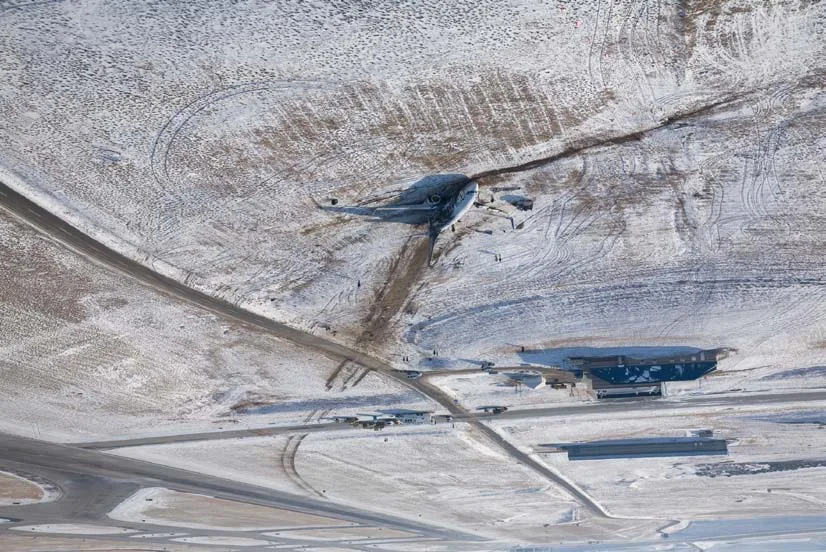
Aerial view of the Continental 1404 wreckage and ground scars west of Denver runway 34R.

The wreckage of Flight 1404 lies beyond taxiway WC and the airport service road.

Photo: National Transportation Safety Board, Public domain

Image info

N18611 after the accident, photographed facing southeast. Fire station 4 is beside the wreckage path.

Image source

Photograph extracted from Figure 2. Responsive WebP copies resized without cropping.

Geographic context

Geographical orientation for Continental Airlines 1404Denver International Airport, accident site; Houston George Bush Intercontinental, intended destination. The flight was scheduled from Denver to Houston. The airplane stopped west of runway 34R near fire station 4. Markers show approximate locations.12NORTH UP / SCHEMATIC / NOT A RECORDED FLIGHT TRACK
  1. Denver International Airport, accident site
  2. Houston George Bush Intercontinental, intended destination
The flight was scheduled from Denver to Houston. The airplane stopped west of runway 34R near fire station 4. Markers show approximate locations. Basemap: Natural Earth, public domain.
Read supporting evidence

What happened

During takeoff on Denver runway 34R, Flight 1404 encountered localized westerly gusts estimated at up to 45 knots. The captain released the right rudder input needed to oppose the wind, and the airplane veered left off the runway at about 110 knots. It crossed uneven terrain, sustained structural damage and caught fire. Cabin crew and two deadheading pilots helped evacuate all occupants through the left-side exits.

Read the full incident Follow what happened, from the flight to the investigation findings.

What investigators concluded

The NTSB determined that the probable cause was the captain's cessation of right rudder input about four seconds before the excursion, during a strong and gusty crosswind that exceeded his training and experience. Contributing factors were an air traffic control system that failed to require or facilitate the dissemination of key available wind information, and inadequate airline crosswind training caused by deficient simulator wind gust modelling.

Evidence behind this explanation

Continental Flight 1404 at Denver

1,561 words / about 8 minutes to read. Based on the investigation records cited below.

Departure into a crosswind

Continental Airlines Flight 1404 was preparing to leave Denver International Airport for Houston on the evening of 20 December 2008. The Boeing 737-500, registered N18611, carried 110 passengers, two pilots and three flight attendants. The flight was a scheduled domestic passenger service operated under Part 121. Visual weather conditions prevailed, with strong, gusty winds from the west. The captain was flying the airplane, while the first officer handled radio calls and monitored the takeoff.

The pilots arrived at about 17:00 and completed their preflight preparations. The captain inspected the airplane outside while the first officer performed cockpit checks. After pushback approval at about 18:04, they taxied toward runway 34R. The departure information they had received reported winds of 11 knots. Runway 34R was a dry, grooved concrete runway, 12,000 feet long and 150 feet wide. A postaccident inspection and friction test confirmed a bare, dry surface with normal or good friction.

At 18:17:26, the tower cleared the flight for takeoff and reported wind from 270 degrees at 27 knots. This produced a crosswind component of 26.6 knots, below Continental's dry-runway takeoff guideline of 33 knots. The crew had noticed clouds moving rapidly and knew there was a crosswind. Given the wind information supplied to them, the NTSB considered their decision to proceed reasonable.

Sources for this section

Rudder inputs and a sudden left turn

The captain advanced the thrust levers and concentrated on the runway ahead. The first officer watched the engine instruments until takeoff power was set, then monitored airspeed for the standard calls. At 18:18:04 he reported that power was set at 90.9 percent. As the airplane accelerated, the captain applied increasing right rudder to counter the left crosswind. The rudder became increasingly effective with speed, taking over the directional-control task from nosewheel steering.

The recorded control movements then became much larger. One right rudder input reached about 88 percent of available pedal travel, followed by a reduction to about 15 percent. The nose first moved right, then turned left again. The captain applied a second substantial right rudder input, reaching about 72 percent. This slowed the left turn briefly. The NTSB performance study estimated that the crosswind component increased from about 30 knots to more than 40 knots during this second cycle, reaching a peak of about 45 knots at 18:18:12.

As the airplane began turning left rapidly, the captain relaxed the right pedal to neutral. After a small, brief further input, he stopped applying rudder. He turned the control wheel right and reached for the nosewheel steering tiller. These actions were ineffective for controlling the airplane at that speed. The NTSB found that the sudden threat, perceived loss of control and extreme time pressure likely produced acute stress that led to these control choices. The airplane departed the left side of runway 34R at 18:18:17, travelling about 110 knots.

Sources for this section

Across the ground and out of the cabin

The 737 left the pavement about 2,600 feet from the runway's approach end. It crossed taxiway WC and an airport service road, traversing uneven ground west of the runway. The captain began reducing power at about 18:18:20 and called for a rejected takeoff about a second later. Braking and reverse-thrust commands followed. Engine damage prevented the requested increase in reverse power. The airplane reached about 120 knots before slowing; the recorders stopped at 18:18:27 while it was still moving at about 90 knots.

Ground scars showed where the landing gear crossed the taxiway and then lost contact with the falling terrain. When the airplane struck the ground again, its engines also left scars. Both main landing gear assemblies separated, the nose gear folded aft, and the fuselage broke near the wheel wells. The right-wing fuel tank was breached, and a fuel-fed fire developed on the right side. Both pilots sustained back injuries, and the captain suffered multiple spinal fractures.

The flight attendants saw the fire and promptly ordered an evacuation. They used the forward, overwing and aft exits on the left side. An exit-row passenger opened the overwing exit, and two deadheading pilots helped the cabin crew direct passengers and keep them away from the right-side exits. All occupants escaped before the fire entered the cabin. People with less serious injuries helped others up the hill to fire station 4 for assessment and treatment. Six people were seriously injured, 41 had minor injuries and 68 were uninjured. Nobody died.

Darkness and lower terrain initially concealed the accident from the tower. Calls from other pilots alerted controllers, who notified the airport rescue crews. The first location passed to responders was incorrect, and some vehicles changed direction after receiving the corrected position. The nearest fire station had its garage doors facing away from the wreckage. Firefighters reached the site about five minutes after the accident and extinguished the exterior and cabin fires. The NTSB concluded that the initial confusion had not made emergency-response timing a significant issue in the accident.

Sources for this section

Reconstructing the winds and the controls

Investigators examined the flight recorders, runway marks, wreckage and airplane systems. They found no evidence of a preaccident failure in the engines, structure or systems, including nosewheel steering. The steering cable had broken under overstress after the airplane left the runway. Flight control movements matched the recorded inputs, and the airplane responded appropriately. Performance calculations showed that the rudder could have generated enough force to counter the weathervaning effect of the winds encountered.

The wind varied sharply across Denver airport. Analysis by the National Center for Atmospheric Research found mountain wave activity producing localized, intermittent surface gusts. The NTSB estimated the winds along the accident takeoff path from recorder data and airplane performance. These estimates gave winds of 30 to 45 knots from the west. The airport's wind sensors sampled different places and heights, and their recordings could miss peaks between samples. The investigation linked the differences between the earlier 11-knot report and the tower's 27-knot report to observation times, sensor locations and the changing local wind field.

The tower's display contained more adverse information than the departure-end wind passed to the crew. Airport wind information showed 35 knots with gusts to 40 knots. The controller followed the established practice of issuing departure-end winds, and the NTSB found no clear requirement to supply the most adverse displayed conditions. It concluded that the stronger information would likely have prompted the captain to delay departure or seek another runway. Denver's runway-selection policy also failed to account clearly for crosswind components.

Sources for this section

Training for gusts at runway level

The captain had about 13,100 flying hours, including 6,300 in the 737. His records showed satisfactory training and checking, including simulator takeoffs and landings in a 35-knot crosswind. During the investigation, however, Continental discovered that its 737-500 simulator allowed only steady wind below 50 feet. Instructors had been unaware that gust inputs made at the controls of the simulator were not applied at those heights. The training therefore failed to reproduce the changing surface winds that challenged the captain in Denver.

Airline operating data also showed that strong crosswind encounters were rare. Among 940,000 recorded departures, Continental identified only 62 with crosswind components of at least 30 knots, measured seven seconds after takeoff. Four involved 737-500s. In the NTSB's simulator work, releasing rudder at 90 knots in a steady 35-knot crosswind led to a runway excursion within about five seconds. Resuming corrective rudder after two seconds enabled participants to remain on the runway; waiting three seconds made recovery inconsistent. The NTSB concluded that immediate renewed significant right rudder could have prevented this excursion.

The Board adopted its final report on 13 July 2010. It identified the captain's cessation of right rudder about four seconds before the excursion as the probable cause, in a gusting crosswind beyond his training and experience. The air traffic control system for disseminating wind information and inadequate crosswind training due to deficient simulator gust modelling contributed. The Board recommended research into mountain winds, transmission of maximum adverse wind components, explicit crosswind criteria for runway selection and realistic surface-gust profiles for simulator training.

Sources for this section

Crew seats and unsecured galley equipment

The impact sequence exposed weaknesses in crew seating. Both pilots' seat height-adjustment mechanisms failed downward, and the front restraint attachment points fractured upward. The seats had been approved to older static-load standards. A later requirement for improved dynamic-impact protection applied to passenger and flight attendant seats in newly manufactured airplanes, but cockpit seats were exempted. The NTSB concluded that seats meeting the improved crashworthiness requirements would likely have reduced or prevented the pilots' injuries. It recommended applying those standards to cockpit seats in newly manufactured airplanes whose types had been certificated before 1988.

The forward flight attendant's jumpseat also failed. Laboratory examination found a manufacturing defect and preexisting fatigue cracks in its pivot plates. The cracks weakened the structure and extended during impact, allowing the seat pan to collapse. The flight attendant sustained minor injuries and remained able to help evacuate passengers. The Board recommended periodic inspections for fatigue cracks in this jumpseat model, with replacement when cracks were found.

In the aft galley, investigators found a drawer loose on the floor beside an unoccupied flight attendant jumpseat. Its compartment latch plate had been attached solely by adhesive. The Board found that this attachment method was inadequate because it could deteriorate with age and exposure to the environment. B/E Aerospace had issued a service bulletin in September 2009 describing mechanical attachment of the latch plate on Continental 737-500 galleys. Compliance was voluntary, and the manufacturers could not identify how widely similar attachments were used. The NTSB recommended mechanical fasteners for adhesive-only galley latch installations on transport-category airplanes.

Sources for this section

Return to the short summary / Source status and limitations

How the sequence developed

Follow the main stages, then open the evidence beneath each step.

  1. Localized mountain wave gusts

    Westerly gusts moved across the takeoff path; the performance study estimated winds reaching 45 knots.

    Read supporting evidence
  2. Heading corrections became larger

    The captain used two large right rudder inputs as the airplane alternately moved right and left in changing crosswinds.

    Read supporting evidence
  3. Rudder input ceased

    The captain relaxed the right pedal and attempted to steer with the tiller and right control wheel. The NTSB found that significant renewed right rudder would have prevented the excursion.

    Read supporting evidence
  4. Excursion, impact and fire

    The airplane left the runway, crossed uneven ground and sustained landing gear and fuselage damage. Fuel from the breached right-wing tank fed a fire.

    Read supporting evidence
  5. Left-side evacuation

    Cabin crew and deadheading pilots directed passengers through the left-side exits before fire entered the cabin.

    Read supporting evidence

A simplified reading of the investigation findings. The sequence does not replace the full report or imply that every contributing factor is shown.

Sequence of events

Times are mountain standard time, using the 24-hour clock. The runway excursion occurred at about 18:18. Expand an event to see its evidence.

  1. About 18:04Pushback approved

    After completing departure preparations, the first officer contacted ramp control. The departure information available to the pilots reported winds of 11 knots.

  2. 18:17:26Takeoff clearance
  3. 18:18:12Peak estimated gust

    The performance study estimated a peak wind of 45 knots as the captain began relaxing his second large right rudder input.

  4. About 18:18:14Right rudder released

    After a small, brief input, the captain ceased applying right rudder and attempted to steer with the tiller and right control wheel.

  5. 18:18:17Runway excursion
  6. 18:18:20 to 18:18:27Rejected takeoff and impact sequence

    The captain reduced power and called for a rejected takeoff. The airplane crossed taxiway WC; the recorders stopped at 18:18:27 while it was still moving.

  7. After the airplane stoppedEvacuation ahead of the fire

    The flight attendants initiated an evacuation through the three left-side exits. All 115 occupants got out before fire entered the cabin.

Search the report evidence

Search extracted report prose, with original page references. Short results link to the full document.

Questions readers ask

How many people survived Continental Flight 1404?

All 115 occupants survived. Six people had serious injuries, 41 had minor injuries and 68 were uninjured.

Was runway 34R icy?

Inspections described runway 34R as bare and dry, and the friction test conducted shortly after the accident showed normal or good surface conditions.

Was there an airplane system failure before the excursion?

Investigators found no evidence of a preaccident failure of the engines, structure or systems, including nosewheel steering.

What the evidence can and cannot establish

Wind reconstruction

The NTSB derived the 30 to 45 knot wind estimates from recorder data and airplane performance. Wind sensors at different locations sampled the variable wind field at intervals.

Read supporting evidence

Safety follow-up

Actions and recommendations are described at the dates of the cited records. A recommendation is not proof of implementation.

Wind reporting and runway selection

Recommendations A-10-105 through A-10-109 called for mountain wind research, preservation of wind data, improved reporting of maximum wind components and written runway-selection programs addressing gusting crosswinds.

Read supporting evidence

Simulator profiles and crosswind guidance

Recommendations A-10-110 through A-10-115 addressed realistic gust profiles, pilot training, methods for setting crosswind limitations, interim guidance and analysis of operational flight data.

Read supporting evidence

Crew seats and galley restraint

The NTSB recommended improved cockpit-seat crashworthiness, fatigue inspections of Burns Aerospace model 2501-5 jumpseats, and mechanical fasteners for galley latches secured solely by adhesives.

Read supporting evidence

Galley service bulletin

In September 2009, B/E Aerospace issued a service bulletin describing a mechanical attachment for latch plates on Continental 737-500 galleys. Compliance was voluntary when the report was adopted.

Read supporting evidence

Classifications, with reasons

These labels organise the evidence. They are not a ranking of causes. A shared label means a shared research topic, not an identical mechanism.

Probable causeLoss of directional control on the runway

The captain ceased the right rudder input required to counter the strong crosswind about four seconds before the runway excursion.

Contributing factorWind information

More adverse wind information was available on the tower display but was not transmitted to the pilots. The NTSB found a system gap in requirements and dissemination.

Contributing factorTraining and simulation

The 737-500 training simulator provided steady winds below 50 feet and could not reproduce the gusting surface winds encountered during takeoff.

CircumstanceStrong and gusty crosswind

Mountain wave conditions generated localized westerly gusts of up to 45 knots across the takeoff path.

Survival riskPostimpact fire

The right-wing fuel tank was breached during the excursion, feeding a fire on the right side. The evacuation used the left-side exits.

Read alongside

These comparisons connect specific research topics. Shared circumstances do not establish identical causes. Evidence from both investigations is provided below.

Southwest Airlines Flight 1248

Both investigations linked a Boeing 737 runway excursion to crew control actions and shortcomings in training or operational guidance. Continental 1404 involved takeoff directional control in gusting crosswinds and the cessation of right rudder. Southwest 1248 involved a landing overrun after delayed reverse-thrust use while the pilots were distracted by unfamiliar autobrake operation.

Read supporting evidence

Further investigation records

Explore the records below for additional context. They open on the publisher's site and are not all included in our report search. Source reuse terms apply.

  • NTSB final report NTSB/AAR-10/04

    NTSB / investigation record

    The investigation includes recorder analysis, wind studies, evacuation evidence, findings and recommendations.

Cockpit voice recorder transcript

A cockpit voice recorder (CVR) transcript records speech and sounds captured in the cockpit. This transcript was produced by the National Transportation Safety Board and is reproduced from printed pages 65 to 104 of the cited NTSB report; it is a US federal government work in the public domain.

Speaker codes and notation

CAM
Cockpit area microphone voice or sound source
HOT
Flight crew hot microphone audio voice or sound source
INT
Flight crew intercom voice or sound source
RDO
Radio transmissions from N18611
Ramp
Radio transmission from the Denver ramp controller
GND
Radio transmission from the Denver ground controller
TWR
Radio transmission from the Denver airport tower controller
-1
Voice identified as the captain
-2
Voice identified as the first officer
-3
Voice identified as the female flight attendant
-4
Voice identified as passenger
-5
Voice identified as passenger
-6
Voice identified as gate agent
-7
Voice identified as the ground mechanic
-8
Voice identified as the male flight attendant
-?
Voice unidentified
*
Unintelligible word
#
Expletive
@
Non-pertinent word
( )
Questionable insertion
[ ]
Editorial insertion

Note 1: Times are expressed in Mountain Standard Time (MST)

Note 2: Generally, only radio transmissions to and from the accident aircraft were transcribed.

Note 3: Words shown with excess vowels, letters, or drawn out syllables are a phonetic representation of the words as spoken.

Note 4: A non-pertinent word, where noted, refers to a word not directly related to the operation, control or condition of the aircraft.

Cockpit voice recorder transcript, printed pages 65 to 104
TimeSpeakerText
17:48:05[start of recording/ start of transcript]
17:48:05(start of recording)
17:48:33CAM-1cold front.
17:48:37CAM-2its still seventy eight degrees there.
17:48:43CAM-1oh man thirty three *
17:49:05CAM-2the’re gunna dead head back to Houston and sit for fifteen hours. looks like a nice-.
17:49:13CAM-1are they Newark-- goin to Lauderdale?
17:50:41RDO-1do you know what runway for Plains departure?
17:50:44RampEast gate looks like three four right bravo current departure Tower ATIS.
17:50:48RDO-1thanks.
17:50:52CAM-2three four right.
17:50:55CAM-2it's already in there.
17:50:59CAM-1yeah baby. worked out nicely.
17:51:06CAM-2what gate are we going now?
17:51:09CAM-2Charlie thirty seven.
17:51:23CAM-1Denver Approach so it's ah I just curious about the ah.
17:51:36CAM-1Bravo south alpha north. that taxiway to golf foxtrot.
17:51:54CAM-1then we're three four right all the way out to the end.
17:52:05CAM-3hey you've got company.
17:52:07CAM-1dude what's happening what's your name?
17:52:10CAM-4*
17:52:13CAM-4I want to come drive up here.
17:52:15CAM-2can I go sit in your seat you can sit right there.
17:52:16CAM-4okay.
17:52:18CAM-1you're gunna sit here and I'm gunna sit in your seat.
17:52:21CAM-4yeah.
17:52:21CAM-2and it's your leg you're gunna fly.
17:52:23CAM-1why don't you ask your dad first if he wants me to do that.
17:52:25CAM-3he's with his mom.
17:52:26CAM-1or ask your mom if you can drive and I can sit in your seat.
17:52:29CAM-4mommy can I drive?
17:52:31CAM-5I don't mind be careful okay.
17:52:33CAM-1alright but that means I'm sittin’ in his seat.
17:52:35CAM-5alright it's nine B.
17:52:38CAM-1(( sound of laugh))
17:52:41CAM-1she's just kiddin’ I don't think she really wants you to drive.
17:52:43CAM-4yes she does.
17:52:43CAM-1you need to have a drivers license let me see your drivers license.
17:52:46CAM-4I don't have any.
17:52:47CAM-1well then you can't drive.
17:52:56CAM-1he'd had done it too.
17:52:57CAM-1he would have tried it anyways.
17:53:02CAM-1I was expecting his mother to save me.
17:53:06CAM-1no son you can't drive.
17:53:20CAM-1she's probably checkin’ you out on the way in.
17:53:26CAM[sound of high low chime]
17:53:29CAM-1that's funny.
17:53:33CAM-1zero nine seven I guess.
17:53:41CAM-1all ready **.
17:53:49CAM-1I don't see any surprises on the departure MSA's ninety two hundred and engine out runway ah three four.
17:54:04CAM-1all other runways standard.
17:54:09CAM-2engine failure after *.
17:54:10CAM-2standard engine out.
17:54:12CAM-1so what have we got here we're fifty three ah fifty four hundred so let's call that ah *...does that sound about right?
17:54:25CAM-2yup.
17:54:32CAM-2flaps five reduced.
17:54:40CAM-1thirty seven--.
17:54:40CAM-2thirty seven forty forty six.
17:54:42CAM-1thirty seven forty forty six.
17:54:48CAM-1set forty--.
17:54:53CAM-1and what do we have here one seventeen.
17:54:55CAM-2two twenty.
17:54:56CAM-1and external *.
17:55:02CAM-1alright so ah heading select up to ten thousand feet level change top bug. did he give us the right runway?
17:55:09CAM-2that's three four right there. here's runway two five. you know there's a chance we can go two five.
17:55:19CAM-1if that's the case then we need to brief the engine out for that.
17:55:22CAM-1watch your legs.
17:55:24CAMsound of trim in motion.
17:55:31CAM-2that's good forty forty six.
17:55:35CAM-1questions comments on the departure.
17:55:37CAM-2nope.
17:55:38CAM-1okay receiving. circuit breakers emergency equipment.
17:55:40CAM-2
17:55:41CAM-1checked.
17:55:42CAM-2flight deck windows locked?
17:55:43CAM-1they're locked.
17:55:43CAM-2oxygen checked set one hundred percent?
17:55:45CAM-1checked one hundred percent.
17:55:46CAM-2IRS selectors?
17:55:47CAM-1there nav.
17:55:47CAM-2hydraulics?
17:55:48CAM-1checked on.
17:55:48CAM-2air conditioning and pressurization?
17:55:50CAM-1it's set for Houston.
17:55:52CAM-2excuse me mode control panel? set.
17:55:54CAM-1
17:55:54CAM-2altimeters and flight instruments are two nine nine three inches and I have sixty three hundred feet set and checked?
17:55:59CAM-1alright ninety three inches and I have sixty three hundred set.
17:56:03CAM-2takeoff config switch?
17:56:03CAM-1checked.
17:56:04CAM-2ground proximity?
17:56:05CAM-1checked.
17:56:05CAM-2speed brake lever down detent?
17:56:06CAM-1down detent.
17:56:07CAM-2parking brake?
17:56:07CAM-1set.
17:56:07CAM-2start levers?
17:56:08CAM-1cut off.
17:56:08CAM-2transponder?
17:56:10CAM-1stand-by good squawk.
17:56:11CAM-2log book ETOPS gear pins MEL?
17:56:13CAM-1checked onboard.
17:56:14CAM-2flight attendant pilot briefing?
17:56:15CAM-1complete.
17:56:15CAM-2receiving aircraft checklist complete.
17:56:19CAM-2I got a lot * #.
17:56:34CAM-2want the APU up?
17:56:36CAM-1what's that? yeah.
17:57:49CAM-1is that another one?
17:57:50CAM-2yeah they bumped up the zero fuel weight it's for two five but I bumped up the zero fuel weight in the ah perf-init. here it comes.
17:57:58CAM-1three four right.
17:58:05CAM-1that's the old two five I'm gunna throw it.
17:58:12CAM-2three four right that's the one we want right?
17:58:15CAM-1yup.
17:58:16CAM-2here's the *.
17:58:24CAM-6Captain are you ready to go?
17:58:26CAM-1check with @ Regina. when she's ready I'm ready
17:58:28CAM-6okay
good evening folks from the flight deck Captain Butler here and first officer Lavang we'd like to add our welcome to flight fourteen zero four service to the Houston Bush Intercontinental Airport. one hour fifty two minutes enroute we
17:58:48PA-1don't anticipate any delays out of Denver and the ride should be pretty good all the way to Houston ah they’re expecting some weather to blow through later this evening it may or may not impact our arrival but gate charlie thirty seven currently a comfortable seventy two degrees standard clouds winds are out of the south at six knots we do appreciate your business. welcome aboard.
17:59:20CAM-6ready to go?
17:59:21CAM-1check with @ Regina please.
17:59:23CAM-6okay.
17:59:24CAM-1if she's ready I'm ready.
17:59:26CAM-1I already said that once.
17:59:28CAM-2I'm pretty sure you did too.
17:59:42CAM-2we like it shaken not stirred huh?
17:59:45CAM-1depends on what I'm drinkin'.
17:59:47CAM-2coffee.
17:59:48CAM-1I don't have a ah--.
17:60:00CAM-1is it still four on the trim?
18:00:02CAM-2three and three quarters.
18:00:03CAM-1okay alright watch your legs.
18:00:05CAM[sound similar to trim in motion]
18:00:08CAM[sound of single chime]
18:00:51CAM-?it's warm.
18:00:54INT-7ground to cockpit.
18:00:56INT-1good evening.
18:00:57INT-7good evening dude.
18:00:59CAM-1dude?
18:01:00INT-7hey good evening I just did a walk around we're gunna close that.
18:01:10CAM[sound of high low chime]
18:01:14INT-7okay walk around has been complete all doors access panels have been closed and ramp is ready.
18:01:20INT-1let me run a checklist and I'll be right back with ya.
18:01:22INT-7copy that.
18:01:24CAM-2two nine nine seven.
18:01:26CAM-1set.
18:01:35CAM-1alright before start checklist.
18:01:39CAM-2before start seatbelt sign?
18:01:41CAM-1it's on.
18:01:41CAM-2door lights?
18:01:42CAM-1out.
18:01:42CAM-2beacon?
18:01:42CAM-1it's on.
18:01:43CAM-2CDU?
18:01:43CAM-1set.
18:01:44CAM-2reference speeds?
18:01:45CAM-1thirty seven forty forty six set.
18:01:47CAM-2thirty seven forty forty six set.
18:01:49CAM-2fuel?
18:01:50CAM-1release twenty point oh I've got twenty point oh and four pumps on.
18:01:53CAM-2trim?
18:01:54CAM-1three and three quarters zero.
18:01:55CAM-2before start checklist complete. call ‘em?
18:01:58CAM-1actually lets wait.
18:02:01CAM-1* something here.
18:02:04CAM-1not a big hurry we're on-time.
18:02:16CAM-2let's shoot a little air back there it's getting a little stuffy with all that heat.
18:02:38CAM-8now we--.
18:02:39CAM-1that's okay no problem.
18:02:40CAM-8ah eight and ninety nine.
18:02:42CAM-1eight and ninety nine and you're you are? what's your name?
18:02:45CAM-8Al.
18:02:46CAM-1Al Dave.
18:02:47CAM-2I'm Sean.
18:02:48CAM-7Al. nice to meet you.
18:02:49CAM-1you too.
18:02:51CAM-8oh different guys now sorry guys.
18:02:54CAM-1huh that's alright that's the way it works.
18:02:58CAM-8are they dead heading back there?
18:02:59CAM-1yes.
18:03:00CAM-8okay that's why I'm confused sorry.
18:03:03CAM-1alright no problem.
18:03:05CAM-2get you there as soon as we can. one U-M and one meet and assist
18:03:08CAM-8uh hum.
18:03:09CAM-1alright thanks.
18:03:10CAM-7alright you guys need any drinks or water? all set?
18:03:12CAM-1all fed and watered.
18:03:13CAM-2I'm good.
18:03:14CAM-8how fast today?
18:03:16CAM-1one hour and fifty eight minutes.
18:03:18CAM-8alright.
18:03:18CAM-1see ya.
18:03:19CAM-?lock you guys up?
18:03:20CAM-1yup.
18:03:21CAM-8alright.
18:03:21CAM-1thanks.
18:03:23CAM-2see how many guests there's fifty here and forty nine here. how does that sound?
18:03:27CAM-1perfect.
18:03:28CAM-1* tell you what - I'm gunna - disregard *
18:03:31CAM-2you ah you want it reduced in ah you want zero fuel weight reduced then or do you care?
18:03:37CAM-1no.
18:03:38CAM-1we'll take the extra sheet.
18:03:43CAM-2this is an extra for two five if we need it.
18:03:46CAM-1alright.
18:03:52CAM-2what?
18:03:57RDO-2Ramp good evening Continental fourteen zero four alpha forty nine to push we have charlie.
18:04:03INT-2 what's up?
18:04:05RampFourteen zero four Denver ramp your push is approved call for a west taxi.
18:04:08CAM-1call for west taxi.
18:04:09RDO-2okay after the push call for a west taxi Continental fourteen zero four.
18:04:14INT-1brakes released your cleared to push tail east.
18:04:18INT-7copy that.
18:04:38CAM-2I do like this part of the country I can tell you that.
18:04:41HOT-1yeah.
18:04:47CAM-2my in-laws lived in Aspen that was freakin’ awesome.
18:04:50HOT-2huh.
18:04:55CAM-1lined up for runway *.
18:04:57INT-7okay sir you're cleared to start.
18:04:59INT-1roger.
18:05:02CAM-1turn one.
18:05:22HOT-2oil pressure rising.
18:05:35CAM-1* start slidin’ on this ice.
18:05:43INT-7okay sir the push back has been complete set brakes.
18:05:50INT-1brakes are set.
18:05:57HOT-2start valve closed.
18:05:58CAM-1two please.
18:06:11INT-7okay sir the tow bar and by-pass pin have been disconnected.
18:06:15INT-1roger stand-by.
18:06:18HOT-2oil pressure rising.
18:06:32INT-1looks like we've got two good starts you're cleared off the headset thanks for the great push see you out front with the pin.
18:06:37INT-7roger that you have a good day.
18:06:46HOT-2start valve closed.
18:06:58CAM-1I'm waitin’ for this thing to start slidin'.
18:07:02HOT-2I ah you gotta love winter.
18:07:04CAM-1after start checklist switches closed.
18:07:31HOT-2watch your knees.
18:07:38HOT-2after start checklist generators?
18:07:40CAM-1on.
18:07:41HOT-2pitot heat?
18:07:42CAM-1ah on.
18:07:43HOT-2anti-ice.
18:07:44CAM-1it's on.
18:07:44HOT-2recall.
18:07:45CAM-1is checked.
18:07:47HOT-2auto-brake.
18:07:48CAM-1is RTO.
18:07:48HOT-2flaps.
18:07:48CAM-1set five.
18:07:50HOT-2controls.
18:07:50CAM-1checked.
18:07:51HOT-2flight deck door?
18:07:53HOT-2after start checklist complete.
18:07:54HOT-2he said call ground now for taxi right?
18:07:56HOT-1nope
18:07:57HOT-2no okay
18:07:57HOT-1no ah talk to him
18:07:58RDO-2Ramp ah Continental fourteen zero four ready to taxi
18:08:02Rampfourteen zero four you'll follow a nineteen hundred just off your right wing tip to three whiskey ground there twenty seven point five when number one have a good flight
18:08:09RDO-2okay three whiskey and ah twenty seven five when number one there continental fourteen zero four we see that nineteen hundred
18:08:16HOT-2okay there he goes clear right
18:08:20CAM-2could that be right
18:08:21CAM-1ah nope
18:08:23CAM-1three whiskey is on the other side of this frontier guy so here's the little nineteen hundred
18:08:36CAM-1three whiskey is the south one
18:08:37CAM-2okay
18:09:02HOT-1follow him
18:09:08HOT-2you done with the ah APU?
18:09:09HOT-1yeah we're all done with that
18:09:44HOT-2grounds up on one
18:09:47HOT-1on one
18:10:14HOT-2kind of up up ahead yet still isn't it three whiskey?
18:10:17CAM-1you you can call her
18:10:18CAM-2okay
18:10:38RDO-2Denver ground good evening Continental fourteen zero four at three whiskey we have charlie
18:10:48GNDContinental fourteen zero four Denver ground taxi to runway three four right via foxtrot
18:10:55RDO-2three four right via foxtrot Continental fourteen zero four
18:10:59CAM-1foxtrot that is the second
18:11:04second one HOT-2
18:11:04HOT-1taxi way
18:11:15CAM-1hotel - golf- foxtrot
18:11:24CAM-1alright go where ever the signs say to go
18:11:46HOT-1let me see here so this is ah - he's on foxtrot right?
18:11:48CAM-2that's correct yup
18:12:18GNDContinental fourteen zero four monitor tower one three five point three good night
18:12:21RDO-2talk to tower Continental fourteen zero four good night
18:12:28CAM-1do we have a departure freq in our ah ?
18:12:30CAM-2twenty eight twenty five
18:12:33CAM-2as per the SID
18:12:35HOT-1there you go
18:12:51HOT-1** these little RJ guys
18:12:57HOT-1boy that guy Captain sittin’ in first class looks like a little scowling
18:13:03HOT-1what are you scowling about dude you've feekin’ gutta
18:13:05was he scowling? HOT-2
18:13:06HOT-1I don't know if he was scowling he just looked like he was scowling
18:13:09HOT-2ah
18:13:10HOT-1what do you think he was scowlin’ about?
18:13:12HOT-2I don't know
18:13:15HOT-2he had a limp he was all
18:13:18HOT-1he was limping?
18:13:18HOT-2yeah hobblin’ around pretty good
18:13:23HOT-1that's what he's got sore leg
18:13:33HOT-2yeah how about this guard's on two ho ho ho
18:13:37HOT-1you wait for that guard to cut you out right when you need to really hear something on your departure
I like guard you know what the tower can hear
18:13:45HOT-1guard down here so if somebody's gunna talk on guard I tell ya and maybe guard en-route you know cause anything around the approach control area approach is gunna hear it
18:13:56HOT-2ah huh
18:13:59HOT-1all it does is get in peoples way when it comes to the terminal area that's my opinion anyway
18:14:07HOT-1alright before takeoff checklist
18:14:08CAM-2thirty five three right?
18:14:14CAM-2want the ice protection on for takeoff?
18:14:16CAM-1no let's kill it
18:14:19CAM-1watch your eyes
18:14:24CAM-2the old ones they won't work that well
18:14:27TWRContinental fourteen zero four Denver tower runway three four right position and hold
18:14:31RDO-2position and hold on three four right Continental fourteen zero four
18:14:34PA-2flight attendants please be seated for departure
18:14:37CAM-1position and hold
18:14:40CAM-1lights work before takeoff recall check departure briefing
18:14:43CAM-2complete departure announcement complete air conditioning and pressurization’s is set start switches are continuous auto throttles on flaps five set green light ?
18:14:51CAM-1flips five set green light
18:14:52CAM-2takeoff config switch checked
18:14:54CAM-1checked
18:14:54CAM-2transponder TA/RA before takeoff checklist is complete
18:14:59HOT-1clear left
18:15:15HOT-1forgettin’ how short these airplanes turn
18:15:20HOT-2it's about as good as it gets ah right there huh
18:15:22HOT-1ah
18:15:24HOT-1*
18:15:40CAM(sound of two clicks)
18:15:58CAM-2did you want three forty four in there?
18:16:16? [what are the winds?]
18:16:47HOT-1looks like you got some wind out here
18:16:48HOT-2yeah
18:16:49HOT-1**
18:16:57HOT-1oh yeah look at those clouds moving
18:17:26TWRContinental fourteen zero four wind two seven zero at two seven turn right heading zero two zero runway three four right cleared for takeoff
18:17:34RDO-2heading zero two zero cleared for takeoff runway three four right Continental fourteen zero four
18:17:37CAM-1alright
18:17:38CAM-1left cross wind twenty ah seven knots
18:17:44HOT-2huh
18:17:45HOT-1alright look for ninety point nine
18:17:49CAM((sound of increasing engine noise))
18:17:52CAM-?throttles (comin') back
18:17:54CAM-?huh
18:18:00HOT-1check power
18:18:04HOT-2power's set ninety point nine percent
18:18:13CAM-?Jesus
18:18:14CAMsound of snap
18:18:15CAMsound of snap
18:18:15HOT-2oh # # #
18:18:17CAMsound of increasing background noise
18:18:21HOT-1reject
18:18:22HOT-1reject
18:18:22HOT-2*ject
18:18:27end of recording / end of transcript

Sources and transparency

NTSB final report adopted 13 July 2010.

Source limitations

Wind speed and direction values recorded directly by the flight data recorder were invalid while the airplane was on the ground.

Runway Side Excursion During Attempted Takeoff in Strong and Gusty Crosswind Conditions, Continental Airlines Flight 1404, Boeing 737-500, N18611

National Transportation Safety Board
Final report NTSB/AAR-10/04, adopted 13 July 2010

Official report PDF, hosted by ntsb.gov

Open source document

117 PDF pages.

NTSB report text is in the public domain. Separately credited material carries its own rights. Source terms.

Read the extraction, classification and review methodology.

Suggest a correction to this dossier

Editorial record

Kevin Murphy writes the incident accounts on AirlineIncidents.com, out of a long interest in aviation safety and the lessons each investigation leaves behind.

Prepared by
AirlineIncidents editorial desk
Report citation check
Independent expert review
Not completed

Citation checks compare supporting text with the indexed report pages. They do not constitute independent expert review. How these pages are prepared.

Revision history

: NTSB final report NTSB/AAR-10/04 adopted 13 July 2010.

Source-based corrections are reviewed before changes appear here. Suggest a correction to this dossier.

Cite or link to this page

Quoting this account or linking to it? Please use the page address below, and credit the investigation report it is built from.

Credit line

AirlineIncidents.com. Continental Flight 1404 accident account. Published 20 October 2026. https://airlineincidents.com/incidents/continental-1404-2008/

HTML link

<a href="https://airlineincidents.com/incidents/continental-1404-2008/">Continental Flight 1404 accident account (AirlineIncidents.com)</a>

Select a box to copy it. Spotted something wrong? Send a correction.