LEVEL 3 Final report

Based on the investigation authority's final report.

Date
Show source
Occurrence
Pilot incapacitation
Location
Dubai International Airport, United Arab Emirates
Show source
Operator
Emirates
Show source
Aircraft
Boeing 777-21H (ER)
Show source
Registration
A6-EMJ
Show source
Route
Bengaluru to Dubai
Show source
People aboard
Two pilots, cabin crew and passengers; total unstated
Show source
Fatalities
None
Show source
Survivors
All passengers and crew; total unstated
Show source
Topics
Crew resource management, Pilot incapacitation, Training and procedures, Unexplained fainting

This photograph is cropped for the banner. See the full photograph, credit, licence and what it shows.

Photographs and geographic context

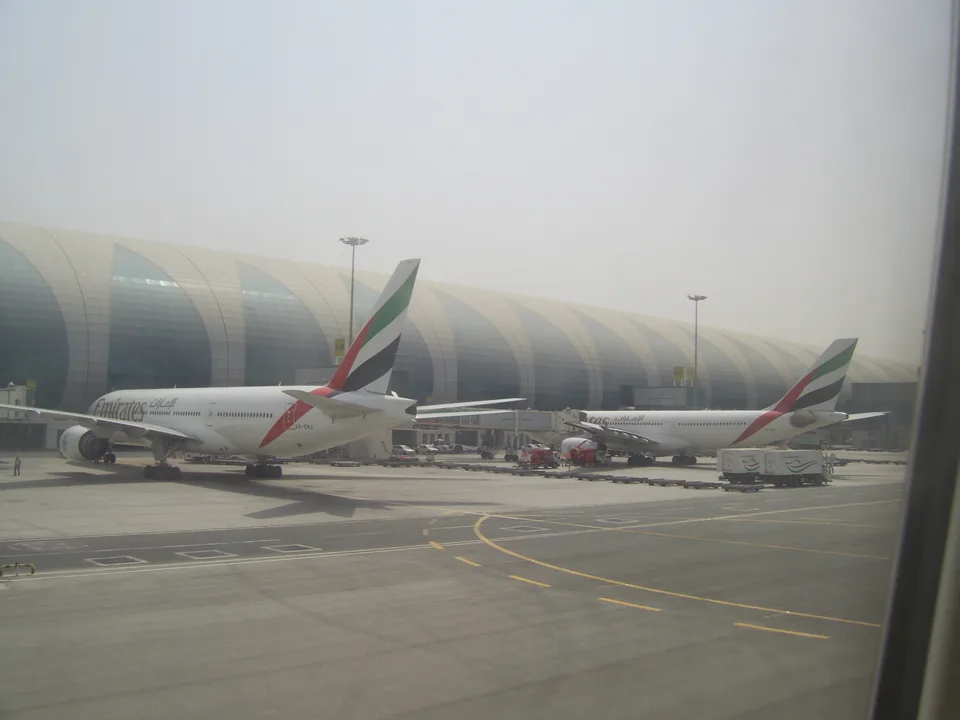
Emirates Boeing 777 A6-EMJ parked beside the terminal at Dubai in 2009

A6-EMJ at Dubai International Airport in July 2009.

Photo: MoHasanie, Creative Commons Attribution 3.0 Unported

Image info

The incident aircraft is on the left, photographed five years before the pilot incapacitation.

Image source

Original photograph displayed without cropping. Responsive WebP copies resized without cropping.

Geographic context

Geographical orientation for Emirates A6-EMJ pilot incapacitationBengaluru International Airport; Dubai International Airport. The flight operated from Bengaluru to Dubai. The summary identifies Dubai International Airport as the place of occurrence and gives no position for the top of descent. The markers show approximate airport locations.12NORTH UP / SCHEMATIC / NOT A RECORDED FLIGHT TRACK
  1. Bengaluru International Airport
  2. Dubai International Airport
The flight operated from Bengaluru to Dubai. The summary identifies Dubai International Airport as the place of occurrence and gives no position for the top of descent. The markers show approximate airport locations. Basemap: Natural Earth, public domain.
Read supporting evidence

What happened

During the flight from Bengaluru to Dubai, the commander developed a headache and nausea. Near the top of descent, he felt that he was about to faint and passed control to the copilot. A senior cabin crewmember secured him in his seat. The copilot declared a MAYDAY and landed at Dubai without injury or aircraft damage.

Read the full incident Follow what happened, from the flight to the investigation findings.

What investigators concluded

The AAIS could not determine the cause of the fainting attack. It found that crew coordination and communication worked well, the aircraft was airworthy, and no aircraft defect contributed to the serious incident.

Evidence behind this explanation
Pilot Incapacitation: Emirates Boeing 777-21H (ER) A6-EMJConclusions and Safety Recommendations | Printed page 5 | PDF page 7Find this passage in evidence search

Control handover before the commander lost consciousness

884 words / about 5 minutes to read. The official report for this event is short, so this account is shorter than most and covers only what the report documents.

A round trip to Bengaluru

On 22 October 2014, Emirates Boeing 777-21H (ER) A6-EMJ operated a passenger round trip between Dubai and Bengaluru. The commander had rested for approximately six hours before reporting for duty. He described waking refreshed, consumed black coffee and travelled to the airport in company transport. His flying hours and duty time were within the regulatory and operator limits. The aircraft left Dubai at 0330 UTC, and the three and a half hour outward flight was uneventful.

Both pilots stayed on board during the ground stop at Bengaluru. The commander ate his first meal of the day, consisting of a muffin, an omelet and fruit. The flight back to Dubai departed at 1026 local time, with the commander as pilot flying and the copilot as pilot monitoring. About one hour after departure, the commander developed a headache and nausea. He took two pain relief tablets from the aircraft first aid kit and visited the bathroom several times.

The nausea was unaccompanied by vomiting. The commander had a persistent mild headache, but developed no fever, chest pain or diarrhea. At the top of descent his condition changed: he suddenly felt nauseous, could not focus and felt that he was about to faint. He announced the transfer of control to the copilot before losing consciousness.

Sources for this section

The copilot and cabin crew respond

The copilot saw the commander trying to stand, then losing consciousness and falling back into his seat. He took control of the aircraft and called the senior cabin crewmember to the cockpit. The cabin crewmember secured the unconscious commander in his seat. Approximately three minutes after the collapse, the commander regained consciousness. He could communicate and interact, but told the copilot that he was unable to assist with the landing.

The copilot continued flying and declared a MAYDAY for pilot incapacitation. Air traffic control immediately gave the flight priority. The aircraft landed at Dubai International Airport at approximately 1238 local time. The controller consulted airport management and decided that an emergency phase declaration was unnecessary. After parking, the crew shut down the engines and the passengers disembarked normally. There were no injuries to passengers or crew and no damage to the aircraft.

Paramedics boarded and gave oxygen to the commander. He was then able to walk off the aircraft, and they accompanied him to the airport clinic. An electrocardiogram and blood pressure examinations produced normal results. He subsequently attended the operator's clinic. After the medical assessment, the GCAA suspended his medical certificate.

Sources for this section

Medical examinations and certification

Both pilots held GCAA airline transport pilot licences with Boeing 777 type ratings and valid class 1 medical certificates. The commander had completed his proficiency checks, had 17,787 flying hours and had worked for Emirates since 1988. In February 2014, he had attended the operator's clinic with stress, tiredness and anxiety. A specialist assessment diagnosed a mood disorder. He underwent a dizziness assessment and passed a functional simulator test covering handling, scanning, situation awareness and decision making.

The commander responded well to treatment and resumed flying in May 2014. Reinstatement followed the GCAA aeromedical guidance and involved two approved psychiatrists. His medical certificate required monthly aeromedical examiner reviews and regular psychiatric reviews. The psychiatrists' assessments supplied to the investigation found him fit for duty. His monthly examination took place two days before the incident, and the examiner referred him for a psychiatric review in accordance with the certificate limitation.

At the operator's clinic approximately two hours after the incident, a doctor found the commander tired and referred him for further assessments and tests. The results were normal. On 31 December 2014, he experienced another fainting episode while alone in his accommodation, fell and injured his head. Hospital examinations found no abnormalities. Further specialist assessments in January 2015 found no neurological or neuropsychological explanation. In May 2015, following the Senior Aeromedical Board recommendation, the GCAA revoked his medical certificate because of the unexplained falling attacks.

Sources for this section
Pilot Incapacitation: Emirates Boeing 777-21H (ER) A6-EMJPersonnel Information and Aeromedical Board | Printed page 2 | PDF page 4Find this passage in evidence search

Procedures and crew performance

Emirates' operations manuals addressed incapacitation for both flight and cabin crew. Flight crew guidance required the remaining pilot to declare an emergency and land as soon as practical, while flying from the normal position. Cabin crew guidance covered pilot seats and restraints, moving the incapacitated pilot away from the controls, securing the pilot and moving the seat backwards to enable removal from the cockpit.

The AAIS found the emergency policies and procedures adequate. Initial and recurrent training helped the crew recognise the emergency correctly. The commander warned the copilot before fainting, allowing him to take over control. The senior cabin crewmember secured the commander with his seat belt while the copilot continued flying. Investigators found that cockpit and cabin communication was appropriate and that the timely, accurate exchange of safety information contributed to a safe landing.

Sources for this section
Pilot Incapacitation: Emirates Boeing 777-21H (ER) A6-EMJPilot incapacitation guidance and crew performance | Printed page 3 | PDF page 5Find this passage in evidence search

The investigation findings

The AAIS found that the aircraft was certified, equipped and maintained in accordance with UAE regulations and was airworthy when released to service. It identified no aircraft defect or malfunction that contributed to the incident. The crew were qualified, adequately rested and operating within the published flight and duty limitations.

The AAIS could not determine the cause of the commander's fainting attack, and the risk of recurrence remained undetermined. Its review of earlier incapacitation investigations found that Emirates had implemented all the previously identified safety improvement opportunities. It issued no additional safety recommendations for this occurrence. The completed investigation was published on 12 February 2018 as a seven-page summary report.

Sources for this section
Pilot Incapacitation: Emirates Boeing 777-21H (ER) A6-EMJConclusions and Safety Recommendations | Printed page 5 | PDF page 7Find this passage in evidence search

Return to the short summary / Source status and limitations

How the sequence developed

Follow the main stages, then open the evidence beneath each step.

  1. Symptoms during the return flight

    The commander developed headache and nausea approximately one hour after leaving Bengaluru.

    Read supporting evidence
  2. Warning and handover

    At the top of descent, he felt that he was about to faint and passed control to the copilot.

    Read supporting evidence
  3. Securing the commander

    The senior cabin crewmember secured the unconscious commander in his seat while the copilot controlled the aircraft.

    Read supporting evidence
    Pilot Incapacitation: Emirates Boeing 777-21H (ER) A6-EMJPilot incapacitation guidance and crew performance | Printed page 3 | PDF page 5Find this passage in evidence search
    Pilot Incapacitation: Emirates Boeing 777-21H (ER) A6-EMJPilot incapacitation guidance and crew performance | Printed page 3 | PDF page 5Find this passage in evidence search
  4. Emergency landing response

    The copilot declared a MAYDAY. Air traffic control gave immediate priority and the aircraft landed safely at Dubai.

    Read supporting evidence

A simplified reading of the investigation findings. The sequence does not replace the full report or imply that every contributing factor is shown.

Sequence of events

The summary gives the Bengaluru departure as 1026 local time and the Dubai landing as approximately 1238 local time. Earlier departure from Dubai is stated in UTC. Untimed events use the reported sequence. Expand an event to see its evidence.

  1. Before the round tripRest and duty limits

    The commander rested for approximately six hours before duty. His flying hours and duty time were within regulatory and operator limits.

  2. 0330 UTCOutbound departure

    A6-EMJ departed Dubai for Bengaluru. The outward flight was uneventful.

  3. 1026 local timeDeparture from Bengaluru

    The commander was pilot flying on the flight to Dubai.

  4. About one hour after departureHeadache and nausea

    The commander took two pain relief tablets and left his seat several times to visit the bathroom.

  5. Top of descentControl transferred before collapse

    The commander felt unable to focus and about to faint. He passed control to the copilot, then lost consciousness.

  6. About three minutes laterConsciousness returns

    The commander could communicate, but was unable to help with the landing. The senior cabin crewmember had secured him in his seat.

  7. Approximately 1238 local timeLanding at Dubai

    The copilot declared a MAYDAY, received immediate priority and landed safely. Passengers disembarked normally.

  8. May 2015Medical certificate revoked

    After a further episode and specialist assessments, the GCAA revoked the commander's medical certificate following the Senior Aeromedical Board recommendation.

    Pilot Incapacitation: Emirates Boeing 777-21H (ER) A6-EMJPersonnel Information and Aeromedical Board | Printed page 2 | PDF page 4Find this passage in evidence search
    Pilot Incapacitation: Emirates Boeing 777-21H (ER) A6-EMJPersonnel Information and Aeromedical Board | Printed page 2 | PDF page 4Find this passage in evidence search
  9. 12 February 2018Investigation summary issued

    The AAIS published its findings and issued no additional safety recommendations.

    Pilot Incapacitation: Emirates Boeing 777-21H (ER) A6-EMJConclusions and Safety Recommendations | Printed page 5 | PDF page 7Find this passage in evidence search

Search the report evidence

Search extracted report prose, with original page references. Short results link to the full document.

Questions readers ask

How did the commander transfer control?

At the top of descent, the commander told the copilot to take control before losing consciousness. The copilot took over and called the senior cabin crewmember.

How long was the commander unconscious?

Approximately three minutes. After regaining consciousness he could communicate, but said that he could not assist with the landing.

Why were no additional safety recommendations made?

The AAIS found that Emirates had implemented all the safety improvement opportunities identified in its previous investigations of pilot incapacitation.

Pilot Incapacitation: Emirates Boeing 777-21H (ER) A6-EMJConclusions and Safety Recommendations | Printed page 5 | PDF page 7Find this passage in evidence search

What the evidence can and cannot establish

Summary report coverage

The published summary includes the flight sequence, selected medical findings, procedural analysis and conclusions. It supplies no occupant total, precise top of descent coordinates, detailed medical test results or recorder transcript.

Read supporting evidence
Pilot Incapacitation: Emirates Boeing 777-21H (ER) A6-EMJPersonnel Information and Aeromedical Board | Printed page 2 | PDF page 4Find this passage in evidence search
Pilot Incapacitation: Emirates Boeing 777-21H (ER) A6-EMJConclusions and Safety Recommendations | Printed page 5 | PDF page 7Find this passage in evidence search

Safety follow-up

Actions and recommendations are described at the dates of the cited records. A recommendation is not proof of implementation.

Medical certificate action

The GCAA suspended the commander's medical certificate after the incident assessment and revoked it in May 2015 following the Senior Aeromedical Board recommendation.

Read supporting evidence
Pilot Incapacitation: Emirates Boeing 777-21H (ER) A6-EMJPersonnel Information and Aeromedical Board | Printed page 2 | PDF page 4Find this passage in evidence search

Earlier safety improvements implemented

The AAIS found that Emirates had implemented all the safety improvement opportunities from previous incapacitation investigations and issued no additional recommendations for this occurrence.

Read supporting evidence
Pilot Incapacitation: Emirates Boeing 777-21H (ER) A6-EMJConclusions and Safety Recommendations | Printed page 5 | PDF page 7Find this passage in evidence search

Classifications, with reasons

These labels organise the evidence. They are not a ranking of causes. A shared label means a shared research topic, not an identical mechanism.

Initiating eventPilot incapacitation

The commander lost consciousness at the top of descent after passing control to the copilot.

Crew responseCrew resource management

The copilot flew the aircraft while the senior cabin crewmember secured the commander. The AAIS found communication timely and accurate.

Pilot Incapacitation: Emirates Boeing 777-21H (ER) A6-EMJPilot incapacitation guidance and crew performance | Printed page 3 | PDF page 5Find this passage in evidence search
Safety defenceTraining and procedures

The AAIS found that initial and recurrent training helped the crewmembers identify the situation correctly. Emirates had adequate emergency policies and procedures.

Pilot Incapacitation: Emirates Boeing 777-21H (ER) A6-EMJPilot incapacitation guidance and crew performance | Printed page 3 | PDF page 5Find this passage in evidence search
Investigation findingUnexplained fainting

Examinations did not identify the reason for the episodes. The risk of recurrence remained undetermined.

Read alongside

These comparisons connect specific research topics. Shared circumstances do not establish identical causes. Evidence from both investigations is provided below.

British Airways Flight 5390

Both flights required the copilot to fly while cabin crew assisted the commander. On A6-EMJ, the commander passed control before fainting and was secured in his seat. On British Airways 5390, a windscreen failed and the commander was partly pulled through the opening; cabin crew held him while the copilot landed at Southampton.

Read supporting evidence
Pilot Incapacitation: Emirates Boeing 777-21H (ER) A6-EMJPilot incapacitation guidance and crew performance | Printed page 3 | PDF page 5Find this passage in evidence search

Further investigation records

Explore the records below for additional context. They open on the publisher's site and are not all included in our report search. Source reuse terms apply.

Sources and transparency

The GCAA AAIS issued the completed investigation as a summary report on 12 February 2018.

Source limitations

The published document is a seven-page investigation summary. It omits passenger and cabin crew totals, the exact position and altitude at incapacitation, detailed medical test results, flight recorder analysis and a cockpit voice recorder transcript.

Pilot Incapacitation: Emirates Boeing 777-21H (ER) A6-EMJ

UAE GCAA Air Accident Investigation Sector
Final investigation summary report AIFN/0017/2014, issued 12 February 2018

Official report PDF, hosted by gcaa.gov.ae

Open source document

7 PDF pages.

Short quotations attributed to the GCAA. Report illustrations are excluded.

Aircraft Accident Report 1/92: BAC One-Eleven G-BJRT, 10 June 1990

AAIB
Final report, 1992

Official report PDF, hosted by assets.publishing.service.gov.uk

Open source document

62 PDF pages.

Crown copyright 1992 Reproduction is subject to the applicable Crown copyright terms.

Read the extraction, classification and review methodology.

Suggest a correction to this dossier

Editorial record

Kevin Murphy writes the incident accounts on AirlineIncidents.com, out of a long interest in aviation safety and the lessons each investigation leaves behind.

Prepared by
AirlineIncidents editorial desk
Report citation check
Independent expert review
Not completed

Citation checks compare supporting text with the indexed report pages. They do not constitute independent expert review. How these pages are prepared.

Revision history

: Published sourced incident account, timeline, photographs and investigation findings.
Source-based corrections are reviewed before changes appear here. Suggest a correction to this dossier.

Cite or link to this page

Quoting this account or linking to it? Please use the page address below, and credit the investigation report it is built from.

Credit line

AirlineIncidents.com. Emirates A6-EMJ accident account. Published 30 October 2026. https://airlineincidents.com/incidents/emirates-a6-emj-2014/

HTML link

<a href="https://airlineincidents.com/incidents/emirates-a6-emj-2014/">Emirates A6-EMJ accident account (AirlineIncidents.com)</a>

Select a box to copy it. Spotted something wrong? Send a correction.