Cockpit voice recorder transcript

LEVEL 3 Final report

Based on the investigation authority's final report.

Date
Show source
Occurrence
Uncontained engine failure during takeoff
Location
Runway 17, Pensacola Regional Airport, Florida, United States
Show source
Operator
Delta Air Lines Inc.
Show source
Aircraft
McDonnell Douglas MD-88, with Pratt & Whitney JT8D-219 engines
Show source
Registration
N927DA
Show source
Route
Pensacola to Atlanta, scheduled domestic passenger service
Show source
People aboard
142: 137 passengers and 5 crew
Show source
Fatalities
2 passengers; 0 crew or people on the ground
Show source
Survivors
140: 135 passengers and all 5 crew
Show source
Topics
Evacuation and rescue, Fatigue, Inspection and quality control, Manufacturing non-conformance, Uncontained engine failure

This photograph is cropped for the banner. See the full photograph, credit, licence and what it shows.

Photographs and geographic context

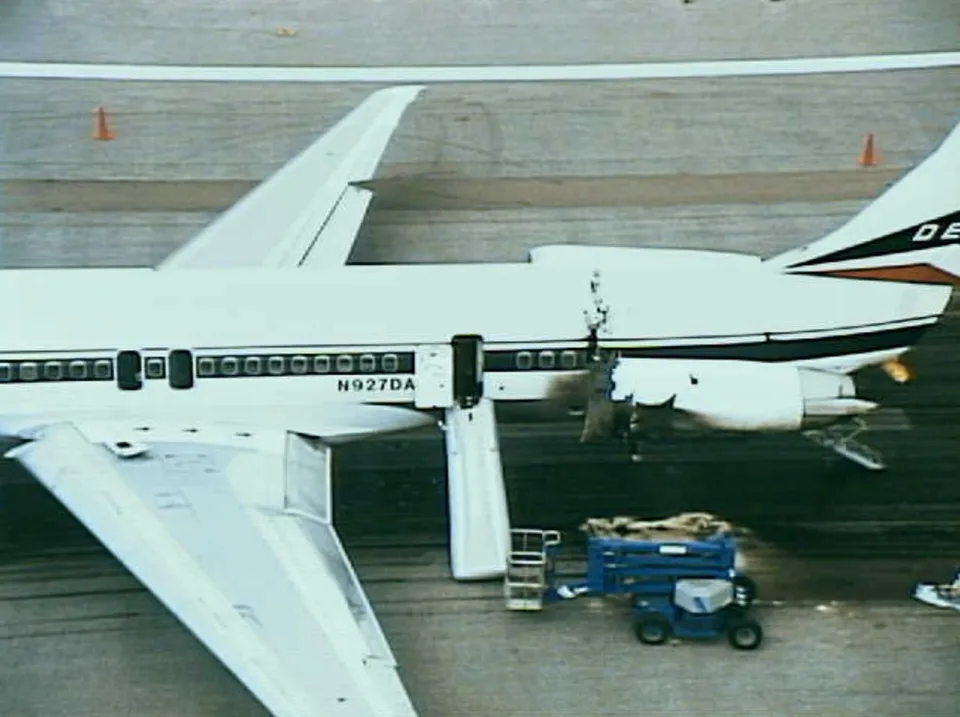
Damage to N927DA's aft left fuselage and left engine after the Pensacola accident

Damage to the left engine and aft fuselage after the rejected takeoff at Pensacola.

Photo: National Transportation Safety Board, Public domain (US federal government work)

Image info

N927DA photographed on 6 July 1996 after the accident. The registration is visible beside the rear service door.

Image source

Original photograph unchanged. Responsive WebP copies resized without cropping.

Geographic context

Geographical orientation for Delta 1288Pensacola Regional Airport, departure; Atlanta, intended destination. The MD-88 stopped on runway 17 at Pensacola. The Atlanta marker shows the intended destination at city scale.12NORTH UP / SCHEMATIC / NOT A RECORDED FLIGHT TRACK
  1. Pensacola Regional Airport, departure
  2. Atlanta, intended destination
The MD-88 stopped on runway 17 at Pensacola. The Atlanta marker shows the intended destination at city scale. Basemap: Natural Earth, public domain.
Read supporting evidence

What happened

At about 40 knots during takeoff, the left engine's titanium fan hub fractured and released debris through the aft cabin. The captain stopped the aircraft on runway 17. Debris severed electrical wiring, interrupting communication between the cockpit and the aft flight attendants as passengers began evacuating. Two passengers were killed, five were injured and 140 survived.

Read the full incident Follow what happened, from the flight to the investigation findings.

What investigators concluded

The NTSB found that Delta's fluorescent penetrant inspection process missed a detectable fatigue crack in the left engine's fan hub. The crack grew from altered metal created during drilling by Volvo for Pratt & Whitney and accepted during manufacturing inspection. Insufficient redundancy in the in-service inspection program contributed to the accident.

Evidence behind this explanation

The fan-hub failure at Pensacola

1,776 words / about 9 minutes to read. Based on the investigation records cited below.

A scheduled departure for Atlanta

Delta Air Lines flight 1288 was preparing to leave Pensacola Regional Airport for Atlanta on 6 July 1996. Its McDonnell Douglas MD-88, N927DA, carried 137 passengers and five crew members. The passengers included two Delta employees travelling without charge, one in the cockpit jumpseat and one in an aft flight attendant jumpseat. The departure took place in daylight with visual weather conditions. The aircraft had two Pratt & Whitney JT8D-219 engines mounted beside the rear fuselage.

During the preflight inspection, which he began at 13:30, the first officer noticed two or three drops of oil on the nose of the left engine and two rivets missing from an outboard section of the left wing. He discussed both observations with the captain. The captain judged the aircraft airworthy and elected to depart without contacting maintenance. The engines started normally, and the crew reported no vibration while taxiing. The NTSB later found that the oil and missing rivets had no role in the fan-hub failure, but that Delta's instructions for reporting maintenance discrepancies required clarification.

At 14:23 the tower cleared the flight to take off on runway 17. The first officer was the pilot flying. He advanced the throttles and called for the autothrottles when engine pressure ratio reached 1.35. The throttles continued advancing automatically as the aircraft accelerated.

Sources for this section

Failure at about 40 knots

At about 14:24 the crew heard a loud bang, and cockpit lighting and instrumentation went out. Passengers and flight attendants in the rear cabin experienced a blast-like concussion. The left engine's front compressor fan hub had fractured. High-energy pieces of the hub and fan assembly escaped the engine casing and struck the fuselage beside the aft passenger seats.

The captain took control, moved both throttles to idle and applied manual braking. He used neither reverse thrust nor the ground spoilers. The aircraft stopped on the runway about 1,350 feet from the threshold. The flight data recorder's last recorded airspeed was 39.75 knots, after the engines had increased to an engine pressure ratio of 1.9 over about ten seconds. Both flight recorders lost power at the failure.

The fragments caused extensive cabin and electrical damage. Investigators documented 16 holes, punctures or tears in the left fuselage skin and seven on the right side. Damage was concentrated near row 37. Of 154 wires in a bundle along the right side, 146 were severed, including four associated with the right generator's differential protection circuit. The left engine failure and the damage to the right electrical system interrupted normal aircraft power.

The first officer initially could reach neither the tower nor the flight attendants by radio or interphone. The pilots selected emergency power and declared an emergency at 14:25. Selected instruments and communications became available from the battery supply.

Sources for this section

Different conditions at opposite ends of the cabin

In the aft cabin, flight attendants saw severe damage and injured passengers. Their attempts to contact the cockpit through the interphone were unsuccessful, and they began an evacuation after the aircraft stopped. Three passengers and an infant used the tailcone slide. An attendant opened the left rear service door and inflated its slide, then saw fire near the front of the left engine cowling. She blocked that exit and directed passengers forward.

Passengers opened all four overwing exits. One man told investigators that he had opened an exit while the aircraft was still moving, under pressure from other passengers. He later jumped from the leading edge of the left wing after seeing flames. About 30 passengers left through the tailcone or overwing exits. The NTSB found that the passenger safety card gave insufficiently specific guidance about when emergency exits should be opened.

The cockpit crew and forward flight attendant initially had little information about the aft cabin. With no cockpit fire indication, the captain instructed the forward attendant to keep passengers aboard. When the first officer walked aft, he saw open exits and heard engine noise. He returned to tell the captain to shut down the engines, and the captain moved both fuel control levers off. The NTSB found that the captain and aft flight attendants made appropriate decisions with the information each had. It also found that the captain shut down the engines promptly when he learned of the conditions in the rear.

Sources for this section

Injuries and emergency response

The two passengers who died had been sitting in the window and aisle seats on the left side of row 37, beside the failed engine. A passenger in the aisle seat on the right side of the same row suffered serious head and other injuries from debris. Another passenger suffered a serious ankle fracture after jumping from the front of the left wing. Three passengers received minor injuries during evacuation. All five crew members survived without injury; 140 of the 142 occupants survived.

A short fire burned around the left engine cowling. Ground witnesses reported seeing flames for approximately 20 seconds. Firefighters arriving at 14:27 saw no flames or smoke, although one smelled smoke, and they applied extinguishing agent to the engine. Investigators found fire damage on the exterior of the cowling. There was no cabin fire.

The captain requested medical assistance at 14:27. Emergency medical technicians and firefighters reached the aircraft, and a treatment area was established beside the runway. The most seriously injured passenger was taken to a local hospital by helicopter at 14:42. Emergency personnel used the aft stairs to remove injured passengers. Other passengers remained aboard until suitable portable stairs arrived, approximately 25 to 30 minutes after the failure, and then travelled to the terminal by bus.

Sources for this section

The hub's manufacturing and service history

The failed fan hub had been forged from titanium alloy by Ladish and machined, finished and inspected by Volvo Aero Corporation for Pratt & Whitney in January 1989. It held 34 fan blades. Twenty-four tie rods joined it to the next compressor disk, passing through holes in the hub rim. Volvo made each tie-rod hole by drilling, two boring operations and honing to the final diameter.

The hub entered service in April 1990. Delta removed it in January 1992 after foreign-object damage to fan blades and performed a visual inspection. It subsequently went into another engine. In October 1995 it received fluorescent penetrant and visual inspections during heavy maintenance at Delta's Atlanta facility. The engine fitted with this hub was installed on N927DA on 1 January 1996, following balancing and a test-cell run in which vibration measurements were within the manufacturer's limits.

At Pensacola the hub had accumulated 16,542 hours and 13,835 cycles, including 1,142 cycles since its October 1995 inspection. Its service-life limit was 20,000 cycles. Investigators recovered three major hub pieces. One was found 2,400 feet to the right of the runway centreline in an athletic field; another had penetrated the cabin and lodged on the right side above row 37. The fracture surfaces contained evidence of progressive fatigue followed by overstress separation.

Sources for this section

Drilling damage beneath an accepted surface

Laboratory examination traced fatigue growth to two origins inside a tie-rod hole. At those origins, the wall surface was darker than surrounding metal, contained boring marks and showed small parallel ladder cracks. Beneath it, metallurgists found zones of altered, deformed and hardened microstructure. The evidence indicated intense local heating and deformation during manufacture.

Volvo conducted more than 300 drilling tests after the accident. Some tests deliberately promoted tool failure, chip accumulation and high local heat. One test hole developed features similar to the accident hub. The NTSB concluded that drill breakage or breakdown, localized loss of coolant and chip packing had created the altered metal and ladder cracks. About 12,887 fatigue striations were identified on the recovered fracture, roughly corresponding to the hub's flight cycles. The Board found that fatigue growth began almost immediately after the hub entered service.

The damage extended deeper than Pratt & Whitney had anticipated when accepting the drilling process. Subsequent boring and honing removed about 0.0185 inch radially, while the altered microstructure extended about 0.024 inch from the original drilled surface. Damaged material therefore remained in the finished hole. A manufacturing inspector had recorded marks in that hole, but the hub passed the blue etch anodize and visual inspections. The NTSB found that its appearance did not match the defect templates then available. After the accident, Pratt & Whitney added four templates illustrating additional abnormal conditions.

Sources for this section

A detectable crack passes the last inspection

From the fracture evidence, the NTSB estimated that the crack at the October 1995 inspection extended about 0.46 inch across the aft face of the hub and 0.90 inch along the hole wall. Its combined surface length was about 1.36 inches. The Board found it large enough for detection. The FAA's review cited reliability data indicating detection probability and confidence greater than 95 percent for a visible crack of that size.

Fluorescent penetrant inspection uses a dye that enters surface-breaking cracks. After excess dye is removed, developer draws penetrant back to the surface, producing an indication under ultraviolet light. Investigators examined every part of that process at Delta, including cleaning and drying, developer coverage, control of development times, handling and the inspector's search. They found weaknesses that could reduce the visibility of indications or allow an inspected area to be missed. The Board could not identify a single reason for this crack's nondetection: inadequate cleaning or processing, inspector performance, or a combination could have caused it.

The inspector had completed the required training, passed vision examinations and was described as competent. The investigation examined how systematic visual search could be interrupted when a hub was repositioned or an indication required diagnosis. It also identified the potential effect of a low expectation of finding cracks. The hub had passed an inspection program in which the opportunities for a second check before failure were insufficient.

Sources for this section

Final findings and safety recommendations

The NTSB adopted its final report on 13 January 1998. It identified the probable cause as the fan-hub fracture following Delta's failure to detect a detectable fatigue crack. The crack originated in altered microstructure created by Volvo's drilling process and missed during manufacture. The Board identified the lack of sufficient redundancy in the in-service inspection program as a contributing factor.

Recommendations to the FAA addressed manufacturing controls, the limitations of etch inspections, and common standards for preparing and inspecting critical rotating parts. The Board called for better tracking of development times and inspected areas, research into inspection duration, and proficiency testing using representative parts. It recommended inspection intervals that would give a crack missed on one occasion another inspection before it could grow to failure.

The report also recorded changes Delta had made during the investigation: daily hot-rinse temperature checks, more focused developer application, a status board for development times, and part-specific inspection technique sheets. Cabin recommendations called for independently powered evacuation alarms operable at every crew station and cockpit indications of open exits connected to emergency power. The Board also sought clearer operational guidance on maintenance irregularities before departure.

Sources for this section

Return to the short summary / Source status and limitations

How the sequence developed

Follow the main stages, then open the evidence beneath each step.

  1. Local damage during drilling

    Tool damage, packed chips and localized coolant loss altered the titanium inside a tie-rod hole and created small ladder cracks.

    Read supporting evidence
  2. Defect accepted at manufacture

    The hole passed manufacturing inspection because its appearance did not match the blue etch anodize templates showing rejectable defects.

    Read supporting evidence
  3. Fatigue grows through service

    Cracks grew from the damaged area almost immediately after the hub entered service in 1990.

    Read supporting evidence
  4. Detectable crack missed in 1995

    Delta's last penetrant inspection missed a crack with about 1.36 inches of surface length. The hub then completed another 1,142 cycles.

    Read supporting evidence
  5. Uncontained fracture on takeoff

    The hub broke at about 40 knots. Fragments penetrated both sides of the aft cabin and severed electrical wiring.

    Read supporting evidence
  6. Cabin damage and interrupted communications

    Two passengers died from debris injuries. With the interphone initially inoperative, the aft attendants began evacuating while the captain kept passengers aboard in the forward cabin.

    Read supporting evidence

A simplified reading of the investigation findings. The sequence does not replace the full report or imply that every contributing factor is shown.

Sequence of events

Times are central daylight time (UTC-5). Both flight recorders stopped at the engine failure; the subsequent sequence was reconstructed from tower and fire-service records and interviews. Expand an event to see its evidence.

  1. January 1989Fan hub manufactured

    Volvo machined, finished and inspected the titanium hub for Pratt & Whitney. Drilling damage in one tie-rod hole later became the fatigue-crack origin.

  2. April 1990Hub enters service

    The hub was first installed in an MD-88 engine. The NTSB found that fatigue cracks began growing almost immediately after it entered service.

  3. 27 October 1995Last penetrant inspection

    Delta performed a fluorescent penetrant inspection. The fatigue crack had a total surface length of about 1.36 inches and was large enough to be detected.

  4. 1 January 1996Engine installed on N927DA

    The engine subsequently completed 1,142 cycles before the accident.

  5. 6 July 1996, 13:30Preflight inspection

    The first officer began his inspection and noticed a few drops of oil on the left engine nose and two missing wing rivets.

  6. 14:23Takeoff clearance

    The tower cleared flight 1288 for departure on runway 17. The first officer was flying.

  7. About 14:24Fan hub fractures
  8. After the aircraft stoppedEvacuation begins in the aft cabin
  9. 14:25Emergency declared
  10. 14:27Medical assistance requested

    The captain reported serious injuries. Firefighters and emergency medical technicians arrived at the aircraft.

  11. 14:42Helicopter transport

    An emergency medical helicopter took the most seriously injured passenger to a local hospital.

  12. About 25 to 30 minutes after the failureRemaining passengers leave

    Portable stairs allowed passengers who had remained aboard to leave the aircraft and travel by bus to the terminal.

  13. 13 January 1998Final report adopted

Search the report evidence

Search extracted report prose, with original page references. Short results link to the full document.

Questions readers ask

Did the aircraft leave the ground?

The failure occurred during the initial takeoff roll at about 40 knots. The captain rejected the takeoff and stopped about 1,350 feet down runway 17.

What does a penetrant inspection reveal?

Dye enters cracks open to the surface. Developer draws it back out, producing a fluorescent indication under ultraviolet light. Cleanliness, drying, preparation and inspection determine whether that indication is revealed and recognised.

Had the hub reached its retirement limit?

It had accumulated 13,835 cycles against a 20,000-cycle limit. The NTSB found that the inspection program required more redundancy to detect defects and growing cracks within a component's service life.

How were the passengers injured?

Engine debris killed two passengers and seriously injured another near row 37. A second seriously injured passenger fractured an ankle while jumping from the wing. Three passengers received minor injuries during evacuation.

Was there a fire inside the cabin?

The NTSB found no cabin fire. A brief fire burned on the exterior of the left engine cowling; ground witnesses reported flames for about 20 seconds.

What changes did the NTSB recommend for evacuation warnings?

It recommended independently powered evacuation alarms at each crew station on newly manufactured Part 121 passenger aircraft, and emergency-powered cockpit indicators for open exits, including overwing hatches.

What the evidence can and cannot establish

Inspection duration and rest breaks

The investigation had no evidence with which to evaluate the effect of inspection duration and breaks on this hub's inspection. The Board called for research into those effects.

Read supporting evidence

Safety follow-up

Actions and recommendations are described at the dates of the cited records. A recommendation is not proof of implementation.

Penetrant processing and inspector performance

Recommendations A-98-11 through A-98-18 addressed drying, developer coverage, development-time control, handling fixtures, inspection coverage, duration and proficiency testing.

Read supporting evidence

A second opportunity to detect a crack

Recommendation A-98-19 called for inspections timed to detect a crack before failure even if the first inspection missed it. A-98-20 sought interim penetrant, eddy-current and ultrasonic checks of high-stress areas.

Read supporting evidence

Changes recorded at Delta

During the investigation Delta introduced daily temperature checks for the hot rinse, squeeze bulbs for developer application, a development-time status board and part-specific technique sheets.

Read supporting evidence

Crew alerts and departure guidance

Recommendations A-98-21 through A-98-23 sought clearer maintenance-discrepancy procedures, independently powered evacuation alarms and emergency-powered cockpit indications of open exits.

Read supporting evidence

Classifications, with reasons

These labels organise the evidence. They are not a ranking of causes. A shared label means a shared research topic, not an identical mechanism.

EventUncontained engine failure

The fan hub fractured during the takeoff roll, and fragments escaped the left engine and penetrated the cabin.

CauseManufacturing non-conformance

Drill damage, localized coolant loss and chip packing created altered microstructure and small cracks in a tie-rod hole.

MechanismFatigue

Fatigue cracks grew from the damaged hole wall almost as soon as the hub entered service and continued until the hub fractured.

Cause and contributing factorInspection and quality control

Delta's penetrant inspection missed a detectable crack; the in-service program lacked sufficient redundant inspections.

Survival factorEvacuation and rescue

Loss of interphone power divided the crews' information during the evacuation. Passengers left through emergency exits or later through portable stairs.

Read alongside

These comparisons connect specific research topics. Shared circumstances do not establish identical causes. Evidence from both investigations is provided below.

United Airlines Flight 232

Delta 1288 and United 232 both suffered uncontained failures after fatigue cracks in titanium fan components escaped inspection. Delta's crack grew from drilling damage in a tie-rod hole; United's grew from a hard-alpha defect formed during manufacture of the titanium ingot. United's debris disabled all three hydraulic flight-control systems during cruise, leading to an attempted emergency landing. Delta's debris penetrated the cabin during the takeoff roll, and the captain stopped on the runway.

Read supporting evidence
NTSB final report3.1 Findings, findings 9 and 10 | Printed page 101 | PDF page 107Find this passage in evidence search
NTSB final report3.1 Findings, finding 19 | Printed page 102 | PDF page 108Find this passage in evidence search
NTSB final reportExecutive summary | Printed page v | PDF page 6Find this passage in evidence search

Further investigation records

Explore the records below for additional context. They open on the publisher's site and are not all included in our report search. Source reuse terms apply.

  • NTSB/AAR-98/01 final report

    NTSB / investigation record

    The final report includes the flight sequence, metallurgical examination, manufacturing and maintenance findings, recommendations and cockpit voice recorder transcript.

Cockpit voice recorder transcript

A cockpit voice recorder (CVR) transcript records speech and sounds captured in the cockpit. This transcript was produced by the National Transportation Safety Board and is reproduced from printed pages 82 to 117 of the cited NTSB report; it is a US federal government work in the public domain.

Only the transcript segment printed in the cited page range is reproduced. The cited segment does not print both recording boundary markers.

Speaker codes and notation

CAM
Cockpit area microphone
HOT
Crewmember hot microphones
-1
Voice (or position) identified as Captain
-2
Voice (or position) identified as First Officer
-3
Voice (or position) identified as Jump Seat rider
-4
Voice identified as first Flight Attendant
-5
Unidentified female voice
-6
Voice identified as second Flight Attendant
-?
Unidentifiable voice
PENGND
Pensacola Ground Control
GNDCRW
Pensacola Ground Crew
TWR
Local Tower Control
PA
Aircraft public address system
*
Unintelligible word
#
Expletive deleted
...
Pause
( )
Questionable text
[ ]
Editorial insertion
-
Break in continuity
Cockpit voice recorder transcript, printed pages 82 to 117
TimeSpeakerText
1505:11CAM-2there's oil coming out of the bullet now.
1505:13CAM-1what?
1505:14CAM-2oil, very little ... but I've never noticed it before.
1505:20CAM-1just a drip, kind of wet?
1505:21CAM-2yeah, you know, but you can tell that it ah, you know * * * *, it wasn't pouring.
1505:31CAM-2I've never, I've never noticed that before.
1505:33CAM-1but there shouldn't be any oil in the bullet.
1505:34CAM-2I figure it must be coming through that ah engine anti-ice, right. * * doesn't it, it goes through the that cowling on the bullet.
1505:43CAM-1* that's bleed air.
1505:45CAM-?so where's the N1 and where's the oil coming from?
DCA96MA068
1505:48CAM-?no idea.
1505:51CAM-?if I knew I'd tell yah.
1505:57CAM-2when we yah know get in there I mean, I don't think it's anything worth worrying about.
1506:01CAM-1yeah we'll do that.
1506:06CAM-2and ah there's two rivets on the left leading edge of that um that slat ... * * *.
1506:16CAM-?*.
1506:24CAM-1two rivets missing ... put it in the book.
1506:26CAM-2do you want to get it now or do you want me to -
1506:27CAM-1um -
1506:28CAM-2just give 'em a call on the way in.
1506:29CAM-1those are the kind of things we should do it now.
DCA96MA068
1506:31CAM-?you'll be - when we get there.
1506:40CAM-2* * * brake pedal * * * their guy fixed it right then and there.
1506:46CAM-1huh?
1506:46CAM-2they're gonna fix it right then right there.
1506:56CAM-?you sure you don't wanna go out on a boat today?
1507:01CAM-?* *.
1507:03CAM-?we might be able to work in eighteen holes of golf too.
1507:06CAM-?* * * parkway (I don't blame you).
1507:10CAM-?(don't) drink my beer.
1507:11CAM-?ah man, now you're getting restrictive.
1507:13CAM[sound of laughter]
1507:15CAM[sound of stabilizer trim-in-motion signal]
DCA96MA068
1507:16CAM[sound of cabin chime]
1507:18CAM-?I like this idea, by the way.
1507:15CAM-?do yah.
1507:20CAM-?yeah.
1507:22CAM[twenty seconds of unintelligible conversation]
1507:41CAM-1I take it you've done all this before, sit on this jump seat on this airplane and all that?
1507:46CAM-3last time I saw a jump seat was a DC-9 so I assume they work pretty much the same way.
1507:51CAM-1yeah we got the squeeze mask -
1507:52CAM-3squeeze mask .. I saw that just pull it.
1507:54CAM-1same as the nine, go out the window (or aft stairs).
1507:56CAM-3yeah.
DCA96MA068
1507:58CAM-1anything up there on that yellow placard.
1508:06CAM-1your choice, we'll try to keep the speaker up.
1508:08CAM-3ah I don't care.
1508:10CAM-1well, if you help us listen and watch we'd appreciate it ... it'll be another set of eyes up here, might as well use them.
1508:15CAM-3glad to do that.
1508:16CAM-1alright.
1508:15RDO-2* ground delta twelve eighty-eight atlanta with victor.
1508:31PENGNDtwelve eighty-eight cleared atlanta as filed maintain three thousand expect flight level two niner zero one zero minutes after departure. departure frequency one one nine point zero. squawk three two two four. DCA96MA068
1508:31CAM-1* how are you doing?
1508:32CAM-4fine, how are you doing?
1508:33CAM-1good to see you.
1508:34CAM-4good to see you too.
1508:35CAM-1how's your mom doing?
1508:36CAM-4hanging in there.
1508:37CAM-1really?
1508:37CAM-4yeah, hanging in there.
1508:38CAM-1still down in tyrone?
1508:40CAM-4yeah, yup.
1508:41CAM-1when you gonna get her to move up?
1508:43CAM-4well, we keep thinking about it, and looking into this, that and the other thing and she doesn't want to move into a rental house (out of the) neighborhood [unintelligible]
DCA96MA068
1508:43RDO-2delta twelve eighty eight atlanta as filed. three thousand's the hold down. twenty nine at ten nineteen zero and three two two four. any delays today?
1508:53PENGNDnegative.
1508:54RDO-2thank you DCA96MA068
1509:00CAM-4you know the bottom line is the whole situation [unintelligible]
1509:04CAM-1yeah.
1509:05CAM-4[sound of laughter] [unintelligible] we keep looking and thinking about it and every time she does she goes well maybe I won't.
1509:14CAM-1yeah. what do you do, where are you living now?
1509:27CAM-1where are you living now?
1509:27CAM-4same place. haven't moved anywhere.
1509:29CAM-1that's over there off of forty-one?
1509:31CAM-4off south cobb.
1509:32CAM-1south cobb.
1509:32CAM-4yeah yeah.
1509:33CAM-1so you're way over there in the boonies.
1509:35CAM-4yeah yeah.
1509:37CAM[unintelligible]
1509:38CAM-1true. every road around me is torn up, every road.
1509:42CAM[unintelligible passenger cabin background conversation]
1509:57CAM-4we haven't gotten our (Agua) yet, do you want anything else?
1510:01CAM-1geeze oh pete, I guess I'll just have to have airplane water.
1510:04CAM-4oh no.
1510:05CAM-1that's okay, I'll live with (this).
DCA96MA068
1510:07CAM-4can I get you anything?
1510:08CAM-2I'll sell you some, I'll sell you some.
1510:10CAM-1nah.
1510:11GNDCRWready captain?
1510:12CAM-2I'll split it with you.
1510:15INT-1yes sir.
1510:16GNDCRWyes sir wings are clear. if I can get some hydraulics and if you would start your APU.
1510:20INT-1okay here comes the hydraulics .. APU's ah, we're turning it on now .. if you'd hold off on pulling the air for about a minute we'd appreciate it.
1510:27GNDCRWyes sir no problem. DCA96MA068
1510:31HOT-2um as filed, three thousand to hold down, twenty-nine at ten, nineteen nothing, three two two four.
1510:41CAM-1where do you live?
1510:42CAM-3dallas.
1510:44CAM[sound of chime and CVR power interrupt]
1510:45CAM-?deadheading on this or seeing a friend or - ?
1510:52CAM[sound of cabin chime]
1510:54CAM-1that's what I did on the layover, I have a friend down here .. retiree [unintelligible]
1511:05CAM-4here's your water, * hot water.
1511:08CAM-?thank you.
1511:10CAM-3who is it john?
1511:11CAM-1it's [nonpertinent name removed].
1511:13CAM-3I don't know him.
DCA96MA068
1511:13CAM-1he married the atlanta chief pilot's secretary, who was [nonpertinent name removed] at the time.
1511:28GNDCRWcaptain just let me know whenever we can pull the ground power.
1511:31INT-1okay you can pull it.
1511:34GNDCRWthank you. DCA96MA068
1511:36CAM-1let's read it.
1511:43HOT-2did they put any um cargo in that number one?
1511:47CAM-1yes (thirty thirty-five) pounds.
1511:50HOT-2because it was empty when I did the walk around.
1511:56CAM-1you say it was empty? * * * ... go ahead and read it.
1512:00HOT-2before start exterior interior pre-flight?
1512:02CAM-1complete.
1512:01HOT-2log books checklist?
1512:02CAM-1checked.
1512:02HOT-2circuit breakers?
1512:03CAM-1checked.
1512:03HOT-2oxygen mask regulators interphones?
1512:04CAM-1left.
1512:04HOT-2right .. aft overhead?
1512:07CAM-1checked.
1512:08HOT-2CADC flight director EFIS switches?
1512:09CAM-1normal.
1512:10HOT-2voice recorder?
1512:10CAM-1checked.
DCA96MA068
1512:11HOT-2electrical panel?
1512:11CAM-1set.
1512:11HOT-2battery switch?
1512:12CAM-1on and locked.
1512:13HOT-2emergency power?
1512:13CAM-1off.
1512:14HOT-2fuel tank pumps crossfeed?
1512:15HOT-1checked and off.
1512:15HOT-2ignition?
1512:16HOT-1off.
1512:16HOT-2emergency lights?
1512:17HOT-1armed.
DCA96MA068
1512:17HOT-2no smoking seat belt lights?
1512:18HOT-1on.
1512:18HOT-2pitot heat?
1512:18HOT-1on.
1512:15HOT-2airfoil engine anti-ice?
1512:15HOT-1off.
1512:20HOT-2windshield anti-fog anti-ice?
1512:20HOT-1off and on.
1512:21HOT-2IRS mode selectors?
1512:23HOT-1it's not required.
1512:23HOT-2anti-skid?
1512:24HOT-1armed.
DCA96MA068
1512:24HOT-2stall warning?
1512:24HOT-1checked.
1512:24HOT-2yaw damper?
1512:25HOT-1on.
1512:25HOT-2mach trim?
1512:26HOT-1normal.
1512:26HOT-2radio rack switch?
1512:27HOT-1fan.
1512:26HOT-2air conditioning?
1512:27HOT-1set.
1512:27HOT-2pressurization?
1512:28HOT-1set.
DCA96MA068
1512:28HOT-2air conditioning auto shutoff?
1512:29HOT-1auto.
1512:29HOT-2ram air switch?
1512:30HOT-1it's off.
1512:31HOT-2annunciator panel digital lights?
1512:31HOT-1recall checked.
1512:32HOT-2exterior lights?
1512:32HOT-1set.
1512:33HOT-2NAV FGS panel?
1512:33HOT-1check set.
1512:34HOT-2altimeters flight instruments?
1512:35HOT-1ah twenty-nine ninety-eight set.
DCA96MA068
1512:37HOT-2ah let's see two nine nine eight set .. cross checked .. ah fire warning?
1512:43HOT-1checked.
1512:44HOT-2art switch?
1512:44HOT-1it's auto.
1512:45HOT-2engine instruments?
1512:45HOT-1checked.
1512:46HOT-2fuel required?
1512:49CAM-5it's full now .. I don't know if your passenger pre-board does not say it's full but it is full.
1512:54HOT-1nineteen, we have eighteen nine minimum of eighteen five.
1512:59HOT-2eighteen five eighteen nine, did you hear that?
1513:01HOT-1what?
DCA96MA068
1513:01HOT-2her paperwork was wrong.
1513:04CAM-4one (four) one thirty-eight (total cabin full).
1513:06HOT-2fourteen one twenty-eight.
1513:07HOT-1I got a hundred and forty-two.
1513:08HOT-2ours is full. thanks for asking though.
1513:12HOT-2fuel used counters?
1513:13HOT-1reset.
1513:14HOT-2brake temp?
1513:14HOT-1checked all.
1513:15HOT-2radar?
1513:15HOT-1checked.
1513:16HOT-2stabilizer trim?
DCA96MA068
1513:16HOT-1checked.
1513:17HOT-2spoilers?
1513:15HOT-1ah retract.
1513:15HOT-2rudder control lever?
1513:20HOT-1power.
1513:20HOT-2throttles?
1513:20HOT-1check idle.
1513:21HOT-2outflow valve?
1513:21HOT-1auto.
1513:22HOT-2flaps slats?
1513:22HOT-1up retract.
1513:22HOT-2fuel levers?
DCA96MA068
1513:23HOT-1they're off.
1513:24HOT-2radios transponder ACARS?
1513:24HOT-1set.
1513:25HOT-2stabilizer trim brake switch?
1513:25HOT-1normal.
1513:26HOT-2rudder aileron trim?
1513:28HOT-1zero.
1513:28HOT-2autobrakes?
1513:28HOT-1zero disarm and off.
1513:29HOT-2flight attendant briefing?
1513:30HOT-1complete.
DCA96MA068
1513:30HOT-2departure briefing .. WARTS weather's not a factor, abnormal's as you brief, runway will be one seven it's ah seven thousand feet we have RTO .. ah we're going to be relatively heavy you call it I'll back you up .. terrain and SID climbing to three thousand feet normal speeds whatever heading they give us.
1513:42HOT-1okay.
1513:45HOT-1zero fuel weight is one twelve point four.
1513:57HOT-1seventeen let's go full power.
1513:59HOT-2okay.
1514:01HOT-1ah one thirty-one one thirty-seven one forty-six .. one eighty- nine.
1514:11HOT-2ah let's see one thirty-one.
1514:12HOT-1two thirty-five.
1514:13HOT-2two thirty-five .. one thirty-one one forty-six eighty-nine two thirty-five .. zero ah zero fuel weight?
DCA96MA068
1514:24HOT-1set.
1514:24HOT-2FMS?
1514:25HOT-1set.
1514:25HOT-2takeoff condition computer?
1514:27HOT-1it is ah sixteen point two and five point five degrees set.
1514:29CAM[sound of trim-in-motion signal]
1514:35HOT-2six point two flaps eleven five point five on the stabilizer ... flap takeoff selector?
1514:39HOT-1set.
1514:40HOT-2airspeed bugs TRP?
1514:42HOT-1they are ah one thirty-one one thirty-seven one forty-eight one eighty-nine two thirty-five full power one point nine five.
1514:52HOT-2set on the right.
DCA96MA068
1515:01HOT-2before start checklist complete.
1515:02HOT-1thank you.
1515:04HOT-2no no thank you.
1515:06CAM-3john do you mind if I go ahead and put this down they're full back there?
1515:09HOT-1yeah go right ahead. do you know how to do it?
1515:10CAM-3well I think it works the same way it used to.
1515:12HOT-1yeah some things never change.
1515:22CAM[sound of laughter]
1515:29CAM-3sure had to make sure she got on.
1515:30HOT-1uh - huh.
1515:45HOT-1what are you flying over in dallas?
DCA96MA068
1515:46CAM-3seven six.
1515:48HOT-1good deal ... it's a tough job isn't it?
1515:53CAM-3yup [unintelligible]
1516:01HOT-1do yah .. what short legs .. up down?
1516:04CAM-3I flew nine years on the thirty-seven. I flew six years on the DC nine as copilot.
1516:09HOT-1yeah ...we're getting longer and longer legs on this ah. last trip we flew atlanta miami boston. the next day we went boston orlando back to boston. third day was our short day it was ah cincinnati indi atlanta.
1516:27CAM-3dallas dallas they got ah they fly the ninety quite a bit out there and they have some pretty good legs.
1516:31HOT-1yeah.
1516:34CAM-3[unintelligible]
1516:34HOT-2the ninety's gotten video on it though doesn't it?
DCA96MA068
1516:35HOT-1yeah ... entertainment.
1516:41CAM-3[unintelligible]
1516:45HOT-2oh yeah.
1516:45HOT-1yeah.
1516:47CAM-3[unintelligible]
1516:51HOT-1you got that on the seven five too don't you?
1516:57CAM-6everybody up here doing alright * * *.
1517:07CAM-6cabin's ready for push back.
1517:08HOT-1okay thank you.
1517:26INT-1brakes released cleared to push.
1517:27CAM[sound of two cabin chimes]
1517:28GNDCRWalright sir here we go. DCA96MA068
1517:33HOT-1pushback and start check list.
1517:35HOT-2it's ah -
1517:45GNDCRWsir which runway will you be using?
1517:46INT-1ah one seven.
1517:57GNDCRWalright captain you're clear to start your engines.
1517:59INT-1roger. DCA96MA068
1518:09HOT-2don't have any rides from here to dallas huh .. any flights?
1518:13CAM-3(not direct).
1518:16HOT-1really, wonder why?
1518:15CAM-3better utilization of equipment, that's the company line.
1518:22HOT-2better utilization of the equipment that's true.
1518:25HOT-1then why weren't we utilizing them better in the first place?
1518:28CAM-3every month they set a boarding record.
1518:31HOT-1ah I know it.
1518:34CAM-3they have two nonstops a day and ah one went through mobile.
1518:39HOT-1yeah, I've flown that one.
1518:40CAM-3they did the same thing in mobile. they have two nonstops through mobile and one more came on over here.
1518:47HOT-2I'll bet you the yield is low here .. vaca -
1518:50HOT-1I'd think it'd be real high here.
1518:51HOT-2isn't it all vacationers?
1518:52HOT-1yeah but the yield is high since there's no competition.
1518:58HOT-2hum.
1518:59HOT-1I mean there is some but not not a whole lot.
DCA96MA068
1515:02GNDCRWalright captain will you please set your brakes.
1515:05INT-1brakes set cleared to disconnect.
1515:07GNDCRWalright sir you have a safe flight home.
1515:09INT-1see yah. DCA96MA068
1515:24HOT-1fuel flow light off.
1515:34HOT-2start valve is closed.
1515:35HOT-1after start.
1515:37CAM[sound of cabin chime and power interruption to CVR]
1515:48HOT-2engine (ice).
1515:49HOT-1it's off not required.
1515:50HOT-2it's off .. left engines up it's above fifty, oil pressure's good, hydraulics good, pumps are on pushback start checklist complete.
1515:56HOT-1thank you.
1520:00RDO-2delta twelve eighty-eight taxi please with victor.
1520:03PENGNDdelta twelve eighty-eight [break in audio] two zero at one two altimeter two niner niner seven.
1520:09RDO-2and delta twelve eighty-eight you were cut out a little bit we understand two nine nine seven cleared to taxi to one seven.
1520:13PENGNDthat is correct. DCA96MA068
1520:16HOT-2clear on the right.
1520:20CAM[sound of several clicks]
1520:22CAM[sound of spoiler being armed]
1520:47HOT-2clear on the right.
1520:49HOT-1thank you.
1520:57HOT-2coming back.
1520:58HOT-1go ahead.
1521:02HOT-1watch your feet.
1521:03HOT-2clear.
1521:07HOT-2spin it?
1521:07HOT-1go ahead.
1521:14HOT-2taxi?
1521:15HOT-1go ahead.
1521:16HOT-2taxi checklist flaps and slats are eleven eleven and takeoff, autobrakes and spoilers are armed takeoff armed airspeed bugs TRP set normal power no change since you went over it. altimeters?
1521:26HOT-1twenty nine ninety seven now.
1521:27HOT-2two nine nine seven set. flight NAV instruments?
1521:29HOT-1set for departure.
DCA96MA068
1521:30HOT-2set and ah flight controls? I've got tops.
1521:32HOT-1bottoms check.
1521:33HOT-2taxi checklist is complete.
1521:37HOT-2flash.
1521:41HOT-2start valve closed.
1521:43CAM[sound of cabin chime]
1521:46HOT-2engine anti-ice?
1521:48HOT-1it's off.
1521:48HOT-2it's off .. both engines up ... coming above fifty. oil pressure's good. hydraulic pressure checks good. delayed start checklist complete.
1521:55HOT-1thank you.
1521:59HOT-2nineteen nine.
DCA96MA068
1522:07HOT-2ready to go terry?
1522:10CAM-6yeah .. what .. what did you say?
1522:16HOT-2you guys ready?
1522:22PA-2good afternoon folks from the flight deck. we're currently number one for departure. if the flight attendants could please complete the cabin safety check we'll be airborne here momentarily. flight plan indicates a very brief forty minutes over to atlanta. we're expecting an on-time arrival. current atlanta weather has scattered conditions and ninety- five degrees. welcome aboard.
1522:37HOT-2was I close?
1522:38HOT-1somewhere around there.
1522:41CAM-3you really know how to read the METAR.
1522:42HOT-2thank you.
1522:50HOT-1you'll probably start seeing somebody's mimeograph cheat sheet somewhere in here like that.
DCA96MA068
1522:55HOT-2yeah .. good idea.
1523:15CAM-6ready for takeoff.
1523:16HOT-1thanks.
1523:17HOT-2thanks terr.
1523:21RDO-2delta twelve eighty-eight's ready to go.
1523:23TWRtwelve eighty-eight fly runway heading clear for takeoff.
1523:25RDO-2delta twelve eighty-eight cleared for takeoff runway one seven and runway heading. DCA96MA068
1523:30HOT-2runway heading, alright.
1523:33CAM[sound of several clicks]
1523:39HOT-2ah annunciator panel warning lights checked. flaps and slats?
1523:42HOT-1eleven eleven takeoff.
1523:43HOT-2eleven eleven and takeoff. takeoff warning?
1523:45HOT-1it's checked.
1523:46HOT-2brake temp looks good. flight attendants notified and acknowledged. doors and windows closed and locked. takeoff briefing runway heading three thousand feet normal speed. runway's updated. got ignition, lights, transponder, TCAS. it's all done.
1523:58HOT-2before taking off checklist complete.
1524:00CAM[sound of several clicks]
1524:17HOT-1your airplane.
1524:18HOT-2I've got the aero machine.
1524:28HOT-2auto throttles.
1524:30CAM[sound similar to that of engines spooling up]
1524:32CAM[sound similar to that of nosewheel on runway]
DCA96MA068
1524:33CAM[sound of loud bang]
1524:33CAM[end of recording]
DCA96MA068

Sources and transparency

The NTSB completed the investigation and adopted its final report on 13 January 1998.

Source limitations

The flight recorders lost power at the engine failure. The NTSB could not determine precise times for some events during the subsequent evacuation.

Uncontained Engine Failure, Delta Air Lines Flight 1288, McDonnell Douglas MD-88, N927DA, Pensacola, Florida, July 6, 1996

National Transportation Safety Board
Final report NTSB/AAR-98/01, adopted 13 January 1998

Official report PDF, hosted by ntsb.gov

Open source document

137 PDF pages.

United States federal government report. Third-party material may have separate rights. Source terms.

Read the extraction, classification and review methodology.

Suggest a correction to this dossier

Editorial record

Kevin Murphy writes the incident accounts on AirlineIncidents.com, out of a long interest in aviation safety and the lessons each investigation leaves behind.

Prepared by
AirlineIncidents editorial desk
Report citation check
Independent expert review
Not completed

Citation checks compare supporting text with the indexed report pages. They do not constitute independent expert review. How these pages are prepared.

Revision history

: NTSB final findings trace the fan-hub fracture to manufacturing damage, a missed fatigue crack and insufficient inspection redundancy.

Source-based corrections are reviewed before changes appear here. Suggest a correction to this dossier.

Cite or link to this page

Quoting this account or linking to it? Please use the page address below, and credit the investigation report it is built from.

Credit line

AirlineIncidents.com. Delta Air Lines Flight 1288 accident account. Published 13 October 2026. https://airlineincidents.com/incidents/delta-1288-1996/

HTML link

<a href="https://airlineincidents.com/incidents/delta-1288-1996/">Delta Air Lines Flight 1288 accident account (AirlineIncidents.com)</a>

Select a box to copy it. Spotted something wrong? Send a correction.