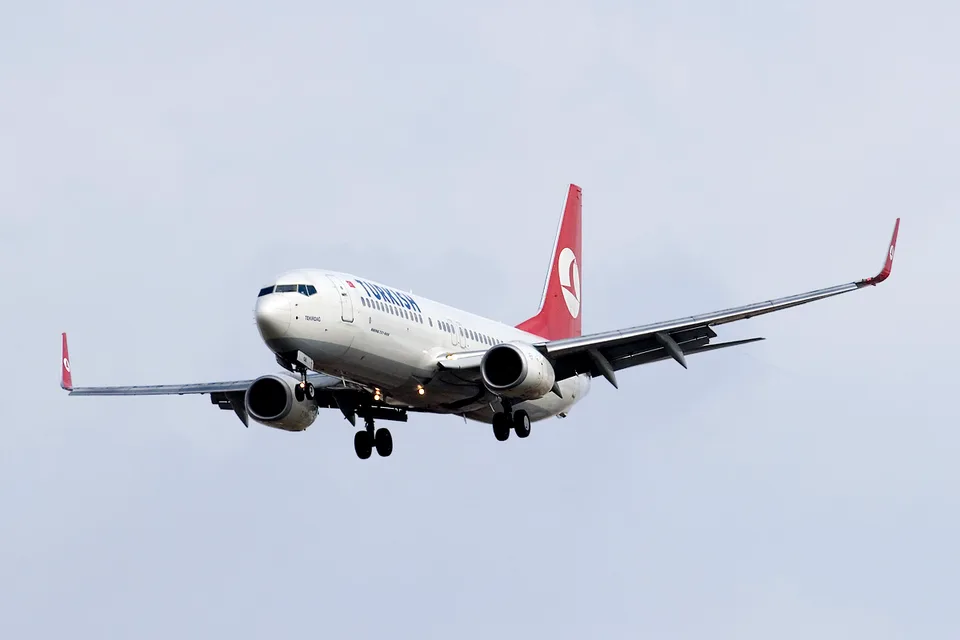
A false radio-altimeter reading drove the autothrottle to idle on approach to Schiphol. The crew recognised the falling airspeed at the stall warning, and the aircraft crashed short of runway 18R.
During an instrument approach, the left radio altimeter supplied an erroneous height of minus eight feet that the system marked usable. The autothrottle entered retard flare mode and reduced both engines to approach idle. The right autopilot continued following the glide slope as the speed fell and the nose rose. The pilots were completing landing tasks and did not recognise the speed loss until the stick shaker activated at about 460 feet.
Read the full incident Follow what happened, from the flight to the investigation findings.
What investigators concluded
The Board found that the false radio height, the approach geometry and increased workload, continuation of an unstabilised approach, missed airspeed decay and an improperly executed recovery led to the stall and crash.
1,599 words / about 8 minutes to read. Based on the investigation records cited below.
A supervised passenger flight
On 25 February 2009, Turkish Airlines flight TK1951 left Istanbul Ataturk Airport at 08:23 local Turkish time for Amsterdam Schiphol. The Boeing 737-800, registered TC-JGE, carried 128 passengers, four cabin crew and three pilots. The first officer occupied the right seat and was the pilot flying. The captain in the left seat also served as his instructor. A second first officer sat in the observer seat as safety pilot.
The flight was the flying first officer's seventeenth line flight under supervision and his first flight to Schiphol. He had already completed Boeing 737 qualification training and had about 4,000 hours of military flying experience. His training file contained no negative or striking comments about his performance. Turkish Airlines placed a safety pilot on the first twenty supervised flights to observe and advise the captain when irregularities arose.
The right autopilot and right flight director were active for the first officer, while the captain used the left flight director. Recorder data showed erroneous left radio-altimeter readings beginning shortly after takeoff, as the aircraft climbed through about 400 feet. The investigation could not determine whether the pilots knew of those early readings. During the approach briefing over Germany, the first officer prepared for a category I instrument approach to runway 18R, with a decision height of 200 feet.
The crew entered Dutch airspace from the east and received successive instructions for heading, speed and descent. At 10:15:02 Netherlands local time, the captain contacted Schiphol Approach while descending towards flight level 70. The controller directed the aircraft towards the Spijkerboor beacon and cleared it down to flight level 40 for runway 18R. During that exchange, an audible landing gear warning sounded while the aircraft was still between flight levels 84 and 82.
The warning persisted for about a minute and a half, with a brief interruption, and the captain referred to the radio altimeter. Further short warnings followed. Flight recorder data showed minus eight feet on the captain's radio-height display during these warnings. The controller subsequently cleared the aircraft to 2,000 feet and directed it onto a heading of 265 degrees. The crew selected flaps 1 and a target speed of 195 knots.
At 10:22:38 the controller instructed a further left turn to 210 degrees and cleared the approach. The pilots attempted to engage the second autopilot for a dual-channel approach. The attempt disconnected the right autopilot while the left failed to engage. They re-engaged the right autopilot and continued with that channel. After flaps 5 were selected, another landing gear warning sounded. The crew then lowered the landing gear, selected 160 knots and extended the flaps to 15.
At 10:24:09, the captain announced localizer capture. The aircraft was aligning with the runway at 2,000 feet, about 5.5 nautical miles from its threshold, and was above the glide slope. The crew selected lower altitudes and a vertical descent rate of 1,400 feet per minute to intercept the glide slope from above. At this selection, the autothrottle annunciation changed to RETARD on both primary flight displays and the thrust levers moved to idle.
The autothrottle normally used the left radio-altimeter height. It switched to the right system when the left system identified its own data as unusable. On this flight the left system marked its false minus-eight-foot value as normal and usable. With the required flap setting and other conditions satisfied, that value allowed the autothrottle to enter retard flare mode, normally associated with the final stage of landing below 27 feet.
The right autopilot used the correctly functioning right radio altimeter. It continued to follow the glide slope while the autothrottle held the thrust near idle. At 10:24:36 the safety pilot referred to a radio-altimeter failure, and the captain confirmed it. Ten seconds later the aircraft intercepted the glide slope at about 1,300 feet. The Board found that the crew's manuals and training had not supplied the information needed to understand the relationship between the left radio-altimeter failure and the autothrottle response.
The tower cleared TK1951 to land at 10:24:48. The captain acknowledged the clearance, and there was no further radio contact with the flight. As the aircraft passed 1,000 feet, its final configuration and landing checklist were still incomplete. Flaps 40 were selected at about 900 feet. The speed brake lever was moved repeatedly as green and amber indications appeared, and the crew selected a final approach speed of 144 knots.
Turkish Airlines' procedures required a stabilised approach by 1,000 feet in instrument conditions. At that height the aircraft lacked its final flap setting, the thrust was below that required for the landing configuration, the checklist was unfinished and airspeed exceeded the permitted upper limit. The Board concluded that a go-around should have been initiated. The approach continued, and the captain began reading the checklist for the first officer to answer.
At 10:25:23, near 750 feet, airspeed fell below 144 knots. The autopilot increased the nose-up attitude as it tried to maintain the glide slope. The airspeed box later turned amber and flashed. The crew did not act on the decreasing speed or increasing pitch. The safety pilot passed on the cabin-ready message and was then instructed to warn the cabin crew of the imminent landing. The Board found that checklist work had drawn all three pilots away from monitoring the flight path and speed. It could not explain exactly why the speed loss went unnoticed during the last approximately 25 seconds before the warning.
The stick shaker activated at 10:25:47, about 460 feet above the ground. Airspeed was approximately 107 knots and the nose was around eleven to twelve degrees above the horizon. The safety pilot warned of low speed. The first officer pushed the control column forward and advanced the thrust levers slightly more than halfway. The captain took control while the autothrottle was still engaged, and it pulled the levers back to idle.
The autothrottle was disconnected at 10:25:50. The autopilot was disconnected a second later at about 420 feet, and the control column moved forward. The thrust levers remained at idle until 10:25:56, when maximum thrust was selected. The engines reached full thrust in less than four seconds. The stick shaker briefly stopped as the nose lowered, then resumed as pitch and angle of attack increased again.
Nine seconds elapsed between the first stall warning and selection of maximum thrust. Simulator tests showed that prompt maximum thrust, as part of the approach-to-stall recovery procedure, could have enabled recovery at the initial warning. The aircraft subsequently stalled while the autopilot was still engaged, at a height between 400 and 450 feet. Boeing flight-test analysis indicated that recovery from the developed stall required about 500 to 800 feet of height.
Ground proximity warnings followed, including a sink-rate alert and a pull-up warning. The aircraft struck a field about 1.5 kilometres short of runway 18R at about 10:26. The fuselage broke into front, centre and tail sections. There was no fire. Passengers escaped through overwing exits, a fuselage tear and the opening at the rear of the centre section. Four crew members and five passengers died; 120 people were injured and six passengers were uninjured.
Investigators found a long history of radio-altimeter problems across the Turkish Airlines 737-800 fleet and at other operators. Turkish Airlines' records contained 235 reported faults across 52 aircraft from January 2008 to February 2009, including sixteen involving TC-JGE. Corrective work included resets, tests and replacement or exchange of components. The left radio-altimeter computer passed its self-test after the crash despite having supplied the false value during the flight.
Quick access recorder analysis identified 148 erroneous-height occurrences on TC-JGE over ten months and 1,143 flights. Only a small proportion had been entered in the maintenance log. Two earlier flights had also experienced retard flare activation. The crews had not logged those events because the irregularities could not be reproduced on the ground or had not recurred on the return flight. The Board concluded that existing reporting and maintenance practices had failed to reveal and resolve the full problem.
The Board could not identify a single origin for the erroneous radio heights. It found that Boeing and the FAA had known about radio-altimeter problems affecting other systems for years, and that the safety risk had received insufficient recognition. It also found shortcomings in flight-mode callouts, monitoring, stall training and recovery guidance. The air traffic instructions had placed the flight high and close to the runway, requiring extra actions that increased workload and obscured the unexpected autothrottle behaviour.
On 4 March 2009, Boeing sent operators information about the accident in coordination with the Dutch Safety Board. Its 19 March Flight Operations Technical Bulletin described unexpected retard flare activation from an incorrect radio height marked valid, and advised careful monitoring of primary instruments and automatic flight modes. The report recorded further work on flight-control software, troubleshooting guidance and antenna connector installation.
Turkish Airlines issued bulletins to Boeing pilots, introduced an online safety reporting system in September 2009 and added stall-recovery work to simulator training. An additional low-level stall-recovery session was introduced for captains and first officers. The final report recommended improved radio-altimeter reliability, evaluation of the autothrottle and flight-management response to incorrect heights, assessment of an audible low-speed warning, clearer recovery procedures and recurrent approach-stall recovery practice. It also called for better occurrence reporting and improvements to the airline's safety programme.
The Board recommended that Dutch air traffic control harmonise its approach alignment procedures with ICAO procedures and ensure controllers followed them. It asked the Transport and Water Management Inspectorate to monitor compliance with national and international air traffic procedures. The final investigation was published on 6 May 2010.
A simplified reading of the investigation findings. The sequence does not replace the full report or imply that every contributing factor is shown.
Sequence of events
Approach times are local Netherlands time, CET (UTC+1), as used in the flight chronology. Departure time is local Turkish time. Expand an event to see its evidence.
08:23, Turkish local timeDeparture from Istanbul
TC-JGE departed with 128 passengers and seven crew. The first officer flew under supervision.
The aircraft had not reached its final landing configuration, thrust was insufficient for that configuration, the checklist was incomplete and speed was above the stabilised approach limit.
Could the aircraft have recovered at the first stall warning?
Simulator tests showed recovery was possible if maximum thrust had been selected immediately at stick shaker activation as part of the recovery procedure. Maximum thrust was selected nine seconds later.
The Board could not explain exactly why the crew failed to notice the speed reduction during the last approximately 25 seconds before the stick shaker.
Actions and recommendations are described at the dates of the cited records. A recommendation is not proof of implementation.
Operator guidance in March 2009
Boeing issued a Flight Operations Technical Bulletin on 19 March 2009 describing the false-height autothrottle response and emphasising instrument and mode monitoring.
The Board recommended better radio-altimeter reliability, evaluation of system responses to incorrect heights, assessment of an audible low-speed warning and revised stall-recovery guidance.
These comparisons connect specific research topics. Shared circumstances do not establish identical causes. Evidence from both investigations is provided below.
Both investigations found that airspeed monitoring and automatic thrust mode awareness deteriorated during approach. On TK1951, an erroneous radio height triggered retard flare mode while the autopilot followed the glide slope. On Asiana 214, the pilot disconnected the autopilot and moved the thrust levers to idle, putting the autothrottle into HOLD, where it did not control airspeed; the crew missed that mode change. Each flight continued an unstabilised approach and the crew intervened after substantial speed loss.
Explore the records below for additional context. They open on the publisher's site and are not all included in our report search. Source reuse terms apply.
Kevin Murphy writes the incident accounts on AirlineIncidents.com, out of a long interest in aviation safety and the lessons each investigation leaves behind.
Prepared by
AirlineIncidents editorial desk
Report citation check
Independent expert review
Not completed
Citation checks compare supporting text with the indexed report pages. They do not constitute independent expert review. How these pages are prepared.
Revision history
: Dutch Safety Board final report published 6 May 2010.