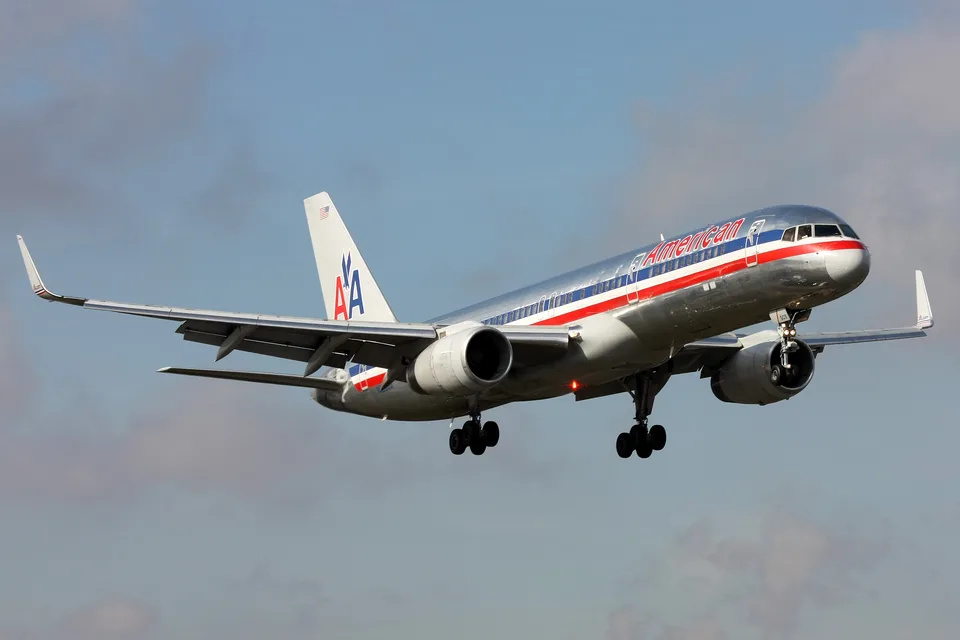
Approach planning and execution, Automation and navigation, Loss of situational awareness, Navigation database and display, Speedbrakes during terrain escape, Night approach in mountainous terrain
Original photograph unchanged. Responsive WebP copies resized without cropping.
Geographic context
Miami departure airport
Tulua VOR
El Deluvio impact site
Cali destination airport
Approximate geographic markers show the departure, arrival navigation aid, accident site and destination. Basemap: Natural Earth, public domain.Read supporting evidence
American Airlines Flight 965 descended toward Cali at night after a delayed departure from Miami. The crew accepted a change to runway 19 and selected the Romeo beacon while intending to fly toward Rozo. The aircraft turned east of the approach course and continued descending. A subsequent turn toward the runway took it into high terrain. The crew attempted to climb after the terrain warning, with the speedbrakes still extended. The aircraft struck trees near the summit of El Deluvio. Of 163 occupants, 159 died and four survived with serious injuries.
Read the full incident Follow what happened, from the flight to the investigation findings.
What investigators concluded
Aeronautica Civil identified inadequate approach planning and execution, inadequate use of automation, failure to discontinue the approach, loss of situational awareness and failure to revert to basic radio navigation as probable causes. Contributing factors were the effort to expedite the arrival, extended speedbrakes during the escape, deletion of intermediate fixes after direct routing, and different naming conventions in charts and the navigation database.
1,588 words / about 8 minutes to read. Based on the investigation records cited below.
A delayed departure toward a mountain valley
American Airlines Flight 965 left Miami on 20 December 1995 for Cali, Colombia, carrying 155 passengers, two pilots and six cabin crew. The Boeing 757-223, registered N651AA, had been operated by American since new in August 1991. Its previous crew had reported no significant maintenance or operating discrepancies. The investigation found no outstanding maintenance items before departure and no repetitive navigation or flight control anomalies. The aircraft's weight and balance were within the applicable limits.
The scheduled departure was 16:40. Waiting for connecting passengers and baggage delayed departure from the gate until 17:14, and airport traffic produced a further ground delay. The flight took off at 18:35 with an estimated flying time of three hours and twelve minutes. It climbed to flight level 370, crossed Cuban and Jamaican airspace, and entered Colombia. Subsequent clearances took it toward Tulua VOR, a navigation aid north of Cali.
The captain had approximately 13,000 flying hours and had flown into Cali thirteen times. The first officer had approximately 5,800 hours and was making his first flight into Cali, although he was qualified for international operations and had flown to other South American destinations. He was flying the aircraft while the captain handled the radio. Both pilots held the required qualifications and medical certificates. Investigators found no behavioral or physiological impairment that caused or contributed to the accident.
Cali's Alfonso Bonilla Aragon airport lay in a long, narrow valley running north to south. Mountains to the east and west reached 14,000 feet. Runway 01 offered an instrument landing system approach, while runway 19 had a VOR/DME approach. Tulua was the initial point on the Rozo 1 arrival from the north. Cali Approach had no radar coverage. The controller depended on position and altitude reports from crews to follow arriving traffic.
The crew received weather indicating visibility greater than ten kilometres and scattered cloud. The flight was operating under instrument flight rules in visual meteorological conditions at night. Aeronautica Civil found that weather was not a factor in the accident. Darkness nevertheless restricted the pilots' ability to see the mountains beside the arrival route.
At 21:34:40 the captain contacted Cali Approach. He reported leaving flight level 230 and descending toward flight level 200. Asked for the distance from Cali, he reported 63 DME. The controller cleared the aircraft to Cali VOR, authorised descent to 15,000 feet and required a report at Tulua. The captain read the clearance back as direct to Cali, while also repeating the requirement to report Tulua. The controller answered affirmatively.
At 21:35:28 the captain told the first officer that he had entered direct Cali in the flight management system. That command removed the intermediate fixes between the aircraft and Cali from the navigation display, including Tulua. The aircraft subsequently passed Tulua without the pilots recognising the crossing or reporting it. Aeronautica Civil found that the display logic compromised their awareness of the aircraft's position relative to the approach fixes.
At 21:36:31 the controller offered the approach to runway 19 because the wind was calm. The crew had expected runway 01, and reconstruction showed that its instrument landing system approach was stored in the flight management system. The pilots agreed to the change in a brief exchange. The first officer recognised that they would have to descend quickly. The shorter route left them little time to find and review the new chart, verify navigation data, alter the programmed route and monitor the aircraft.
The captain had earlier asked the first officer to maintain speed in the descent. Investigators linked the hurried arrival to concern about the delayed flight and the cabin crew's rest requirements. They found that the pilots had insufficient time to prepare adequately for runway 19, but continued trying to complete the approach as uncertainty increased. Neither pilot reconsidered the initial decision to accept it.
At 21:37:29 the captain asked whether the flight could go direct to Rozo and then follow the Rozo arrival. The controller repeated the Rozo 1 arrival and runway 19, together with reporting requirements. During this part of the descent the aircraft turned left from the cleared course, flew east for approximately one minute and then turned right. The flight management computer's recovered memory and subsequent tests helped investigators reconstruct how the turn began.
Rozo was a nondirectional beacon close to the northern end of the runway. Its chart identifier was R. Romeo, near Bogota, also used R and transmitted on the same frequency, 274 kilohertz. The electronic database required unique entries within the relevant country coding. Romeo had been entered first under R; Rozo was entered under its full name. Entering R therefore produced a list of beacons that included Romeo, while retrieving Rozo required the letters ROZO.
Tests showed Romeo at the top of the list because it was the closest available beacon under R. A direct route to that beacon pointed east-northeast, toward the Bogota area. Executing the selection commanded a turn away from Cali. Aeronautica Civil concluded that one of the pilots selected Romeo believing it was Rozo. The investigation could not identify which pilot made that selection. The crew failed to check its coordinates and obtain the other pilot's approval before executing the change, as American's procedures required.
The investigation also identified different names for approach fixes in the charts and the computer database. D-21 and D-16 on the runway 19 chart appeared as CF19 and FF19 in the electronic data. Aeronautica Civil found that these differences increased workload and confusion during approach preparation. It recommended closer agreement between chart information and electronic displays, and explicit warnings to crews about remaining differences.
The pilots continued trying to locate Tulua and establish their position through the flight management system. Their cockpit discussion showed uncertainty about where they were and which navigation aid to follow. The aircraft kept descending. At 21:40:01 the captain asked the controller whether the flight should proceed to Tulua and then follow the Rozo arrival, although the aircraft had already passed Tulua. The flight reported 37 DME from Cali at 10,000 feet. A later effort to return toward the extended runway centreline directed the aircraft southwest toward terrain between its displaced position and the airport.
At 21:41:02 the controller requested the flight's altitude, and the crew reported 9,000 feet. A request for distance followed. At 21:41:15 the ground proximity warning system sounded a terrain warning. The crew disconnected the autopilot, advanced power and raised the nose. Flight recorder data showed the engines beginning to accelerate from flight idle within two seconds of the warning. The speedbrakes, extended earlier during the descent, remained deployed.
The aircraft entered the stickshaker stall warning regime. The crew briefly reduced the nose-up attitude, the warning stopped, and a further increase in pitch brought the warning back. The cockpit recording ended at 21:41:28. The aircraft struck trees at approximately 8,900 feet on the eastern side of El Deluvio with a high nose attitude and approximately level wings. It crossed the ridge and broke up on the western side. Investigators found no evidence of fire or separation of parts before impact.
The extended speedbrakes reduced climb performance. American's escape procedure at the time did not explicitly require their retraction, and investigators found few cues to alert the pilots that they remained extended. A performance study indicated a possible gain of about 150 feet at the initial impact position if they had been retracted one second after the escape began. More idealised pitch control and immediate retraction produced a larger calculated gain. Simulator limitations prevented investigators from determining precisely whether the aircraft would have cleared the mountain and trees.
Search and rescue coordinators were notified at 21:50. Civil Defence, Red Cross, police and army personnel mobilised toward the Buga area at 22:30. A helicopter located the site at 06:30 the next morning, and search teams reached it within minutes. Five passengers initially survived the impact with serious injuries. One later died in hospital. The final outcome was 159 fatalities and four seriously injured survivors. Aeronautica Civil judged the search and rescue response timely and effective given the remote mountain location.
Aeronautica Civil's September 1996 final report identified failures in approach planning and execution, inadequate use of automation, failure to discontinue the approach, loss of situational awareness and failure to return to basic radio navigation when computer-assisted navigation became confusing. Its contributing factors were the effort to expedite the arrival, the deployed speedbrakes during the escape, deletion of intermediate fixes following direct routing and inconsistent naming of navigation information.
The investigation found that the approach controller followed the applicable Colombian and international rules and neither caused nor contributed to the accident. He lacked radar and relied on the crew's reports. Although questions and position reports contained indications of difficulty, the pilots expressed no misgivings to him about their ability to complete the approach. Investigators also found deficiencies in FAA oversight of Latin American operations, but concluded that these deficiencies did not affect the crew's performance or contribute to this accident.
Recommendations to the FAA addressed harmonised navigation information, retention of intermediate fixes, accessible charts, terrain portrayal, training in the logic of flight management systems and recognition of when to abandon computer-assisted navigation. Aeronautica Civil called for realistic terrain escape simulator exercises and evaluation of automatic speedbrake retraction, including its aerodynamic effects. It recommended enhanced ground proximity warning displays, improved recording of crew inputs to the computer and more detailed pilot training records. Recommendations to ICAO sought standard phraseology and unified database criteria; recommendations to American addressed consistent checking standards and analysis of pilot performance in training records.
A simplified reading of the investigation findings. The sequence does not replace the full report or imply that every contributing factor is shown.
Sequence of events
Eastern standard time, also local time in Colombia. The report rounds the accident time to 21:42; the cockpit recording ends at 21:41:28. Expand an event to see its evidence.
18:35Departure from Miami
The flight took off after waiting for connecting passengers and baggage, followed by a ground delay associated with airport traffic.
The crew reported descending toward flight level 200. The controller cleared the flight to Cali VOR, with a descent to 15,000 feet and a requirement to report Tulua.
A pilot selected and executed the Romeo beacon under the identifier R while intending to select Rozo. Rozo could be retrieved from this database only by entering ROZO. The crew failed to verify the selection and obtain the other pilot's approval before executing the course change.
The crew advanced power and raised the nose after the terrain warning. The speedbrakes remained extended, reducing climb performance. Simulator limitations prevented investigators from determining precisely whether retracting them would have cleared the mountain.
Four passengers survived with serious injuries. Five initially survived the impact, but one later died in hospital. The final injuries table records 159 fatalities among 163 occupants.
The recorder omitted selected navigation aids and some display settings. Recovered computer memory and tests supplemented the voice and flight data recordings.
The voice recorder contained about the final thirty minutes. Investigators could not determine whether an earlier approach briefing had occurred or how detailed it was.
Actions and recommendations are described at the dates of the cited records. A recommendation is not proof of implementation.
Navigation information and terrain
Aeronautica Civil recommended closer agreement between charts and electronic displays, preservation of intermediate fixes, and graphical terrain information.
The FAA was asked to evaluate automatic retraction and its dynamic effects, and to require automatic retraction during escape manoeuvres on newly certified transport aircraft.
Matching dossiers for Approach planning and execution: No other dossier in this collection.
Probable causeAutomation and navigation
The crew used the flight management system inadequately and failed to revert to basic radio navigation when the system increased confusion and workload.
Matching dossiers for Night approach in mountainous terrain: No other dossier in this collection.
Read alongside
These comparisons connect specific research topics. Shared circumstances do not establish identical causes. Evidence from both investigations is provided below.
Both investigations identified continued descent with inadequate awareness of the aircraft's path relative to terrain. At Cali, the crew selected the wrong beacon and continued descending after leaving the approach course. At Halifax, the TSB found that the crew failed to monitor altitude and distance after selecting flight path angle, and did not notice drift below the planned vertical profile. The TSB also identified plan continuation bias as delaying recognition of the low approach.
Explore the records below for additional context. They open on the publisher's site and are not all included in our report search. Source reuse terms apply.
The adopted English report contains the flight sequence, analysis, findings, recommendations and appendices.
Sources and transparency
Aeronautica Civil completed its investigation in September 1996.
Source limitations
The flight data recorder did not record selected navigation aids or all flight management display settings. Investigators reconstructed the route using recovered computer memory, recordings and tests.
Controlled flight into terrain: American Airlines Flight 965, Boeing 757-223, N651AA, near Cali, Colombia, 20 December 1995
Aeronautica Civil, Colombia Final report, English adopted version, September 1996
Kevin Murphy writes the incident accounts on AirlineIncidents.com, out of a long interest in aviation safety and the lessons each investigation leaves behind.
Prepared by
AirlineIncidents editorial desk
Report citation check
Independent expert review
Not completed
Citation checks compare supporting text with the indexed report pages. They do not constitute independent expert review. How these pages are prepared.
Revision history
: Final investigation completed by Aeronautica Civil in September 1996.