Wikimedia-generated 1280-pixel thumbnail, no editorial crop or content alteration. Responsive WebP copies resized without cropping.
Geographic context
London Heathrow departure
Amsterdam Schiphol diversion
Hong Kong intended destination
Approximate schematic markers only. Lines between airports are not a recorded flight track. Basemap: Natural Earth, public domain.Read supporting evidence
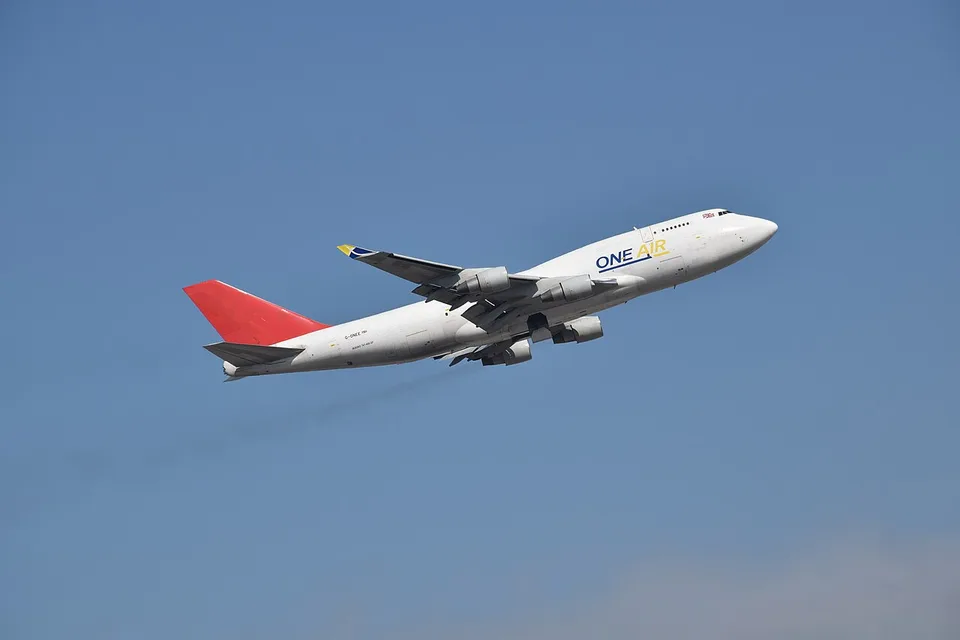
G-ONEE left Heathrow for Hong Kong but lost two AC electrical buses. With all pitot heating unavailable, the crew sought a diversion clear of icing. Rising cabin altitude prompted an earlier descent into cloud. Erroneous airspeed drove the autopilot nose-down before the probes cleared; the aircraft recovered and landed safely at Schiphol.
Read the full incident Follow what happened, from the flight to the investigation findings.
What investigators concluded
The AAIB traced the bus failures to water ingress into generator control units. It identified weakened water barriers and inadequate recurring inspection requirements. Multiple failures created a high workload without a specific combined checklist; the crew's resources and structured decisions helped prevent a more serious outcome.
What happened: rainwater, failed systems and an unreliable descent
1,621 words / about 8 minutes to read. Based on the investigation records cited below.
An open door in the rain
The cargo flight from Heathrow to Hong Kong on 8 February 2024 began with water on the floor near the forward entrance. During maintenance overnight, the Boeing 747's left forward L1 door had remained open. Moderate rain had fallen for two hours before maintenance ended at 07:00, while an easterly wind blew toward the doorway. When the flight crew boarded around 06:15, they noticed water on the entrance mat and the surrounding floor.
G-ONEE was a freighter version of the Boeing 747-400, but no cargo was on board for this sector. Five crew members were aboard and there were no passengers. The pilot arrangement included a training captain flying from the right seat, a trainee captain monitoring from the left seat and a safety pilot in the jump seat. That third pilot later provided another resource as the failure sequence grew more complicated.
Water on a freighter's cargo deck should not automatically result in damage to the equipment below it. The deck is designed as a wet area, since pallets and containers can bring in rain or snow. Layers of sealing, tape, drainage and a drip shield are intended to keep that water away from electrical equipment in the Main Equipment Centre beneath the deck. The incident exposed weaknesses in those layers.
The investigation eventually identified rain entering through the open door as the only identifiable water source. It did not identify one continuous, proven path from the wet floor to the failed equipment. Missing sealant around the entrance mat, compromised waterproof tape and defects in the drip shield supplied possible routes. The distinction matters: the failure was traced to water in the generator control units, while the exact journey of that water remained unresolved.
During the takeoff roll, after the decision speed, the first electrical-system messages appeared. In the initial climb, failures affecting AC electrical system 4 produced multiple messages on the engine-indication and crew-alerting display. The autothrottle disconnected and was unavailable. The lateral and vertical navigation modes normally used with the flight-management computer also became unavailable.
The crew continued along the departure using more basic heading and flight-level-change modes. Once the after-takeoff checks were complete, they analysed the large number of messages and applied the procedure for AC Bus 4. About four minutes after the commander told air traffic control there was an electrical problem, AC Bus 1 also lost power. The second failure changed the event from a single-bus problem into a combination for which the quick-reference handbook did not provide one dedicated procedure.
Bus 4 could be restored manually three times over the following twenty minutes, but each recovery was temporary. It eventually remained unpowered for the rest of the flight. The electrical failures affected many connected systems and generated a succession of alerts. Radio recordings captured occasions when the crew could not answer calls, evidence of the workload during departure.
The pilots declared Pan and levelled above cloud at Flight Level 250 to assess their options. They used the operator's structured decision process and the available crew resources. The AAIB later regarded that approach, including the contribution of the third pilot, as important to managing the complex situation. Continued flight to Hong Kong was no longer the plan. Their next task was to select a landing airport while identifying which apparently separate failures shared the same electrical origin.
One consequence of losing both AC buses was especially important for the diversion: all pitot-probe heating was unavailable. Pitot probes provide pressure information used to calculate airspeed. If those unheated probes iced up, the captain's, first officer's and standby airspeed indications could all become unreliable. A third indication would not necessarily provide an independent escape from the problem.
The handbook procedures warned the crew to avoid icing. The commander asked air traffic control for airports within about ninety minutes that offered the best prospect of clear-air descent and arrival. Schiphol's reported weather was favourable, and another crew confirmed that there was no cloud below 6,000 ft. Its long runways also offered useful landing options for a large aircraft.
The Boeing's takeoff weight had been 299 tonnes. When the diversion was selected, its weight was approximately the 290-tonne maximum landing weight. The pilots considered weather and landing distance at the candidate airports, rather than choosing only on geographical proximity. They wanted to land as soon as practicable because, after the repeated failures, they were uncertain what might fail next.
At Flight Level 250 they began preparing for unreliable airspeed during descent. The normal immediate actions would tend to maintain level flight or climb. The crew wanted to descend out of icing, so the safety pilot used the handbook's performance tables to identify settings for that task: approximately level pitch and idle thrust. Those values were for this aircraft's weight and circumstances, not general instructions for other aircraft. The planning was then interrupted by another developing problem, a rising cabin altitude.
The cabin-altitude indication appeared in amber as the cabin climbed through 8,600 ft. The commander initiated descent to avoid reaching the altitude where oxygen-mask use would add another complication. Cabin altitude then began to reduce. The AAIB considered the earlier rise probably related to a stuck outflow valve and a change in pack flow, both in the context of the electrical failures.
As the aircraft descended through approximately 12,000 ft, it entered icing conditions. All three displayed airspeeds began to fall. The autopilot remained engaged in flight-level-change mode, which controls pitch to maintain the selected speed. Responding to the falsely low indication, it pitched the nose down. A falling indicated speed did not mean the aircraft's actual speed was falling in the same way.
Around this period the commander had temporarily passed the flying task to the other pilot while checking route information in the flight-management computer. The commander recognised the increasing nose-down attitude and alerted the handling pilot. Thrust was increased, but the frozen probes continued to produce decreasing indicated speed. The autopilot's response therefore steepened rather than stabilised the descent.
The recorded pitch reached 7.6 degrees nose-down, with a descent rate of 6,240 ft per minute. The pilots recalled an airspeed-disagree indication and said they were about to intervene. Before that further intervention, the aircraft descended out of the icing layer near 10,000 ft and the probes cleared. Correct airspeed returned abruptly. The autopilot then pitched up, while the crew reduced thrust to idle. The change restored the flight path, but the aircraft had already accelerated into an overspeed.
The event resulted in an 18-knot overspeed. The crew had watched indicated airspeed decrease and then rise abruptly, so their confidence in the indications was damaged. The AAIB records that they did not use the speedbrake to help slow the aircraft, choosing instead to monitor the autopilot's corrective pitch response. The overspeed lasted 55 seconds before speed fell below the maximum operating speed.
The commander declared Mayday as the instrument reliability and associated hazards deteriorated. The aircraft broke out of cloud at about 6,000 ft and remained in clear air for the remainder of the flight. That removed the immediate icing exposure, but did not restore the electrical buses or remove the need to manage the remaining failures.
Schiphol offered Runway 06 instead of the main landing runway in use, 36R. As the pilots configured the aircraft, a flap-drive caution appeared. They completed another checklist and calculated the landing distance for the resulting higher landing speed. Air traffic control provided vectors to give them time to finish those preparations and then positioned the aircraft for Runway 06.
The landing was uneventful and G-ONEE taxied to a parking bay, where engineers began investigating. No crew injuries or aircraft damage were reported. A successful landing does not reduce the event to an ordinary technical diversion: two electrical-bus failures had removed critical systems, a pressurisation issue had driven an earlier descent, and misleading airspeed had produced a substantial unintended vertical deviation. The crew still had to solve the flap problem before landing. Those interacting failures are central to why the AAIB classified it as a serious incident.
Examination of generator control units 1 and 4 found that water had caused them to command electrical contactors open, isolating their associated buses. Investigators found deficiencies above the equipment racks, including a missing screw in a cargo power-drive unit, compromised floor tape, cracks and holes in the drip shield and weakened sealant around brackets and cover plates. Moisture-barrier curtains that should have been fitted were also absent, although they would not have covered every possible entry path.
Earlier water-ingress events had already led to protective modifications, including a reinforced drip shield. What was missing was a requirement to revisit those protections through repetitive inspections. A general inspection from standing height could miss small sealing defects, and some screws could only be examined by moving the power-drive unit. Protection that was installed once could degrade without a focused recurring check.
The AAIB made four recommendations: two concerning recurring inspection of the drip shield and two concerning detailed inspection of the floor seals, waterproof tape, drive units and entrance mat near the Main Equipment Centre. They were addressed to Boeing and Israel Aerospace Industries for the relevant freighter variants. Recommendations are proposals recorded in the report; their presence is not proof of later fleet-wide implementation.
The operator issued a weather-related technical notice the day after the incident. The conversion manufacturer later reminded operators about leakage-protection service bulletins. The report also retained an important operational lesson: unreliable airspeed can become particularly difficult when several other systems are failing. The crew's preparation and resources helped, but agreed limits for autopilot pitch and a defined intervention point might have reduced the excursion. That is the investigator's qualified assessment, not a claim that one alternative action guarantees a particular outcome.
A simplified reading of the investigation findings. The sequence does not replace the full report or imply that every contributing factor is shown.
Sequence of events
UTC. Report event time 08:13; the sequence uses flight phases where exact clock times are not stated in the prose. Expand an event to see its evidence.
Before departureL1 door left open during rainfall; crew sees water near entrance
L1 door left open during rainfall; crew sees water near entrance.
The report describes electrical and instrument failures, not a loss of engine thrust. The steep descent developed because the autopilot responded to erroneous airspeed.
Actions and recommendations are described at the dates of the cited records. A recommendation is not proof of implementation.
Four recurring-inspection recommendations
The AAIB recommended recurring drip-shield and detailed floor-area inspections to Boeing and Israel Aerospace Industries. These are recommendations, not proof of completed fleet-wide action.
The operator issued a technical notice the day after the event, covering door closure, measures to reduce water ingress, inspection and technical-log entries.
These comparisons connect specific research topics. Shared circumstances do not establish identical causes. Evidence from both investigations is provided below.
Both investigations explain how icing can make airspeed information unreliable and disrupt automatic flight. G-ONEE involved unheated probes, a descent and an autopilot that remained engaged; the AF447 report describes likely pitot obstruction, autopilot disconnection and an unidentified stall. Shared airspeed uncertainty does not imply identical causes or outcomes.
Explore the records below for additional context. They open on the publisher's site and are not all included in our report search. Source reuse terms apply.
Authority publication record. Later revisions should be checked here.
Sources and transparency
Checked against the original final report. This account has not had independent expert review.
Source limitations
The exact water path could not be determined. Cockpit recording ceased about 19 minutes after departure, limiting reconstruction. The FDR predominantly sampled captain-side instruments. The operator is not named in the report, and this account does not infer its identity from a photograph.
AAIB final report: G-ONEE
AAIB Official final report, released 3 September 2026
Official report PDF, hosted by assets.publishing.service.gov.uk
Limited quotations for source-based commentary. Full report and illustrations are not republished. Wider reuse requires checking BEA terms. Source terms / provenance.
Kevin Murphy writes the incident accounts on AirlineIncidents.com, out of a long interest in aviation safety and the lessons each investigation leaves behind.
Prepared by
AirlineIncidents editorial desk
Report citation check
Independent expert review
Not completed
Citation checks compare supporting text with the indexed report pages. They do not constitute independent expert review. How these pages are prepared.
Revision history
: Published sourced incident account, timeline, photographs and investigation findings.
.jpg)