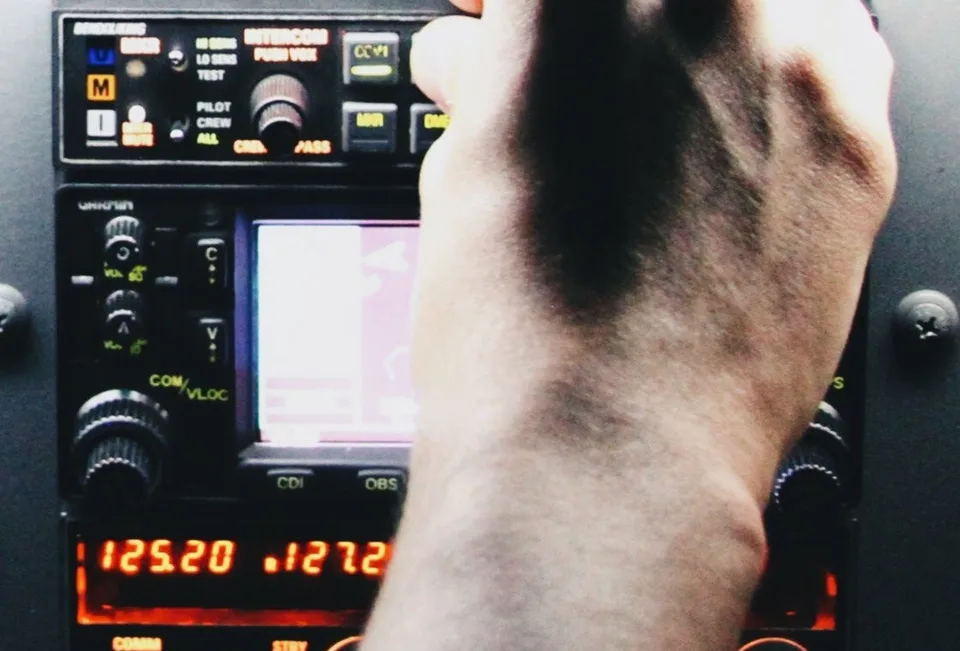
A runway inspection vehicle escaped onto a taxiway about five seconds before a departing cargo aircraft rotated nearby. Radio clarity and incomplete visual checks left neither participant aware of the conflict.
Embedded cover JPEG extracted from the report; retained without cropping. Responsive WebP copies resized without cropping.
Geographic context
Mackay departure
Brisbane intended destination
Schematic approximate airport markers, not a recorded flight track or navigation chart. Route names are documented in the report. Basemap: Natural Earth, public domain.Read supporting evidence
A runway inspection vehicle escaped onto a taxiway about five seconds before a departing cargo aircraft rotated nearby. Radio clarity and incomplete visual checks left neither participant aware of the conflict.
Read the full incident Follow what happened, from the flight to the investigation findings.
What investigators concluded
ATSB found poor radio broadcasts, lack of runway confirmation after an unidentified light, and incomplete scanning and listening by the vehicle driver contributed. Separate safety issues concerned electronic-device guidance and formal assessment of non-controlled-airport hazards.
1,611 words / about 8 minutes to read. Based on the investigation records cited below.
The departure that slipped beyond tower hours
On the evening of 12 November 2025, a Sharp Airlines Fairchild SA227-DC was due to fly scheduled freight from Mackay to Brisbane. The aircraft, registered VH-HPE, carried a single pilot and no passengers. Its planned departure was 19:55 local time, but the flight plan had been inadvertently cancelled. The pilot had to resolve the problem with Mackay Tower and resubmit details. The resulting delay of around thirty minutes changed the setting for the departure: by the time the aircraft was ready, the tower had closed.
Mackay was then operating on a common traffic advisory frequency, or CTAF. Rather than receiving runway instructions from a tower controller, pilots and authorised vehicle drivers used radio broadcasts and visual checks to coordinate their movements. The pilot selected the Mackay CTAF on the aircraft's second communications radio and kept Brisbane Centre on the first. That division let the pilot monitor local movements and obtain air traffic information, but it also meant two streams of broadcasts could be heard during the preparation for takeoff.
At the same time an airport safety officer was waiting in a vehicle, callsign Car 1, near the runway. The driver intended to inspect the runway after another scheduled aircraft had departed and before a later arrival. Sharp's delay made its departure less consistent with the driver's expectations. No accident had yet occurred, but the pilot and driver were about to use the same runway without sharing an accurate picture of each other's position. The investigation would trace that breakdown through radio clarity, visual attention, electronic-device use and organisational procedures.
The aircraft taxied from the western general aviation apron towards runway 14. A review of the recordings found that the pilot's taxi broadcast was barely audible. It also contained incorrect information, including a wrong flight number and holding point, and did not identify Mackay at the start. The pilot later broadcast that the aircraft was entering and backtracking the runway. That call was also difficult to hear. Meanwhile, Car 1 remained at the Bravo holding point for about five minutes while the aircraft moved to the departure threshold.
The driver heard the preceding aircraft's departure call but did not see Sharp enter and backtrack the runway. The driver had opened a runway-inspection form on a company-issued iPad before entering. The ATSB found evidence that the form was opened one second before Sharp's lining-up call on the Brisbane Centre frequency. It considered distraction from the device possible, while also accounting for the driver's expectation that Sharp would not be departing at that time. The finding does not require inventing exactly where the driver was looking at every instant.
At 20:29:45, Sharp's pilot told Brisbane Centre that the aircraft was lining up on runway 14 at Mackay. That transmission was audible despite the wrong flight number. A little later the pilot broadcast on the CTAF that the aircraft was rolling, then worked through a six-item line-up checklist. During the checklist a flash of light appeared at the other end of the runway. The pilot paused to identify it but could not determine its source. Having lost track of which checklist items were complete, the pilot restarted the checklist instead of confirming on the radio whether something was on the runway.
At 20:30:21, as the aircraft's engine power increased, Car 1's driver broadcast that the vehicle was entering runway 14. Recordings showed that this transmission was of good quality. The pilot did not hear it. Around twenty seconds later the vehicle crossed the holding point, and about ten seconds after that the aircraft began moving. The driver was now inspecting the runway while the aircraft accelerated towards the same area. Neither had identified the conflict before entering this stage of the sequence.
The driver subsequently saw a light but initially wondered whether it belonged to a vehicle on a road behind the runway threshold. That uncertainty was not resolved with a radio call. As the inspection vehicle approached the area between the Bravo and Juliet taxiways, the driver recognised the approaching aircraft. CCTV showed a noticeable increase in the vehicle's speed. The driver moved towards the runway edge, accelerated and headed for the Juliet exit. The conflict had moved from a planning and communication problem to an immediate physical escape.
The pilot reported seeing two lights as the aircraft passed approximately 100 knots. They blended with the runway edge lights and were hard to distinguish. The pilot only realised they were vehicle headlights as rotation approached and the vehicle was leaving the runway. About five seconds after Car 1 exited, the aircraft rotated adjacent to that taxiway. The aircraft then departed without contact or damage, and the pilot and driver exchanged clear radio calls about what had happened. There were no injuries, but this was a near collision during a high-speed takeoff, rather than routine low-speed contact on an apron.
The ATSB examined recordings from the airport and rescue-service receivers, Brisbane Centre communications, the aircraft's flight data recorder and CCTV. The cockpit voice recording was not obtained because it would have been overwritten. Those sources supported the sequence of calls and movements but did not provide an uninterrupted recording of everything heard or said inside the cockpit. The investigation therefore combined physical recordings with the pilot's and driver's accounts, qualifying conclusions where the evidence did not settle them.
The Metroliner had two VHF antennas: one on top of the aircraft and one underneath. The second radio used the underside antenna. Broadcasts made from the ground using that radio were difficult to understand, while those made after the aircraft became airborne were clear. The ATSB concluded that the ground-facing antenna reduced signal strength through shielding by the aircraft. Rapid speech and non-standard phraseology added to the problem. No fault was subsequently reported with the second radio or its antenna, so the findings did not reduce the incident to a broken radio.
The driver's entering-runway broadcast was clearly recorded, yet that did not establish that it reached the pilot with the same clarity. Reception through the lower antenna was likely reduced, and concurrent traffic on the Brisbane Centre frequency added another stream of information. The pilot confirmed being able to hear both frequencies simultaneously. On the driver's side, transmissions were present but lacked clear, expected cues identifying Mackay. The investigation explains that poor clarity, competing attention and expectation could make relevant information fail to register. It retains 'likely' and 'possibly' because the actual processing of each call cannot be directly reconstructed.
The investigation's contributing factors addressed both participants. The pilot did not confirm that the runway was clear after the unidentified flash of light. The driver did not scan for aircraft ground movements or maintain a constant radio listening watch before entering an occupied runway. Possible iPad distraction and the expectation of a different departure time contributed to the ATSB's explanation of the driver's incomplete awareness. Neither finding means the safety system was simply absent. Calls were made, lighting was visible and each person had procedures, but those protections did not establish shared awareness before takeoff.
The organisational findings were separate from those immediate actions. Mackay Airport had provided iPads to safety officers for useful operational purposes, including forms and movement information. It had not given specific guidance to prevent unintended consequences such as distraction. Sharp Airlines had identified hazards at uncontrolled airports, but had not formally assessed known hazards in its risk register as required by its safety management system. Discussions in safety meetings were not supported by minutes or a formal evaluation trail.
Those issues matter because correcting one person's broadcast would not necessarily correct the underlying process. A device can assist a runway inspection while competing with the visual and listening tasks needed to enter safely. Likewise, discussing a known hazard does not establish that its severity has been assessed, that mitigation is documented or that different crews understand the same precautions. The ATSB classified these as other factors that increased risk, including safety issues, rather than presenting them as individually proven causes of the vehicle and aircraft reaching the same runway.
Sharp Airlines investigated the occurrence and issued an advisory stressing effective radio communication. It reviewed its risk register and introduced a procedure to document discussion of hazards in safety meetings. In response to the draft report, it also assessed antenna placement and radio selection during operations at uncontrolled aerodromes and incorporated that detail into the register. The ATSB welcomed those measures and recorded the corresponding safety issue as closed and adequately addressed at the time of publication.
Mackay Airport updated human-factors training, reviewed runway and taxiway procedures and checked the radios in its airside vehicles. Tests confirmed that those vehicle radios were fully functional. The safety issue concerning electronic-device use was also recorded as closed and adequately addressed. The report's justification describes prohibiting electronic devices while in vehicles on manoeuvring areas, alongside additional human-factors training and annual refresher training. These are the actions and assessments recorded in the final report, not a statement that this page independently audited later airport operations.
The central sequence ended in seconds: the driver recognised the aircraft, accelerated to the runway exit, and the aircraft rotated shortly afterwards. The report supports that narrow temporal margin without establishing a precise closest separation in metres or an unavoidable crash if one action had been delayed. That distinction preserves both the seriousness of the occurrence and the limits of the evidence. A scheduled cargo flight, no injuries and no damage can still belong in a collection of significant airline close calls when official evidence documents a runway near collision at takeoff speed. Here the final investigation explains how ordinary tasks and incomplete cues aligned, and how the two organisations responded.
Does five seconds give the exact collision margin?
No. It is the recorded interval between vehicle exit and nearby aircraft rotation, not a measured closest separation or a deterministic collision prediction.
Matching dossiers for Electronic-device distraction: No other dossier in this collection.
Read alongside
These comparisons connect specific research topics. Shared circumstances do not establish identical causes. Evidence from both investigations is provided below.
Both investigations illustrate why incomplete cues can matter close to a runway. Mackay involved an unseen vehicle during takeoff and radio coordination; Air Canada 624 involved an approach below the intended path and collision with terrain. The common research question is cue interpretation, not a shared accident cause.
Explore the records below for additional context. They open on the publisher's site and are not all included in our report search. Source reuse terms apply.
Prepared 7 October 2026 from the cited final investigation. Unpublished; editorial approval and independent expert review have not been completed.
Source limitations
No exact closest distance is established. Cockpit voice recording was overwritten; interpretations of attention and reception retain likely or possible wording. No injury or aircraft damage occurred.
Runway incursion and near collision involving Fairchild SA227-DC, VH-HPE, and an airport safety vehicle, at Mackay Airport, Queensland, on 12 November 2025
ATSB Official final report; cached original bytes and complete extraction checked 7 October 2026
Non-commercial excerpts, attributed to the TSB and linked to the original version. No TSB endorsement. Third-party illustrations excluded. The TSB terms page was unavailable during the final link check.
Kevin Murphy writes the incident accounts on AirlineIncidents.com, out of a long interest in aviation safety and the lessons each investigation leaves behind.
Prepared by
AirlineIncidents editorial desk
Report citation check
Independent expert review
Not completed
Citation checks compare supporting text with the indexed report pages. They do not constitute independent expert review. How these pages are prepared.
Revision history
: Published sourced incident account, timeline, photographs and investigation findings.