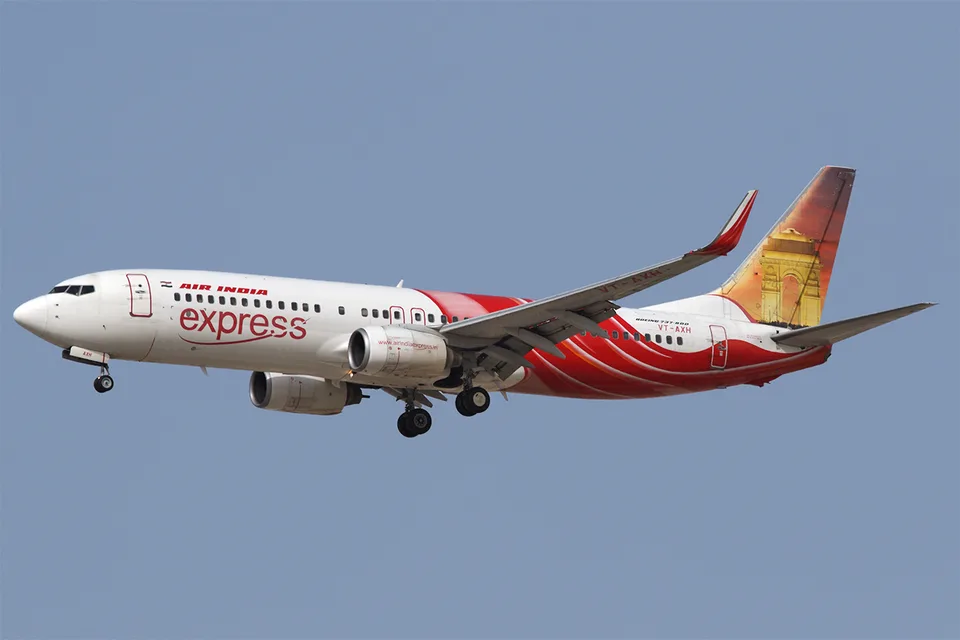
Air India Express Flight 1344 returned from Dubai with 190 people aboard. After a missed approach to runway 28, the crew accepted runway 10 in rain and tailwind. The approach became unstable, the aircraft crossed the threshold high and additional thrust prolonged its float. It touched down 4,438 feet into the 8,858-foot available landing distance. Reverse-thrust and braking interruptions reduced deceleration. The aircraft overran the runway and safety area, fell about 110 feet and broke into three sections on the perimeter road. Twenty-one people died and 169 survived.
Read the full incident Follow what happened, from the flight to the investigation findings.
What investigators concluded
The AAIB identified non-adherence to standard operating procedures as the probable cause: the captain continued an unstable approach and landed beyond the touchdown zone despite the first officer's go-around call, and the first officer failed to take over and execute the go-around. Contributory factors included poor crew resource management, training and supervision deficiencies, pressure from crew scheduling, inadequate landing-performance tools, inaccurate wind reporting and weaknesses in flight-data monitoring.
1,703 words / about 8 minutes to read. Based on the investigation records cited below.
A return flight in the monsoon
On 7 August 2020, Air India Express Boeing 737-800 VT-AXH flew a quick return rotation from Kozhikode to Dubai and back. The operation formed part of the Vande Bharat Mission, which repatriated passengers stranded overseas during the Covid-19 restrictions. The outbound flight left Kozhikode at 04:49 UTC and landed in Dubai at 08:11. The same two pilots and four cabin crew operated the return flight, AXB 1344. It departed Dubai at 10:00 UTC with 184 passengers, including ten infants.
The return sector was uneventful until the approach to Kozhikode. The captain was flying and the first officer was monitoring. Weather obtained before descent showed rain and low visibility at the destination. Fuel had been planned for the more distant alternate of Tiruchirappalli. The captain selected Cochin as the diversion alternate during the briefing, and the flight had enough fuel for 30 minutes of holding over Kozhikode.
At 13:19 UTC, area control passed visibility of 1,500 metres in moderate thunderstorm and rain, with winds from 270 degrees at 14 knots and runway 28 in use. The required visibility for an instrument landing system approach to either runway was 1,300 metres. The crew briefed runway 28 but omitted a contingency for a runway change and the mandatory landing-distance calculation. They selected flap and autobrake settings without verifying the distance required under the prevailing conditions.
The airport was under concurrent warnings for thunderstorms with rain and wind exceeding 17 knots. Airport fire tenders moved to predetermined standby positions. Flight 1344 was cleared for the runway 28 instrument approach at 13:44 UTC. The tower later cleared it to land, reporting 2,000 metres visibility with a decreasing trend, light rain, a wet runway and winds from 280 degrees at five knots.
The crew selected the windshield wipers at about 13:50:41 UTC. The captain's wiper operated for approximately 27 seconds and stopped. The approach continued to decision altitude, where the crew could not see the runway. At 13:52:39 UTC they executed a missed approach, using a previously agreed clearance to avoid surrounding cumulonimbus clouds. The first officer subsequently reported weather and heavy rain as the reason to the tower.
The crew began preparing for another approach to runway 28. At about the same time, a departing Air India flight requested runway 10. The controller accepted that request and offered runway 10 to Flight 1344. After repeated enquiries about wind, visibility and cloud, the captain accepted. The aircraft levelled at 7,000 feet instead of continuing its cleared climb to 10,000 feet.
The crew did not discuss diverting after the wiper stopped. Company procedures required a diversion to an airfield with no reported or forecast rain when the captain's wiper was unserviceable during monsoon operations. The AAIB identified Coimbatore as the available alternate without rain at that time. The crew also omitted a fresh landing-distance calculation for runway 10, where the wind direction now produced a tailwind.
The second approach was rushed. At 14:01:32 UTC the controller cautioned the crew that they had passed 25 nautical miles from the airport navigational beacon without turning inbound as instructed. The aircraft reached 27.5 nautical miles during the turn. It established on the runway 10 localiser at about 14:06 and captured the glideslope at 14:07:59. The tower cleared it to land at 14:08, reporting 2,000 metres visibility in light rain, a wet runway and winds from 250 degrees at eight knots.
The crew remained concerned about the captain's wiper. On the second approach it worked at a speed lower than selected. They chose flaps 30 after discussing turbulence, although monsoon procedures favoured flaps 40 to reduce landing distance. The AAIB considered the turbulence concern justified but criticised the delayed configuration and the lack of a landing-performance assessment.
The selected approach speed was 150 knots, six knots above the recorded reference speed. About 40 seconds before touchdown the autopilot was disconnected, while autothrottle remained engaged. The pitch attitude decreased and the descent rate rose, momentarily reaching about 1,500 feet per minute. The first officer twice cautioned the captain about the descent rate. The aircraft reached 1.7 dots below the glideslope, and two glideslope cautions sounded at 14:09:58 UTC.
The captain increased pitch and thrust. Descent rate initially decreased and then increased again. Company criteria required a missed approach once the approach became unstable below the applicable gate. The captain continued towards landing. The AAIB also found that keeping autothrottle engaged for this manual landing violated the company procedure at Kozhikode.
Flight 1344 crossed the runway 10 threshold at 92 feet radio altitude, above the intended crossing height of 50 feet. Ground speed at the threshold was approximately 169 knots. During the final seconds of flight the captain manually increased thrust, overriding autothrottle commands to reduce it. At about 1,363 feet beyond the threshold and 20 feet radio altitude, engine fan speed reached 83% N1. The additional thrust arrested the descent and prolonged the float above the runway.
Seven seconds before touchdown, when the aircraft was about 2,500 feet beyond the threshold, the first officer made a non-standard caution. Three seconds before touchdown, after the aircraft had passed the end of the touchdown zone, he again tried to attract the captain's attention. Less than a second before touchdown he called for a go-around. The captain continued landing. The first officer did not take over the controls.
The aircraft touched down at about 14:10:25 UTC, after a float of 16 seconds. The touchdown point was approximately 4,438 feet beyond the threshold on the declared landing distance of 8,858 feet. Computed airspeed was about 150 knots and ground speed about 165 knots. The available landing distance was 2,700 metres, shorter than the full physical pavement because part of the pavement had been assigned to the runway end safety area.
Tailwind estimates varied across the reconstruction. The synopsis gives a 15-knot component, and recorder analysis found 16 knots at 30 feet radio altitude. The airline's limit for landing with a tailwind was ten knots. The AAIB found that the actual tailwind was substantially stronger than the wind reported by the tower. The runway 10 sensor was installed in a non-standard valley location and had suffered recurring breakdowns.
Immediately after touchdown, the captain applied manual braking, overriding autobrake setting 3. The automatic speedbrakes were fully deployed after about 1.2 seconds. The first officer called out the speedbrake deployment and autobrake disarming. The captain did not acknowledge those calls. The thrust reversers were commanded to deploy about three seconds after touchdown and became deployed about two seconds later.
The first reverse-thrust application lasted only about two seconds before the captain stowed the reversers. At approximately nine seconds after touchdown, commanded left brake pressure briefly fell to about 570 psi, then increased again towards full pressure. The reduction and reverser stowage reduced deceleration. Reverse thrust was selected again about 14 to 15 seconds after touchdown, with maximum reverse commanded as the aircraft approached the runway end. The reversers were stowed again with engine fan speed still high.
The aircraft crossed the declared runway end at about 84.5 knots. It continued through the safety area, struck lighting and localiser equipment, broke a fence and fell down the embankment. The descent carried it approximately 110 feet below runway elevation. Impact with the perimeter road split the fuselage into three sections and separated both engines. Fuel escaped from the wing tanks, but there was no post-impact fire.
The AAIB found the braking and reverse-thrust systems serviceable. A failed right brake-pressure transducer produced a constant recorder value; testing and the aircraft's behaviour supported normal brake-system operation. Investigators found adequate tyre contact and no hydroplaning. Their mathematical modelling showed that a touchdown at 4,438 feet under the prevailing tailwind and runway conditions left insufficient declared runway for a stop or a safe missed approach after touchdown. Some improved braking scenarios ended within the additional paved or soft safety area.
Security personnel at the nearby airport gate and local civilians began assisting passengers. Off-duty security staff also joined the effort. The first airport fire tender reached the wreckage at 14:18 UTC. Crews sprayed foam to reduce the risk of fire and rescued people from the ground and wings. Taxis, ambulances and other vehicles carried injured occupants to hospitals.
The broken aircraft trapped some passengers in their seats. Rescuers used cutting equipment to free them. In the cockpit, impact damage left little space around the pilots. Security personnel and civilians gained access through the damaged nose, but difficulty releasing the pilots' harnesses delayed extrication. The pilots were removed after almost an hour. The AAIB found that airport rescue crews lacked Boeing 737 familiarisation training and had not guided the rescuers in opening cockpit exits or releasing the harnesses.
Rescue operations ended at 16:45 UTC. Nineteen passengers and both pilots died, including three passengers who later succumbed to injuries in hospital. The final injury table records 76 serious injuries, 34 minor injuries and 59 uninjured occupants. There were 169 survivors. The AAIB found that rescue lacked an effective command post and coordination, and that the narrow perimeter road impeded emergency access. Similar shortcomings had been identified during an emergency exercise in November 2019.
The AAIB identified the captain's continuation of the unstable approach and long landing, despite the go-around call, and the first officer's failure to take over and execute a go-around as the probable cause. Poor crew resource management and a steep authority gradient were major contributory factors. The investigation also linked the captain's motivation to return to Kozhikode to an assignment to fly the following morning. Only one captain was permanently based there against 26 first officers.
The report identified wider weaknesses in training, supervision, simulator maintenance and landing-performance support. Portable electronic flight bags lacked the required performance application, and monitoring did not reliably identify long landings. The AAIB recommended more effective go-around and adverse-weather training, stronger first-officer assertiveness, reliable simulator standards, improved performance tools and complete flight-data monitoring.
Recommendations for the airport and supporting agencies covered aircraft familiarisation for rescue crews, maintenance of the safety area, a wider perimeter road and better wind and visibility measurement. The wind-measuring unit was replaced in May 2021 after further failures. The AAIB also recommended regulatory monitoring of long landings, revised exceedance limits, competency-based training and consideration of runway-overrun alerting systems.
Following autopilot disconnection, the descent rate increased and the aircraft deviated 1.7 dots below the glideslope. The required go-around was not flown.
A simplified reading of the investigation findings. The sequence does not replace the full report or imply that every contributing factor is shown.
Sequence of events
UTC. Indian Standard Time is UTC plus 5 hours 30 minutes. Touchdown was at about 14:10:25 UTC, or 19:40:25 IST. The report gives the accident time as 14:11 UTC. Expand an event to see its evidence.
10:00Departure from Dubai
Flight AXB 1344 departed for Kozhikode with 184 passengers and six crew after the same crew had flown the outbound sector.
The tower changed the runway in use following another aircraft's departure request. Flight 1344 accepted runway 10 after asking about winds and visibility.
About 14:10:09 to 14:10:25High crossing and prolonged float
The aircraft crossed the threshold at 92 feet. Additional thrust reached 83% N1 and prolonged the float. The first officer called for a go-around less than a second before touchdown.
The approach had become unstable below the company gate. Company procedures also required a go-around once either pilot called for it, with the monitoring pilot taking control if the flying pilot failed to respond.
About 4,420 feet of the 8,858-foot declared landing distance remained after touchdown at 4,438 feet. The runway end safety area extended beyond the declared runway.
Testing found the braking and deceleration systems serviceable. Tyre contact and inspection evidence led the AAIB to conclude that hydroplaning had not occurred. The failed right brake-pressure transducer affected the recorded pressure value.
The synopsis gives about 15 knots at touchdown, while recorder analysis found 16 knots at 30 feet radio altitude. The company limit was ten knots. The AAIB found the reported surface wind was lower than the actual wind experienced.
Modelling found that the aircraft could not stop within the declared runway under the prevailing conditions. Some improved braking scenarios stopped in the additional paved or soft safety area; scenarios reproducing the actual reverser and braking sequence exceeded the total runway, strip and safety-area distance.
Twenty-one people died: both pilots and 19 passengers. The final table records 76 serious injuries, 34 minor injuries and 59 uninjured occupants. There were 169 survivors.
The AAIB concluded from cockpit recordings that the captain's wiper stopped on the first approach and ran below the selected speed on the second. Post-accident component and wiring tests were satisfactory, and wiper operation was not recorded by the flight-data recorder.
The AAIB considered that multiple unprescribed diabetes medicines could probably have caused subtle cognitive deficits through mild hypoglycaemia. It also identified possible visual illusions from degraded visual cues and the wiper's sub-optimal performance.
The AAIB could not clearly identify the reason for the first missed approach from the cockpit recording. It considered drifting low cloud, rain, the wiper malfunction and the short approach-light system as probable factors affecting runway visibility.
Impact damage and rescue activity affected the controls. Investigators resolved discrepancies in thrust-lever, speedbrake and flap positions using recordings, surface measurements and component examination.
Actions and recommendations are described at the dates of the cited records. A recommendation is not proof of implementation.
Training and performance support
The AAIB recommended simulator scenarios for wet-runway tailwind landings, extended flares and first-officer takeover when a captain fails to respond to a go-around call. It also recommended the onboard performance application for accurate landing calculations.
Recommendations called for full flight-data downloads and monitoring, corrective training, technical training for recorder analysts and regulatory monitoring of long landings.
The AAIB recommended aircraft familiarisation for rescue crews, adequate maintenance of the runway end safety area, a perimeter road wide enough for emergency vehicles and formal training for airport doctors in accident response.
After recurring failures, the runway 10 wind-measuring unit was replaced in May 2021. The AAIB recommended compliant sensor installation, regular maintenance, a tower meteorological officer during adverse weather and automatic weather and runway-visual-range systems.
The AAIB recommended aircraft-specific operational risk assessments for critical runways, consideration of runway-overrun alerting systems and installation of centreline lighting at Kozhikode and Mangalore within the identified recarpeting schedules.
The AAIB found poor crew resource management, a steep cockpit authority gradient and ineffective training. The first officer called for a go-around but did not take over the controls.
Matching dossiers for Tailwind on a wet runway: No other dossier in this collection.
Crew actionInterrupted deceleration
The captain stowed reverse thrust before it became effective and briefly eased braking. These actions reduced deceleration and increased the distance required to stop.
Matching dossiers for Interrupted deceleration: No other dossier in this collection.
Contributory factorSurface-wind reporting
The runway 10 wind sensor was installed in a non-standard location and suffered recurring breakdowns. Reported winds understated the tailwind experienced by the aircraft.
Matching dossiers for Emergency response: No other dossier in this collection.
Read alongside
These comparisons connect specific research topics. Shared circumstances do not establish identical causes. Evidence from both investigations is provided below.
Further investigation records
Explore the records below for additional context. They open on the publisher's site and are not all included in our report search. Source reuse terms apply.
Kevin Murphy writes the incident accounts on AirlineIncidents.com, out of a long interest in aviation safety and the lessons each investigation leaves behind.
Prepared by
AirlineIncidents editorial desk
Report citation check
Independent expert review
Not completed
Citation checks compare supporting text with the indexed report pages. They do not constitute independent expert review. How these pages are prepared.
Revision history
: AAIB final investigation report, signed 17 August 2021.