LEVEL 3 Final report

Based on the investigation authority's final report.

Date
Show source
Occurrence
Turbulence encounter
Location
Atlantic Ocean during descent to Palm Beach
Show source
Operator
JetBlue Airways Corp
Show source
Aircraft
Airbus A320-232
Show source
Registration
N605JB
Show source
Route
Islip (ISP) to West Palm Beach (PBI)
Show source
People aboard
164: 158 passengers and 6 crew
Show source
Fatalities
0
Show source
Survivors
164, everyone aboard
Show source
Topics
Weather information, Convective turbulence

This photograph is cropped for the banner. See the full photograph, credit, licence and what it shows.

Photographs and geographic context

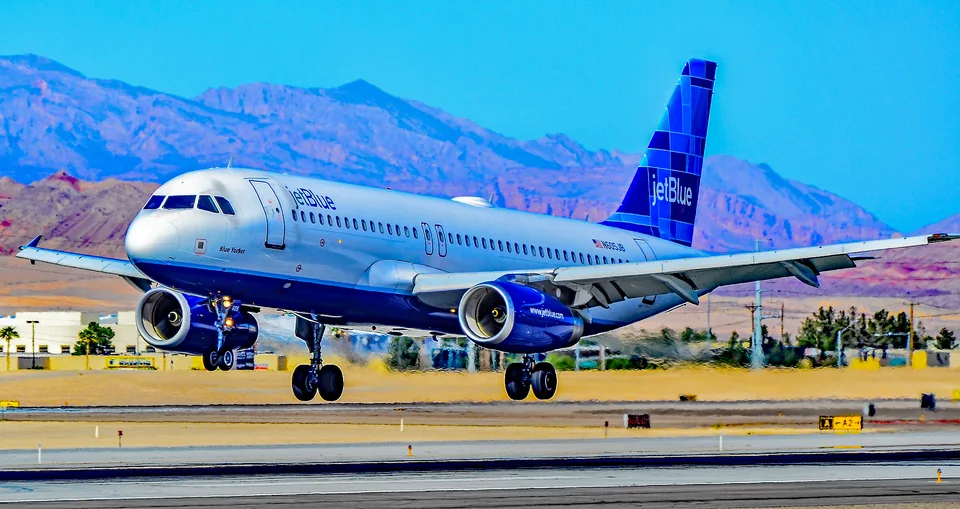
JetBlue Airbus A320-232 N605JB at Las Vegas in 2011

JetBlue A320 N605JB at Las Vegas in May 2011.

Photo: Tomás Del Coro from Las Vegas, Nevada, USA, CC BY-SA 2.0

Image info

N605JB photographed at Las Vegas on 5 May 2011, before the turbulence accident.

Image source

Original photograph displayed with its full frame. Responsive WebP copies resized without cropping.

Geographic context

Geographical orientation for JetBlue 1245Islip, Long Island MacArthur Airport; Estimated turbulence encounter; Palm Beach International Airport. The flight was descending from Islip toward Palm Beach. The ocean marker uses the NTSB estimated accident coordinates; airport markers show geographic context.123NORTH UP / SCHEMATIC / NOT A RECORDED FLIGHT TRACK
  1. Islip, Long Island MacArthur Airport
  2. Estimated turbulence encounter
  3. Palm Beach International Airport
The flight was descending from Islip toward Palm Beach. The ocean marker uses the NTSB estimated accident coordinates; airport markers show geographic context. Basemap: Natural Earth, public domain.
Read supporting evidence

What happened

The A320 entered a small cloud layer at about 7,000 to 9,000 feet. Flight attendants were securing the galley after arrival checks when one aft attendant was thrown to the floor.

Read the full incident Follow what happened, from the flight to the investigation findings.

What investigators concluded

The NTSB found that turbulence caused serious injuries to a flight attendant who remained unseated because of arrival compliance checks.

Evidence behind this explanation

JetBlue 1245: turbulence on descent to Palm Beach

706 words / about 4 minutes to read. The official report for this event is short, so this account is shorter than most and covers only what the report documents.

A scheduled flight from Islip

JetBlue flight 1245 was operating a scheduled domestic passenger service from Long Island MacArthur Airport at Islip, New York, to Palm Beach International Airport at West Palm Beach, Florida, on 19 March 2026. The aircraft was an Airbus A320-232 registered N605JB. JetBlue Airways Corp was both its registered owner and its operator, and the flight was conducted under Part 121 air carrier rules.

The A320 had been manufactured in 2005 and carried serial number 2368. It had two IAE turbofan engines of the V2500 series. The flight plan and air traffic control clearance were both under instrument flight rules. The departure time was recorded as 16:23 UTC. There were 158 passengers and six crew members aboard, a total of 164 people. The first officer was flying the aircraft during its descent toward Palm Beach.

Both pilots held airline transport certificates and airplane instrument ratings. The captain occupied the left seat and the first officer the right; both used five-point restraints. The first officer also held flight instructor qualifications covering single-engine and multiengine airplanes and instrument flying. Both pilots held Class 1 medical certificates.

Sources for this section
JetBlue flight 1245: NTSB Aviation Investigation Final Report DCA26LA165Meteorological Information and Flight Plan | Printed page 4 | PDF page 4Find this passage in evidence search

Three seconds in a cloud layer

At 14:58 local time, the aircraft encountered turbulence over the Atlantic Ocean while descending into Palm Beach. The first officer described entering a small cloud layer at about 7,000 to 9,000 feet, followed by brief, sharp turbulence lasting approximately three seconds. In the cabin, the flight attendants had just finished their arrival compliance checks and were securing the galley when the turbulence occurred.

Two flight attendants were working at the rear of the cabin. One reported being thrown to the floor and then needing help from the other aft attendant to reach the jump seat. Both aft attendants described the turbulence as severe. The two attendants at the front of the aircraft also sustained injuries, which were classified as minor. One of the forward attendants contacted the flight deck and told the captain that emergency medical services would be needed at the gate because members of the cabin crew were injured.

Sources for this section

The weather information available

The captain and first officer said the onboard weather radar showed no significant returns when the aircraft encountered the turbulence. Afterward, the first officer reported the encounter to air traffic control. The controller advised that the air traffic control radar also showed no significant weather activity in that sector. The NTSB found that no significant meteorological information messages, convective SIGMETs or Center Weather Advisories covered the general arrival route into Palm Beach at the time.

There were also no relevant pilot reports available during flight 1245's descent. A later pilot report, made at about 15:30 local time, described severe turbulence at 2,000 feet during descent into Palm Beach. That report concerned an encounter at a lower altitude and was made after the JetBlue accident. The NTSB's findings identified convective turbulence affecting personnel and recorded meteorological knowledge issues for the cabin crew, flight crew and air traffic control personnel.

The airport weather observation at 14:53 local time recorded daylight, visibility of ten miles and wind from 350 degrees at 15 knots, gusting to 23 knots. Scattered cloud was present at 3,000 feet above ground, with a broken ceiling at 5,000 feet. The temperature was 23 degrees Celsius and the dew point 16 degrees, with an altimeter setting of 30.05 inches of mercury. No precipitation or obscuration was recorded. The report classified conditions at the accident site as visual meteorological conditions and recorded the actual turbulence as convective and severe.

Sources for this section
JetBlue flight 1245: NTSB Aviation Investigation Final Report DCA26LA165Meteorological Information and Flight Plan | Printed page 4 | PDF page 4Find this passage in evidence search

Landing and medical assessment

Flight 1245 continued to Palm Beach and landed without further incident. The aft flight attendant who had fallen was taken to a local hospital, where an evaluation found fractures to the pelvis and vertebrae. The final injury totals were one seriously injured crew member, two crew members with minor injuries and three uninjured crew members. All 158 passengers were uninjured. Everyone aboard survived.

The aircraft sustained no damage, and there was no fire or explosion. The NTSB recorded an estimated accident position of 27.273011 degrees north and 79.812 degrees west in the Atlantic Ocean. Its probable cause finding linked the turbulence encounter to the serious injury sustained by the attendant, who was still unseated because of the arrival compliance checks. The NTSB completed the investigation and published final report DCA26LA165 on 16 July 2026.

Sources for this section

Return to the short summary / Source status and limitations

How the sequence developed

Follow the main stages, then open the evidence beneath each step.

  1. Arrival cabin work

    Flight attendants had completed compliance checks and were securing the galley during descent.

    Read supporting evidence
  2. Brief sharp turbulence

    The first officer described approximately three seconds of turbulence after entry into a small cloud layer.

    Read supporting evidence
  3. An attendant thrown to the floor

    An aft flight attendant fell and needed help getting to the jump seat. Hospital evaluation identified a fractured pelvis and vertebrae.

    Read supporting evidence

A simplified reading of the investigation findings. The sequence does not replace the full report or imply that every contributing factor is shown.

Sequence of events

Times are local as stated in the NTSB report, except the departure time, which is UTC. Expand an event to see its evidence.

  1. 16:23 UTCDeparture from Islip

    The scheduled passenger flight departed Islip for West Palm Beach under instrument flight rules.

    JetBlue flight 1245: NTSB Aviation Investigation Final Report DCA26LA165Meteorological Information and Flight Plan | Printed page 4 | PDF page 4Find this passage in evidence search
  2. 14:58 localTurbulence during descent

    The first officer reported sharp turbulence lasting about three seconds after entry into a cloud layer at 7,000 to 9,000 feet.

  3. During the encounterCabin crew injured

    One aft flight attendant was thrown to the floor. Two forward flight attendants sustained minor injuries.

  4. After the encounterMedical assistance requested

    A forward flight attendant told the captain that emergency medical services were needed at the gate.

  5. Arrival and hospital assessmentSafe landing at Palm Beach

    The aircraft landed without further incident. Hospital evaluation identified fractures to the aft attendant's pelvis and vertebrae.

  6. 16 July 2026Final report published

    The NTSB completed its investigation as a Class 4 case.

Search the report evidence

Search extracted report prose, with original page references. Short results link to the full document.

Questions readers ask

How was the flight attendant seriously injured?

An aft flight attendant was thrown to the floor during the turbulence and needed help reaching the jump seat. Hospital assessment found fractures to the pelvis and vertebrae.

Why was the injured attendant still unseated?

The NTSB linked the serious injury to turbulence encountered while the attendant remained unseated because of arrival compliance checks. The attendants had just completed the checks and were securing the galley.

Where did the aircraft encounter turbulence?

During descent into Palm Beach, the aircraft entered a small cloud layer at about 7,000 to 9,000 feet. The first officer described approximately three seconds of sharp turbulence.

What the evidence can and cannot establish

Available weather warning

No relevant pilot reports were available during the descent. The severe turbulence report at 2,000 feet was made later, at about 15:30 local time.

Read supporting evidence

Safety follow-up

Actions and recommendations are described at the dates of the cited records. A recommendation is not proof of implementation.

Completed investigation

The NTSB published its final report on 16 July 2026. It conducted a Class 4 investigation and did not travel to the accident scene.

Read supporting evidence

Classifications, with reasons

These labels organise the evidence. They are not a ranking of causes. A shared label means a shared research topic, not an identical mechanism.

CauseConvective turbulence

The NTSB identified convective turbulence affecting personnel and linked the serious injury to the attendant remaining unseated for arrival checks.

CircumstanceWeather information

The crew reported no significant radar returns, and no relevant pilot reports were available during the descent.

Read alongside

These comparisons connect specific research topics. Shared circumstances do not establish identical causes. Evidence from both investigations is provided below.

Qantas Flight 72

Both occurrences injured cabin crew during abrupt motion in flight. The NTSB identified convective turbulence on JetBlue 1245 during descent while an attendant was completing arrival checks. On Qantas 72, the ATSB traced pitch-down commands to erroneous angle-of-attack data and a flight-control software design limitation; unrestrained occupants were thrown toward the ceiling.

Read supporting evidence

Further investigation records

Explore the records below for additional context. They open on the publisher's site and are not all included in our report search. Source reuse terms apply.

  • NTSB final report DCA26LA165

    NTSB / public docket

    Completed investigation of the turbulence encounter, cabin injuries and weather information available during descent.

Sources and transparency

NTSB final report published 16 July 2026.

Source limitations

The turbulence duration and altitude are the first officer's estimates.

JetBlue flight 1245: NTSB Aviation Investigation Final Report DCA26LA165

National Transportation Safety Board
Final report DCA26LA165, published 16 July 2026

Official report PDF, hosted by data.ntsb.gov

Open source document

6 PDF pages.

United States government report. Original attributed commentary with short source quotations. Source terms.

Read the extraction, classification and review methodology.

Suggest a correction to this dossier

Editorial record

Kevin Murphy writes the incident accounts on AirlineIncidents.com, out of a long interest in aviation safety and the lessons each investigation leaves behind.

Prepared by
AirlineIncidents editorial desk
Report citation check
Independent expert review
Not completed

Citation checks compare supporting text with the indexed report pages. They do not constitute independent expert review. How these pages are prepared.

Revision history

: Published sourced incident account, timeline, photographs and investigation findings.
Source-based corrections are reviewed before changes appear here. Suggest a correction to this dossier.

Cite or link to this page

Quoting this account or linking to it? Please use the page address below, and credit the investigation report it is built from.

Credit line

AirlineIncidents.com. JetBlue Flight 1245 accident account. Published 15 October 2026. https://airlineincidents.com/incidents/jetblue-1245-2026/

HTML link

<a href="https://airlineincidents.com/incidents/jetblue-1245-2026/">JetBlue Flight 1245 accident account (AirlineIncidents.com)</a>

Select a box to copy it. Spotted something wrong? Send a correction.