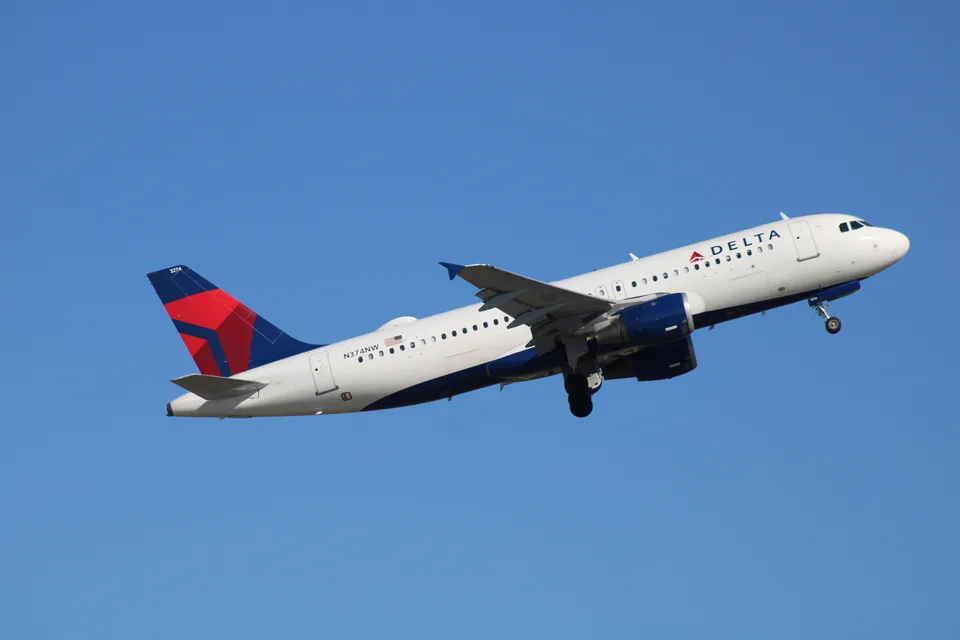
Northwest 188 passed Minneapolis at 37,000 feet while its pilots discussed crew scheduling. The NTSB found that distraction displaced flight monitoring.
Original JPEG. Displayed to fit the page. Responsive WebP copies resized without cropping.
Geographic context
San Diego departure airport
Minneapolis destination and return airport
Eau Claire, radio contact restored
Airport and city markers show the departure, destination and position at renewed radio contact. Eau Claire is an approximate city reference. The NTSB location table gives estimated Minneapolis coordinates. Basemap: Natural Earth, public domain.Read supporting evidence
On 21 October 2009, Northwest Airlines flight 188 remained out of ATC radio contact for about 1 hour 17 minutes and passed its Minneapolis destination at 37,000 feet. A flight attendant's arrival question prompted the pilots to check their position. They restored contact over Eau Claire, returned to Minneapolis and landed without injuries.
Read the full incident Follow what happened, from the flight to the investigation findings.
What investigators concluded
The NTSB determined the probable cause: The flight crew's failure to monitor the airplane's radio and instruments and the progress of the flight after becoming distracted by conversations and activities unrelated to the operation of the flight.
1,515 words / about 7 minutes to read. Based on the investigation records cited below.
Cruise toward Minneapolis
Northwest Airlines flight 188 departed San Diego for Minneapolis on 21 October 2009. The captain was flying the Airbus A320, registration N374NW. Takeoff, climb and early cruise proceeded normally, according to the pilots. The flight followed the route programmed into the flight management computer and reached its final cruise altitude of 37,000 feet at about 18:22 central daylight time. The captain had entered a Minneapolis arrival procedure but had left the anticipated landing runway unset.
The pilots had been off duty for two days before starting their five-day trip. On its first day they flew from Minneapolis to San Diego and stayed overnight. Both described normal sleep and feeling rested before the incident flight. This trip was the first time they had flown together. In interviews after the overflight, both said they had remained awake. Alcohol and drug tests after arrival were negative.
The captain had accumulated 18,641 flight hours, including 8,196 as pilot in command. The first officer had 13,811 flight hours. Both held airline transport pilot certificates with Airbus A320 ratings; the first officer's A320 rating carried second-in-command privileges.
The first two Denver Center sectors established normal voice contact with flight 188. At 18:56:41, the second controller directed the crew to the next sector on 132.17 MHz. He repeated the instruction at 18:56:56. At 18:57:01 the crew acknowledged the correct frequency. That was its last transmission in Denver airspace. The flight data recorder registered no further radio microphone keying until 20:12:46, and the crew never checked in with the assigned sector.
The NTSB found that the first officer probably began selecting the frequency and failed to finish. A pilot had to turn a dial and then press a transfer button to activate the selected frequency. When the crew eventually transmitted again, the radio was on 132.125 MHz, close to the acknowledged 132.17 MHz. The analysis placed the interruption likely around the captain's lavatory break and the serving of dinner. A flight attendant remained on the flight deck while the captain was away. The NTSB considered these activities possible distractions, with the captain's absence also removing a second pilot's monitoring.
After the captain returned and the pilots finished eating, their conversation turned to the crew scheduling system introduced during the Northwest and Delta merger. The captain was dissatisfied with his November bid results, which would require more commuting to Minneapolis. He opened his laptop to show the first officer the results. After several minutes the first officer opened his own laptop on the tray table and began explaining the bidding process. Both computers were open together.
The pilots had removed their headsets and were listening through the cockpit speakers. Both remembered radio chatter and neither remembered hearing the flight's call sign. The NTSB concluded that the scheduling conversation monopolized their attention. The computers further concentrated their attention on non-operational matters and restricted their visual scan of the instruments. Investigators found that laptop placement could obscure the primary flight and navigation displays, although the upper display carrying the ACARS message indication would probably remain visible.
The analysis linked the conversation and computer use to reduced monitoring, lost situational awareness and lost awareness of elapsed time. The captain estimated that the bidding discussion lasted about 15 minutes. The recorded interval without ATC communications lasted about 1 hour 17 minutes. Airline policy already prohibited personal computers on the flight deck.
The aircraft crossed two Denver sectors without voice contact. Both sectors changed controllers, and neither relief briefing identified the missing communications. Electronic handoffs continued. The NTSB found no system-wide procedure for marking that a frequency change had been issued or that an aircraft had actually established contact. Controllers consequently passed flight 188 between sectors without recognizing the continuing radio silence.
The next Denver controller identified the problem almost 30 minutes after the crew's last transmission. At 19:26:07 he asked a manager to contact Northwest dispatch and have the crew call Minneapolis Center. Dispatch began sending ACARS messages at about 19:32 and 19:34, with further messages later. Minneapolis controllers called the aircraft repeatedly and asked other Northwest flights to relay requests. A controller also called on the emergency frequency, 121.5 MHz.
None of these attempts brought a reply. The pilots said a second radio was tuned to the emergency frequency. The NTSB could not determine why they missed those calls. It identified possible explanations including reduced volume, distraction and coverage limits of the emergency-frequency transmitters.
ACARS verified delivery between the aircraft and the ground network. Receipt at the aircraft generated a flashing message on the upper electronic centralized aircraft monitor and a waiting-message advisory on each pilot's multifunction control and display unit. There was no audible ACARS alert. In the simulator reconstruction, the upper indication flashed green for 30 seconds, then remained steady until acknowledged.
The aircraft also displayed cues about its progress toward Minneapolis. At about 180 miles from the destination, the simulator produced a prompt to enter landing data. Passing top of descent at cruise altitude brought a deceleration message. Thirty seconds before the final programmed waypoint, both control units displayed a lateral discontinuity warning. At that waypoint, lateral guidance changed from navigation mode to heading mode and maintained the aircraft's current heading. The flight recorder showed that mode change at about 20:01 during the actual flight.
After the last waypoint, the simulator displayed present position and a flight plan discontinuity, with dashes replacing waypoint entries. These alerts had no accompanying sound. The NTSB counted at least nine position-related messages during the approach to Minneapolis and concluded that the available visual cues were sufficient. The crew noticed none of them.
A flight attendant called the cockpit to ask when the aircraft would land so that passengers with connections could be advised. Both pilots identified that call as their first indication that something was unusual. The captain looked at his flight management display and found no flight plan information. His navigation display showed Duluth to the left and Eau Claire to the right. The first officer then tried to contact ATC and noticed the ACARS message indication.
At 20:12:46, the crew transmitted on 132.125 MHz, reported that it had passed its destination and asked to return to Minneapolis. That frequency belonged to Winnipeg Area Control Center. After establishing that the aircraft was over Eau Claire, Wisconsin, at 37,000 feet, the controller supplied a Minneapolis frequency. At 20:14:06 the crew established contact with Minneapolis Center. It received radar vectors for arrival and repeatedly described cockpit distractions when controllers asked about the radio silence.
Flight 188 returned and landed without further incident or injuries. The CVR specialist's summary gives touchdown at about 21:07:45. The Final Report records no aircraft damage.
ATC managers expected dispatch to resolve the missing communications, as it often did for other air carrier flights. A Denver manager assumed contact had resumed because the aircraft had been electronically transferred to Minneapolis. A Minneapolis manager also delayed reporting to the operations manager because he expected an ACARS message to restore contact. The NTSB found that repeated experience of short losses of radio contact likely encouraged complacency.
At the Minneapolis watch desk, an acting manager wrote the problem on a notepad. When the duty manager returned after a short absence, the acting manager did not use the position checklist for the briefing. The duty manager learned of the prolonged silence on a later notification and made the first call to the domestic events network. She subsequently raised the possible need for a fighter intercept. Communications were restored as the network called back to coordinate that possibility.
FAA procedures required controllers to use appropriate available means to restore contact and, after five minutes, treat the activity as possibly suspicious under the applicable reporting procedures. The NTSB concluded that controller procedural failures delayed recognition of flight 188 as an aircraft without radio communications and that ATC management delayed required notifications.
The NTSB issued a brief Aviation Investigation Final Report for the incident, with an original publication date of 18 March 2010 and a last revision date of 8 July 2024. It has no board-adopted AAR designation. Its analysis addresses both the flight crew's monitoring failures and the ATC system's delayed recognition and escalation. Its conclusions also identify the absence of national standardized procedures for documenting communications status during automated handoffs.
The NTSB determined the probable cause: The flight crew's failure to monitor the airplane's radio and instruments and the progress of the flight after becoming distracted by conversations and activities unrelated to the operation of the flight.
The findings table lists monitoring communications and monitoring equipment or instruments under personnel issues, both assigned to the flight crew. Its environmental issues entry is recorded as general, not specified. Delta told investigators it planned to modify the system so that dispatch could add an audible alert to certain ACARS messages.
The 30-minute cockpit voice recorder began on final approach. The specialist's report explains that later electrical power cycles overwrote part of the recording. A CVR group did not convene and a transcript was not prepared. The Final Report describes the audible conversations as operational and records no discussion of the radio-silence event.
A simplified reading of the investigation findings. The sequence does not replace the full report or imply that every contributing factor is shown.
Sequence of events
Central daylight time, using the detailed ATC chronology. Approximate times are marked. The occurrence summary separately lists 17:56 Local. Expand an event to see its evidence.
About 16:59Departure from San Diego
The scheduled passenger flight departs for Minneapolis. The captain is flying.
The first officer read back 132.17 MHz, but the crew made no radio transmission until it called on 132.125 MHz. The NTSB considered an interrupted frequency selection likely: the radio required selection with a rotary dial and activation with a transfer button.
What indicated that the aircraft was approaching its destination?
Simulator work showed a landing-data prompt at about 180 miles from Minneapolis, a deceleration prompt at top of descent and further alerts near the final waypoint. The NTSB concluded that sufficient visual cues were available but the crew missed them.
Why did ATC take so long to recognize the radio silence?
The two Denver sectors' relief briefings omitted the missing radio contact. Automated handoffs had no system-wide marking procedure to show a completed frequency transfer or established communications. The NTSB found that procedural failures delayed recognition of the loss of contact.
The flight history lists 144 passengers and five crew, totaling 149. The injury table lists 147 passengers and five crew, totaling 152. Both sections record no injuries.
The recording begins on final approach. Later electrical power cycles overwrote part of the recording. The CVR specialist reported that a transcript was not prepared.
FAA Order 7110.65 called for appropriate available means to restore communications and possible suspicious-aircraft handling after five minutes. The NTSB found that required notifications were delayed.
These labels organise the evidence. They are not a ranking of causes. A shared label means a shared research topic, not an identical mechanism.
NTSB conclusionIncomplete frequency change
The first officer acknowledged the frequency change but never completed it because of interruptions, likely while the captain was absent and a flight attendant was in the cockpit.
Matching dossiers for Incomplete frequency change: No other dossier in this collection.
NTSB conclusionRequired communications missed
The failure to complete the frequency change, contact ATC and maintain communications was contrary to regulations and airline procedures. A conversation involving personal computers diverted the pilots' attention to non-operational issues.
NTSB conclusionDelayed recognition of radio silence
Controllers did not follow procedures to ensure the aircraft was on the correct frequency, delaying its identification as an aircraft without radio communications.
Matching dossiers for Delayed recognition of radio silence: No other dossier in this collection.
NTSB conclusionNo national handoff marking standard
National standardized procedures were absent for nonverbal documentation and confirmation of ATC information when automated transfers replaced paper progress strips.
Matching dossiers for Environmental entry: No other dossier in this collection.
Read alongside
These comparisons connect specific research topics. Shared circumstances do not establish identical causes. Evidence from both investigations is provided below.
Both NTSB investigations found cockpit attention diverted from flight monitoring. Northwest 188 passed Minneapolis during a scheduling conversation and returned without injuries. In United Airlines 173, preoccupation with a landing gear malfunction and preparations for an emergency landing displaced fuel monitoring. The NTSB found that the captain failed to monitor and respond to the low fuel state, leading to fuel exhaustion in all engines.
Explore the records below for additional context. They open on the publisher's site and are not all included in our report search. Source reuse terms apply.
NTSB brief Aviation Investigation Final Report DCA10IA001, an incident investigation report. Published 18 March 2010; last revised 8 July 2024. It has no board-adopted AAR designation.
Source limitations
The cockpit voice recording begins on final approach to Minneapolis. The radio silence is documented through ATC records, flight data, interviews and simulator work.
Northwest Airlines flight 188, Aviation Investigation Final Report DCA10IA001
National Transportation Safety Board Final Report, published 18 March 2010; last revised 8 July 2024
Kevin Murphy writes the incident accounts on AirlineIncidents.com, out of a long interest in aviation safety and the lessons each investigation leaves behind.
Prepared by
AirlineIncidents editorial desk
Report citation check
Independent expert review
Not completed
Citation checks compare supporting text with the indexed report pages. They do not constitute independent expert review. How these pages are prepared.
Revision history
: Published sourced incident account, timeline, photographs and investigation findings.