LEVEL 3 Final report

Based on the investigation authority's final report.

Date
Show source
Inadvertent Opening of Emergency Exit Hatch and Deployment of Slide RampFactual Information, History of the Accident | Printed page 2 | PDF page 3Find this passage in evidence search
Occurrence
Inadvertent emergency exit opening and slide deployment
Location
Taxiing towards gate C58, Dubai International Airport
Show source
Inadvertent Opening of Emergency Exit Hatch and Deployment of Slide RampFactual Information, History of the Accident | Printed page 2 | PDF page 3Find this passage in evidence search
Operator
Saudia Airlines
Show source
Inadvertent Opening of Emergency Exit Hatch and Deployment of Slide RampFactual Information, History of the Accident | Printed page 2 | PDF page 3Find this passage in evidence search
Flight
SV566
Show source
Inadvertent Opening of Emergency Exit Hatch and Deployment of Slide RampFactual Information, History of the Accident | Printed page 2 | PDF page 3Find this passage in evidence search
Aircraft
Airbus A320-214
Show source
Inadvertent Opening of Emergency Exit Hatch and Deployment of Slide RampFactual Information, History of the Accident | Printed page 2 | PDF page 3Find this passage in evidence search
Registration
HZ-AS55
Show source
Inadvertent Opening of Emergency Exit Hatch and Deployment of Slide RampFactual Information, History of the Accident | Printed page 2 | PDF page 3Find this passage in evidence search
Route
Jeddah King Abdulaziz International Airport to Dubai International Airport
Show source
Inadvertent Opening of Emergency Exit Hatch and Deployment of Slide RampFactual Information, History of the Accident | Printed page 2 | PDF page 3Find this passage in evidence search
People aboard
126: 119 passengers and 7 crew
Show source
Inadvertent Opening of Emergency Exit Hatch and Deployment of Slide RampFactual Information, History of the Accident | Printed page 2 | PDF page 3Find this passage in evidence search
Fatalities
0 reported
Show source
Inadvertent Opening of Emergency Exit Hatch and Deployment of Slide RampFactual Information, History of the Accident | Printed page 2 | PDF page 3Find this passage in evidence search
Survivors
All 126 occupants
Show source
Inadvertent Opening of Emergency Exit Hatch and Deployment of Slide RampFactual Information, History of the Accident | Printed page 2 | PDF page 3Find this passage in evidence search
Topics
Water-salute risk assessment, Fire-vehicle turret controller failure, External emergency exit operation, Unannounced ground activity

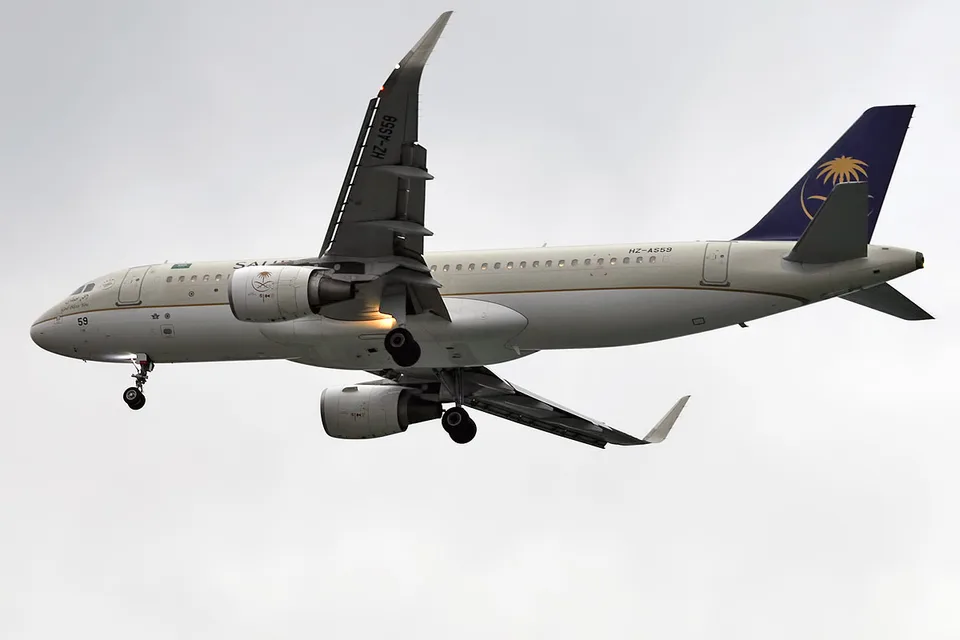
This photograph is cropped for the banner. See the full photograph, credit, licence and what it shows.

Photographs and geographic context

Saudia Airbus A320-214 HZ-AS59 approaching Istanbul Ataturk Airport.

A Saudia Airbus A320-214 at Istanbul Ataturk Airport in February 2019.

Photo: Anna Zvereva, CC BY-SA 2.0

Image info

HZ-AS59, another Saudia A320-214, photographed on 7 February 2019.

Image source

Original photograph used without cropping. Responsive WebP copies resized without cropping.

Geographic context

Geographical orientation for Saudia HZ-AS55Jeddah King Abdulaziz departure airport; Dubai International Airport, taxi towards gate C58. Approximate airport markers for the Jeddah to Dubai service. The incident occurred during taxi towards gate C58.12NORTH UP / SCHEMATIC / NOT A RECORDED FLIGHT TRACK
  1. Jeddah King Abdulaziz departure airport
  2. Dubai International Airport, taxi towards gate C58
Approximate airport markers for the Jeddah to Dubai service. The incident occurred during taxi towards gate C58. Basemap: Natural Earth, public domain.
Read supporting evidence
Inadvertent Opening of Emergency Exit Hatch and Deployment of Slide RampFactual Information, History of the Accident | Printed page 2 | PDF page 3Find this passage in evidence search

What happened

After flight SV566 landed at Dubai, an uncontrolled water jet pushed the external opening panel of the left forward over-wing exit. The hatch fell into the cabin, slightly injuring the adjacent passenger. The pilots stopped the aircraft, and passengers later disembarked normally at the gate.

Read the full incident Follow what happened, from the flight to the investigation findings.

What investigators concluded

AAIS attributed the incident to erratic water-jet movement onto the exit push panel. A failed hand-controller potentiometer and the absence of a formally described and risk-assessed water-salute process contributed. The slide ramp deployed as designed.

Evidence behind this explanation
Inadvertent Opening of Emergency Exit Hatch and Deployment of Slide RampFactual Information, History of the Accident | Printed page 2 | PDF page 3Find this passage in evidence search
Inadvertent Opening of Emergency Exit Hatch and Deployment of Slide RampContributing Factors and Safety Recommendations | Printed page 7 | PDF page 8Find this passage in evidence search

The water salute and the emergency exit

1,075 words / about 5 minutes to read. The official report for this event is short, so this account is shorter than most and covers only what the report documents.

An uneventful arrival from Jeddah

Saudia Airlines flight SV566 landed at Dubai International Airport at 10:38 local time on 20 September 2018. The flight from Jeddah King Abdulaziz International Airport had been uneventful. The Airbus A320-214, registered HZ-AS55, carried 119 passengers, two pilots and five cabin crewmembers. After landing, the pilots followed instructions to taxi towards gate C58.

The aircraft had been delivered to Saudia in 2017 and had accumulated 4,977 flight hours and 3,933 landings. Its cabin contained 12 business-class and 132 economy-class seats. AAIS found that it was airworthy before the incident and that it had been certificated, equipped and maintained in accordance with the applicable requirements. Both flight crewmembers held appropriate licences and valid aviation medical certificates.

Dubai Airports Aviation Business Development had requested a water salute to celebrate Saudi Arabia National Day. The request reached the Airport Fire Services Operation Center and the airline operations manager. It did not reach the pilots or the ground handlers waiting at the gate. The national day itself was three days later, on 23 September.

Sources for this section
Inadvertent Opening of Emergency Exit Hatch and Deployment of Slide RampFactual Information, History of the Accident | Printed page 2 | PDF page 3Find this passage in evidence search
Inadvertent Opening of Emergency Exit Hatch and Deployment of Slide RampWater Salute Communication and Flight Crew Performance | Printed page 5 | PDF page 6Find this passage in evidence search

An uncontrolled jet opens the hatch

After the aircraft turned towards the terminal, two firefighting vehicles began spraying water from opposite sides of the taxiway. Their turret operators selected forceful jets to form a far-reaching arc above the aircraft. The vehicle on the left, FIRE 8, was a Rosenbauer Panther 8X8. Its roof turret stopped following commands from the operator's hand controller.

As HZ-AS55 passed beneath the water, FIRE 8's high-pressure jet moved upwards and then downwards. It struck the left forward over-wing emergency exit. AAIS found that the jet's high kinetic energy pushed the external opening panel inwards. The hatch opened, fell into the cabin and caused the left over-wing emergency slide ramp to deploy.

The passenger in the adjacent window seat sustained minor injuries from the falling hatch. A warning alerted the flight crew that the exit had opened. The pilots initially suspected that a passenger had operated it from inside. They immediately stopped the aircraft, applied the parking brake and shut down both engines to protect anyone who might be leaving the cabin. The external cause became apparent later.

The aircraft was towed to the gate with the inflated slide ramp still attached. Passengers disembarked normally. The injured passenger received medical attention, was medically cleared and chose to continue the journey. AAIS found no aircraft damage, and the summary also records no damage to property or the environment.

Sources for this section
Inadvertent Opening of Emergency Exit Hatch and Deployment of Slide RampFactual Information, History of the Accident | Printed page 2 | PDF page 3Find this passage in evidence search

The exit and slide operated as designed

HZ-AS55 had four floor-level Type I emergency exit doors and four Type III over-wing emergency exit hatches. The over-wing exits were at rows 35 and 36. Opening an over-wing hatch activated a slide ramp over the trailing edge of the wing to help occupants leave the aircraft.

The Type III exits were always considered armed during aircraft operations. Their opening mechanism became operational when cabin pressure was equalized, and the installation prevented opening while the cabin was pressurized. From inside, a person could remove a cover and pull a handle. From outside, the exit could be reached from the upper wing surface and opened by pressing a red panel.

Each hatch weighed approximately 15 kg. The hatches were unhinged and opened inwards, after which the person beside the exit was expected to pick up the hatch and throw it outside. The investigation noted the value of an exit that an untrained person could open from outside during an emergency. It was unable to identify another similar occurrence in which these exits had opened unexpectedly.

An inspection approximately an hour after the incident confirmed that the slide deployment mechanism had activated and that the ramp remained inflated as designed. An airline engineer inspected the emergency hatch, its airframe attachments and its mechanism, found no damage, and refitted the hatch. After investigators had collected the relevant evidence, the inflated ramp was detached.

Sources for this section
Inadvertent Opening of Emergency Exit Hatch and Deployment of Slide RampAircraft Information and Over-wing Emergency Exit Hatch Mechanism | Printed page 3 | PDF page 4Find this passage in evidence search
Inadvertent Opening of Emergency Exit Hatch and Deployment of Slide RampA320 Over-wing Emergency Exit Hatch Design | Printed page 6 | PDF page 7Find this passage in evidence search
Inadvertent Opening of Emergency Exit Hatch and Deployment of Slide RampFactual Information, History of the Accident | Printed page 2 | PDF page 3Find this passage in evidence search

Repairing FIRE 8 and authorizing another flight

FIRE 8 was removed from service after the event. The vehicle manufacturer sent a maintenance team to examine and repair the turret, with an AAIS investigator attending. The work traced the loss of vertical turret control to a fault in the elevation control potentiometer on the hand controller. The potentiometer was replaced and the turret movement recalibrated before the vehicle returned to service.

The manufacturer said that no similar turret control problems had previously been reported. Maintenance records for the airport fleet contained no similar problem in the preceding 12 months. However, maintenance technicians told investigators that they had seen similar movements before and had corrected them by recalibrating the turret and hand-controller movements. AAIS considered that the failure to follow controller commands appeared to have occurred before this incident.

Saudia's Technical Services department issued Engineering Authorization S25-A10024 for one flight with the left over-wing slide ramp removed. It required an inspection under the aircraft maintenance manual procedure, securing the hatch during flight, and informing every crewmember that the ramp was inoperative and unavailable for an emergency.

The authorization also required rows 33 to 44 to be blocked and identified. This reduced the permitted passenger seating capacity from 144 to 72. The aircraft departed Dubai at 16:22 local time as a commercial flight following what the summary describes as a four-hour delay.

Sources for this section
Inadvertent Opening of Emergency Exit Hatch and Deployment of Slide RampDubai Airport Fire Vehicle Turret Maintenance | Printed page 4 | PDF page 5Find this passage in evidence search
Inadvertent Opening of Emergency Exit Hatch and Deployment of Slide RampThe Operator's Technical Services' Engineering Authorization | Printed page 5 | PDF page 6Find this passage in evidence search
Inadvertent Opening of Emergency Exit Hatch and Deployment of Slide RampFactual Information, History of the Accident | Printed page 2 | PDF page 3Find this passage in evidence search

Findings and safety recommendations

AAIS concluded that erratic directional movement of the water jet onto the external push panel caused the hatch to open and fall into the cabin. It identified two contributing factors: the failed potentiometer that controlled the roof turret, and the airport fire service's failure to formally describe and risk-assess the water-salute process. The possibility of erratic turret movement had therefore gone unidentified.

The investigation also examined communication. Because the pilots had received no warning of the salute, they could not prepare the cabin crew or passengers. Cabin crewmembers became concerned when they saw the fire vehicles spraying the aircraft. The passengers' reaction was unknown. AAIS found that the pilots followed known procedures using the information available to them when confronted with the unexpected events.

AAIS issued two safety recommendations to the UAE General Civil Aviation Authority for aerodromes allowing water salutes. SR07/2019 called for a formal risk assessment and a procedure to mitigate identified risks. SR08/2019 called for a routine dry turret check to identify malfunctioning equipment during maintenance or before operation with water or foam.

The investigation connected reliable turret control with firefighting and rescue capability as well as ceremonial spraying. Its analysis described the potential for a controller fault to injure people, damage aircraft or equipment, and hinder emergency operations. Checking turret movement before spraying would allow operators to detect a failure to follow hand-controller inputs.

Sources for this section
Inadvertent Opening of Emergency Exit Hatch and Deployment of Slide RampContributing Factors and Safety Recommendations | Printed page 7 | PDF page 8Find this passage in evidence search

Return to the short summary / Source status and limitations

How the sequence developed

Follow the main stages, then open the evidence beneath each step.

  1. A forceful water salute

    Two fire vehicles sprayed high-energy jets to form an arc over the taxiing aircraft.

    Read supporting evidence
    Inadvertent Opening of Emergency Exit Hatch and Deployment of Slide RampFactual Information, History of the Accident | Printed page 2 | PDF page 3Find this passage in evidence search
  2. Vertical turret control fails

    FIRE 8's roof turret stopped following the hand controller. Maintenance identified a failed elevation control potentiometer.

    Read supporting evidence
  3. Water operates the external opening panel

    Erratic jet movement pushed the left forward over-wing exit panel inward. The released hatch fell into the cabin.

    Read supporting evidence
  4. The slide ramp deploys

    Opening the hatch triggered the left slide ramp, which deployed and remained inflated as designed.

    Read supporting evidence

A simplified reading of the investigation findings. The sequence does not replace the full report or imply that every contributing factor is shown.

Sequence of events

Times are Dubai local times as stated in the summary. The landing was at 10:38; the subsequent departure was at 16:22. The hatch-opening time is not specified. Expand an event to see its evidence.

  1. 10:38Flight SV566 lands at Dubai

    The A320-214 arrives from Jeddah with 119 passengers, two pilots and five cabin crew. The landing is uneventful.

    Inadvertent Opening of Emergency Exit Hatch and Deployment of Slide RampFactual Information, History of the Accident | Printed page 2 | PDF page 3Find this passage in evidence search
    Inadvertent Opening of Emergency Exit Hatch and Deployment of Slide RampFactual Information, History of the Accident | Printed page 2 | PDF page 3Find this passage in evidence search
  2. After landingWater salute begins near gate C58

    Two fire vehicles spray water across the taxiing aircraft. The flight crew has received no advance notice of the salute.

    Inadvertent Opening of Emergency Exit Hatch and Deployment of Slide RampFactual Information, History of the Accident | Printed page 2 | PDF page 3Find this passage in evidence search
    Inadvertent Opening of Emergency Exit Hatch and Deployment of Slide RampFactual Information, History of the Accident | Printed page 2 | PDF page 3Find this passage in evidence search
  3. During the saluteFIRE 8 loses vertical turret control

    The left-side vehicle directs its jet upwards and then downwards. Water strikes the external exit panel, opening the hatch and deploying the left over-wing slide ramp.

    Inadvertent Opening of Emergency Exit Hatch and Deployment of Slide RampFactual Information, History of the Accident | Printed page 2 | PDF page 3Find this passage in evidence search
    Inadvertent Opening of Emergency Exit Hatch and Deployment of Slide RampFactual Information, History of the Accident | Printed page 2 | PDF page 3Find this passage in evidence search
  4. Immediately afterwardsThe pilots stop and shut down both engines

    After an emergency-exit warning, the pilots stop, apply the parking brake and shut down both engines. They initially suspect a passenger has opened the hatch.

  5. At the gatePassengers disembark normally

    The aircraft is towed with its slide ramp attached. The passenger injured by the falling hatch receives medical attention and is cleared to continue the journey.

    Inadvertent Opening of Emergency Exit Hatch and Deployment of Slide RampFactual Information, History of the Accident | Printed page 2 | PDF page 3Find this passage in evidence search
    Inadvertent Opening of Emergency Exit Hatch and Deployment of Slide RampFactual Information, History of the Accident | Printed page 2 | PDF page 3Find this passage in evidence search
  6. 16:22The aircraft departs under engineering restrictions

    A one-flight authorization permits operation with the left slide ramp removed. Seat capacity is reduced from 144 to 72.

    Inadvertent Opening of Emergency Exit Hatch and Deployment of Slide RampFactual Information, History of the Accident | Printed page 2 | PDF page 3Find this passage in evidence search
    Inadvertent Opening of Emergency Exit Hatch and Deployment of Slide RampThe Operator's Technical Services' Engineering Authorization | Printed page 5 | PDF page 6Find this passage in evidence search
  7. 24 March 2019AAIS issues its summary report

    The authority recommends formal water-salute risk assessments and procedures, and routine dry turret checks.

    Inadvertent Opening of Emergency Exit Hatch and Deployment of Slide RampContributing Factors and Safety Recommendations | Printed page 7 | PDF page 8Find this passage in evidence search
    Inadvertent Opening of Emergency Exit Hatch and Deployment of Slide RampContributing Factors and Safety Recommendations | Printed page 7 | PDF page 8Find this passage in evidence search
    Inadvertent Opening of Emergency Exit Hatch and Deployment of Slide RampContributing Factors and Safety Recommendations | Printed page 7 | PDF page 8Find this passage in evidence search

Search the report evidence

Search extracted report prose, with original page references. Short results link to the full document.

Questions readers ask

What fault caused the fire vehicle to lose turret control?

Maintenance identified a fault in the elevation control potentiometer on the control handle. It was replaced and the turret was recalibrated before FIRE 8 returned to service.

How did the A320 emergency hatch open from outside?

The exit can be opened from the wing by pushing its red external panel. AAIS found that the water jet pushed the panel inward and caused the hatch to fall into the cabin.

What restrictions applied to the subsequent flight?

The engineering authorization required those rows to be blocked and identified, reducing passenger capacity from 144 to 72. The hatch had to be inspected and secured, and every crewmember informed that the left slide ramp was inoperative.

Inadvertent Opening of Emergency Exit Hatch and Deployment of Slide RampThe Operator's Technical Services' Engineering Authorization | Printed page 5 | PDF page 6Find this passage in evidence search

What the evidence can and cannot establish

Safety follow-up

Actions and recommendations are described at the dates of the cited records. A recommendation is not proof of implementation.

Classifications, with reasons

These labels organise the evidence. They are not a ranking of causes. A shared label means a shared research topic, not an identical mechanism.

Contributing factorWater-salute risk assessment

The airport fire service had neither formally described nor risk-assessed the water-salute process, leaving erratic turret movement unidentified as a risk.

Inadvertent Opening of Emergency Exit Hatch and Deployment of Slide RampContributing Factors and Safety Recommendations | Printed page 7 | PDF page 8Find this passage in evidence search
Contributing factorFire-vehicle turret controller failure

A failed hand-controller potentiometer prevented control of the roof turret movement.

Inadvertent Opening of Emergency Exit Hatch and Deployment of Slide RampContributing Factors and Safety Recommendations | Printed page 7 | PDF page 8Find this passage in evidence search
MechanismExternal emergency exit operation

The high-energy water jet pushed the external opening panel inward, releasing the hatch and deploying the slide ramp.

Operational contextUnannounced ground activity

The flight crew and ground handlers were not told about the water salute. The pilots could not brief the cabin crew and passengers.

Read alongside

These comparisons connect specific research topics. Shared circumstances do not establish identical causes. Evidence from both investigations is provided below.

Emirates Flight 521

Both investigations at Dubai examined evacuation equipment. HZ-AS55's slide ramp deployed and remained inflated as designed after the water jet opened its hatch. During the evacuation of Emirates 521, wind lifted several escape slides against the fuselage, and the R3 slide ramp remained stowed after the door opened.

Read supporting evidence
Inadvertent Opening of Emergency Exit Hatch and Deployment of Slide RampFactual Information, History of the Accident | Printed page 2 | PDF page 3Find this passage in evidence search

Further investigation records

Explore the records below for additional context. They open on the publisher's site and are not all included in our report search. Source reuse terms apply.

Sources and transparency

AAIS issued its Incident Summary Report AIFN/0011/2018 on 24 March 2019, with findings, causes, contributing factors and two safety recommendations.

Source limitations

The published document is a summary report. AAIS limited the investigation to events leading to the occurrence and undertook no in-depth analysis of non-contributing factors. The summary contains no cockpit voice recorder transcript, recorder analysis, measured water-jet pressure or force, or recommendation implementation record.

Inadvertent Opening of Emergency Exit Hatch and Deployment of Slide Ramp

UAE GCAA Air Accident Investigation Sector
Final investigation summary: Incident Summary Report AIFN/0011/2018, issued 24 March 2019

Official report PDF, hosted by gcaa.gov.ae

Open source document

8 PDF pages.

GCAA copyright. Limited extracts for source-based commentary; photographs and figures have separate rights. Source terms.

Runway Impact during Attempted Go-Around: Emirates Boeing 777-31H A6-EMW

UAE GCAA Air Accident Investigation Sector
Final report AIFN/0008/2016, issued 20 January 2020

Official report PDF, hosted by gcaa.gov.ae

Open source document

164 PDF pages.

GCAA report linked as the official investigation source. Original explanatory text and short supporting quotations. Source terms.

Read the extraction, classification and review methodology.

Suggest a correction to this dossier

Editorial record

Kevin Murphy writes the incident accounts on AirlineIncidents.com, out of a long interest in aviation safety and the lessons each investigation leaves behind.

Prepared by
AirlineIncidents editorial desk
Report citation check
Independent expert review
Not completed

Citation checks compare supporting text with the indexed report pages. They do not constitute independent expert review. How these pages are prepared.

Revision history

: Published sourced incident account, timeline, photographs and investigation findings.
Source-based corrections are reviewed before changes appear here. Suggest a correction to this dossier.

Cite or link to this page

Quoting this account or linking to it? Please use the page address below, and credit the investigation report it is built from.

Credit line

AirlineIncidents.com. Saudia HZ-AS55 accident account. Published 30 October 2026. https://airlineincidents.com/incidents/saudia-hz-as55-2018/

HTML link

<a href="https://airlineincidents.com/incidents/saudia-hz-as55-2018/">Saudia HZ-AS55 accident account (AirlineIncidents.com)</a>

Select a box to copy it. Spotted something wrong? Send a correction.