LEVEL 3 Final report

Based on the investigation authority's final report.

Date
Show source
AAIB-31017: Boeing 737-8, G-CRUXOccurrence details | Printed page 41 | PDF page 1Find this passage in evidence search
Occurrence
Serious incident
Location
Runway 25, London Luton Airport
Show source
AAIB-31017: Boeing 737-8, G-CRUXOccurrence details | Printed page 41 | PDF page 1Find this passage in evidence search
AAIB-31017: Boeing 737-8, G-CRUXHistory of the flight | Printed page 41 | PDF page 1Find this passage in evidence search
Operator
Unnamed commercial passenger operator
Show source
AAIB-31017: Boeing 737-8, G-CRUXOccurrence details | Printed page 41 | PDF page 1Find this passage in evidence search
Aircraft
Boeing 737-8
Show source
AAIB-31017: Boeing 737-8, G-CRUXOccurrence details | Printed page 41 | PDF page 1Find this passage in evidence search
Registration
G-CRUX
Show source
AAIB-31017: Boeing 737-8, G-CRUXOccurrence details | Printed page 41 | PDF page 1Find this passage in evidence search
Route
London Luton to Athens
Show source
AAIB-31017: Boeing 737-8, G-CRUXHistory of the flight | Printed page 41 | PDF page 1Find this passage in evidence search
AAIB-31017: Boeing 737-8, G-CRUXOccurrence details | Printed page 41 | PDF page 1Find this passage in evidence search
People aboard
168: 6 crew and 162 passengers
Show source
AAIB-31017: Boeing 737-8, G-CRUXOccurrence details | Printed page 41 | PDF page 1Find this passage in evidence search
Fatalities
0
Show source
AAIB-31017: Boeing 737-8, G-CRUXOccurrence details | Printed page 41 | PDF page 1Find this passage in evidence search
Survivors
168
Show source
AAIB-31017: Boeing 737-8, G-CRUXOccurrence details | Printed page 41 | PDF page 1Find this passage in evidence search
Topics
Takeoff performance verification, Shorter takeoff run, Insufficient takeoff thrust, Stopping and obstacle-clearance exposure

This photograph is cropped for the banner. See the full photograph, credit, licence and what it shows.

Photographs and geographic context

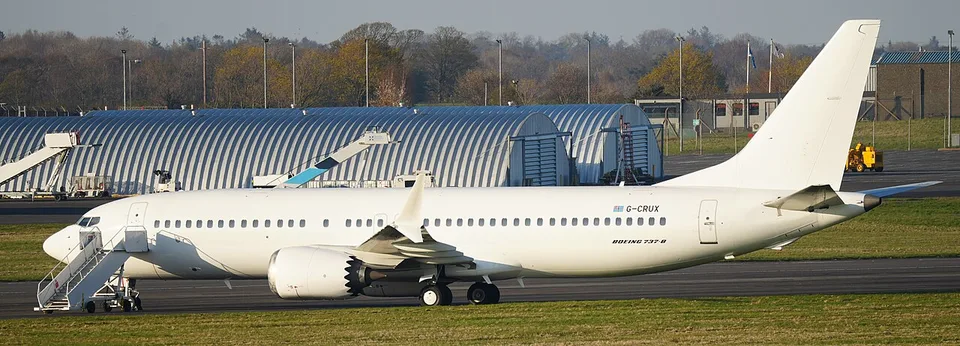
Boeing 737-8 G-CRUX in white paint on the ground at Prestwick.

G-CRUX at Prestwick on 8 April 2025.

Photo: Jonathan Payne, CC BY-SA 2.0

Image info

The incident aircraft, photographed at Prestwick fourteen days before the Luton departure.

Image source

Resized to 1280 pixels wide. No cropping. Responsive WebP copies resized without cropping.

Geographic context

Geographical orientation for G-CRUXLondon Luton, Runway 25 departure end; Athens. The flight departed London Luton for Athens. The Luton marker uses the Runway 07 threshold coordinates shown on the AAIB chart, at the departure end of Runway 25. Athens is shown as a city marker.12NORTH UP / SCHEMATIC / NOT A RECORDED FLIGHT TRACK
  1. London Luton, Runway 25 departure end
  2. Athens
The flight departed London Luton for Athens. The Luton marker uses the Runway 07 threshold coordinates shown on the AAIB chart, at the departure end of Runway 25. Athens is shown as a city marker. Basemap: Natural Earth, public domain.
Read supporting evidence
AAIB-31017: Boeing 737-8, G-CRUXHistory of the flight | Printed page 41 | PDF page 1Find this passage in evidence search

What happened

The crew prepared a full-length departure, then accepted Intersection A. The takeoff settings in the flight management computer were not correctly verified after that change. Maximum recorded thrust was 82.1%, against the 85.2% calculated for the intersection departure, and V2 remained unchanged from the initial entry. The aircraft lifted off 162 m before the end of the paved runway.

Read the full incident Follow what happened, from the flight to the investigation findings.

What investigators concluded

The AAIB attributed the long takeoff roll and slow climb to insufficient power after the crew changed the departure point and failed to verify the flight management computer entries. It identified a potential loss of stopping or obstacle-clearance margins if thrust had been lost during takeoff.

Evidence behind this explanation
AAIB-31017: Boeing 737-8, G-CRUXHistory of the flight | Printed page 41 | PDF page 1Find this passage in evidence search
AAIB-31017: Boeing 737-8, G-CRUXTakeoff performance | Printed page 44 | PDF page 4Find this passage in evidence search
AAIB-31017: Boeing 737-8, G-CRUXHistory of the flight | Printed page 42 | PDF page 2Find this passage in evidence search

The changed departure and the low climb

709 words / about 4 minutes to read. The official report for this event is short, so this account is shorter than most and covers only what the report documents.

Preparing the Athens flight

On 22 April 2025, G-CRUX was preparing for an early morning scheduled passenger flight from London Luton to Athens. The Boeing 737-8 carried six crew and 162 passengers. Built in 2018, it had two CFM International LEAP-1B27G05 turbofan engines. The AAIB recorded the serious incident at 0630 UTC. No injuries or aircraft damage were reported.

The pilots initially prepared the aircraft to use the full length of Runway 25. Their takeoff performance data therefore reflected that departure point. The commander was 61, held an Airline Transport Pilot's Licence and had 10,000 flying hours, including 3,000 on type.

The AAIB's stated information source was an Aircraft Accident Report Form submitted by the pilot. Its investigation also examined flight data monitoring, ATC observations and CCTV.

Sources for this section
AAIB-31017: Boeing 737-8, G-CRUXOccurrence details | Printed page 41 | PDF page 1Find this passage in evidence search
AAIB-31017: Boeing 737-8, G-CRUXHistory of the flight | Printed page 41 | PDF page 1Find this passage in evidence search
AAIB-31017: Boeing 737-8, G-CRUXOccurrence details | Printed page 41 | PDF page 1Find this passage in evidence search
AAIB-31017: Boeing 737-8, G-CRUXTakeoff performance | Printed page 44 | PDF page 4Find this passage in evidence search
AAIB-31017: Boeing 737-8, G-CRUXHistory of the flight | Printed page 42 | PDF page 2Find this passage in evidence search

Accepting Intersection A

The departure plan changed before takeoff. The pilots checked the performance calculations to see whether they could use Intersection A. During the pushback clearance, they told air traffic control that they could accept an intersection departure. As they approached the holding point, they recalled checking the Onboard Performance Tool and believed they had updated the V speeds in the Flight Management Computer.

The Onboard Performance Tool calculated takeoff and landing performance for the aircraft, runway and conditions. The V speeds were defined airspeeds used during takeoff, climb, approach and landing.

The shorter starting point changed the required performance. Intersection A had a declared takeoff run available of 1,771 m and a calculated thrust requirement of 85.2%. For the full runway length, the corresponding figures were 2,116 m and 81.4%. Takeoff run available, abbreviated TORA, meant the runway length available for the aircraft's ground run during takeoff.

A full-length Runway 25 departure involved entering through holding point A1, turning left to the runway end and making a 180 degree turn where space was available.

Sources for this section
AAIB-31017: Boeing 737-8, G-CRUXHistory of the flight | Printed page 41 | PDF page 1Find this passage in evidence search
AAIB-31017: Boeing 737-8, G-CRUXTakeoff performance | Printed page 44 | PDF page 4Find this passage in evidence search

The long takeoff roll

Flight data monitoring subsequently showed that the takeoff settings had failed to follow the change in departure point. The V2 speed remained unchanged between the initial entry during flight preparation and takeoff. Maximum achieved thrust was 82.1%, below the 85.2% calculated for the intersection departure. The AAIB found that the crew had failed to verify that the takeoff performance was correctly entered in the flight management computer.

The achieved thrust was slightly above the 81.4% calculated for a full-length departure. The AAIB could not determine whether the autothrottle had set a slightly higher value than required or whether the pilot had set the thrust manually. The recorded maximum established the power used during takeoff, while the method of setting it remained unresolved.

The aircraft used a long ground run before becoming airborne. Flight data placed liftoff 162 m from the end of the paved surface. Figure 1 in the investigation showed that position by overlaying the flight data on a satellite image of the runway.

Sources for this section
AAIB-31017: Boeing 737-8, G-CRUXHistory of the flight | Printed page 42 | PDF page 2Find this passage in evidence search
AAIB-31017: Boeing 737-8, G-CRUXTakeoff performance | Printed page 44 | PDF page 4Find this passage in evidence search
AAIB-31017: Boeing 737-8, G-CRUXHistory of the flight | Printed page 42 | PDF page 2Find this passage in evidence search

Thirteen feet at the runway end

The climb after liftoff was very shallow. G-CRUX crossed the end of the runway at 13 ft above ground level. Air traffic control reported that the aircraft appeared on radar climbing through 900 ft above ground at approximately 0.8 nautical miles from the airfield. At that height, an aircraft would normally have appeared much closer to the airport.

CCTV from Luton air traffic control provided a further view of the departure. The AAIB included two images: the upper image showed G-CRUX, while the lower image showed a representative departure a few minutes later. Together with the flight data overlay and the radar observations, the images documented the shallow departure.

Sources for this section
AAIB-31017: Boeing 737-8, G-CRUXHistory of the flight | Printed page 42 | PDF page 2Find this passage in evidence search

The finding and the remaining margins

The AAIB concluded that accepting a different departure point without verifying the performance entries led to a lower power setting than required, a long takeoff roll and a slow climb. Its explanation of the performance calculations covered both stopping distance and obstacle clearance. The calculations provided for enough runway to stop after a failure at a critical speed and for minimum clearance from obstacles during the climb.

The investigation identified a potential consequence if the aircraft had lost thrust during takeoff. Following a decision to reject, it might have been unable to stop on the remaining paved surface. Following a decision to continue, it might have been unable to achieve the minimum height clearances during departure.

The operator reviewed its procedures and issued new guidance to crews. The AAIB published its completed correspondence investigation as AAIB-31017 in Bulletin 7/2026.

Sources for this section
AAIB-31017: Boeing 737-8, G-CRUXTakeoff performance | Printed page 44 | PDF page 4Find this passage in evidence search

Return to the short summary / Source status and limitations

How the sequence developed

Follow the main stages, then open the evidence beneath each step.

  1. Departure point changed

    The crew accepted Intersection A after preparing full-length runway performance.

    Read supporting evidence
    AAIB-31017: Boeing 737-8, G-CRUXHistory of the flight | Printed page 41 | PDF page 1Find this passage in evidence search
    AAIB-31017: Boeing 737-8, G-CRUXHistory of the flight | Printed page 41 | PDF page 1Find this passage in evidence search
  2. Flight computer entries went unverified

    The crew believed they had updated the V speeds, but V2 remained unchanged from initial data entry.

    Read supporting evidence
    AAIB-31017: Boeing 737-8, G-CRUXHistory of the flight | Printed page 41 | PDF page 1Find this passage in evidence search
    AAIB-31017: Boeing 737-8, G-CRUXHistory of the flight | Printed page 42 | PDF page 2Find this passage in evidence search
  3. Takeoff thrust fell below the intersection requirement

    Maximum achieved thrust was 82.1%; the intersection calculation required 85.2%.

    Read supporting evidence
    AAIB-31017: Boeing 737-8, G-CRUXTakeoff performance | Printed page 44 | PDF page 4Find this passage in evidence search
    AAIB-31017: Boeing 737-8, G-CRUXTakeoff performance | Printed page 44 | PDF page 4Find this passage in evidence search
  4. Late liftoff was followed by a shallow climb

    The aircraft lifted off 162 m before the paved runway ended and crossed the runway end at 13 ft above ground.

    Read supporting evidence
    AAIB-31017: Boeing 737-8, G-CRUXHistory of the flight | Printed page 42 | PDF page 2Find this passage in evidence search
    AAIB-31017: Boeing 737-8, G-CRUXHistory of the flight | Printed page 42 | PDF page 2Find this passage in evidence search

A simplified reading of the investigation findings. The sequence does not replace the full report or imply that every contributing factor is shown.

Sequence of events

The AAIB gives the occurrence time as 0630 UTC. Subsequent events are ordered by flight phase. Expand an event to see its evidence.

  1. Before pushbackFull-length performance prepared

    The crew prepared the scheduled Athens flight using the full length of Runway 25.

    AAIB-31017: Boeing 737-8, G-CRUXHistory of the flight | Printed page 41 | PDF page 1Find this passage in evidence search
    AAIB-31017: Boeing 737-8, G-CRUXHistory of the flight | Printed page 41 | PDF page 1Find this passage in evidence search
  2. Pushback clearanceIntersection departure accepted

    The pilots checked whether they could use Intersection A and told ATC that they could accept it.

    AAIB-31017: Boeing 737-8, G-CRUXHistory of the flight | Printed page 41 | PDF page 1Find this passage in evidence search
  3. Approaching the holding pointCrew recalled checking the tool

    The pilots recalled checking the Onboard Performance Tool and believed they had updated the V speeds in the flight management computer.

    AAIB-31017: Boeing 737-8, G-CRUXHistory of the flight | Printed page 41 | PDF page 1Find this passage in evidence search
    AAIB-31017: Boeing 737-8, G-CRUXHistory of the flight | Printed page 41 | PDF page 1Find this passage in evidence search
  4. Takeoff, about 0630 UTCThrust below the calculated requirement

    Recorded thrust reached 82.1%. The intersection calculation required 85.2%, and V2 remained at its initial value.

    AAIB-31017: Boeing 737-8, G-CRUXOccurrence details | Printed page 41 | PDF page 1Find this passage in evidence search
    AAIB-31017: Boeing 737-8, G-CRUXTakeoff performance | Printed page 44 | PDF page 4Find this passage in evidence search
    AAIB-31017: Boeing 737-8, G-CRUXTakeoff performance | Printed page 44 | PDF page 4Find this passage in evidence search
    AAIB-31017: Boeing 737-8, G-CRUXHistory of the flight | Printed page 42 | PDF page 2Find this passage in evidence search
  5. Liftoff and runway endLittle paved runway remained

    The aircraft lifted off 162 m before the end of the paved surface and crossed the runway end at 13 ft above ground.

    AAIB-31017: Boeing 737-8, G-CRUXHistory of the flight | Printed page 42 | PDF page 2Find this passage in evidence search
    AAIB-31017: Boeing 737-8, G-CRUXHistory of the flight | Printed page 42 | PDF page 2Find this passage in evidence search
  6. Initial climbRadar appearance farther from the airfield

    ATC reported the aircraft appearing on radar through 900 ft above ground at approximately 0.8 nautical miles from the airfield.

    AAIB-31017: Boeing 737-8, G-CRUXHistory of the flight | Printed page 42 | PDF page 2Find this passage in evidence search
  7. Following the incidentOperator reviewed its procedures

    The operator reviewed its procedures and issued new crew guidance.

Search the report evidence

Search extracted report prose, with original page references. Short results link to the full document.

Questions readers ask

Why did changing the departure point matter?

Intersection A provided 1,771 m of takeoff run and required 85.2% thrust. The full-length calculation used 2,116 m and required 81.4%. The crew failed to verify the revised performance entries.

AAIB-31017: Boeing 737-8, G-CRUXTakeoff performance | Printed page 44 | PDF page 4Find this passage in evidence search
How low was G-CRUX at the runway end?

It crossed the end of the runway at 13 ft above ground after lifting off 162 m before the end of the paved surface.

AAIB-31017: Boeing 737-8, G-CRUXHistory of the flight | Printed page 42 | PDF page 2Find this passage in evidence search
What did the pilots recall checking before takeoff?

They recalled checking the Onboard Performance Tool and believed they had updated the V speeds. Flight data monitoring subsequently showed that V2 had stayed unchanged from the initial entry.

AAIB-31017: Boeing 737-8, G-CRUXHistory of the flight | Printed page 41 | PDF page 1Find this passage in evidence search
AAIB-31017: Boeing 737-8, G-CRUXHistory of the flight | Printed page 42 | PDF page 2Find this passage in evidence search

What the evidence can and cannot establish

Safety follow-up

Actions and recommendations are described at the dates of the cited records. A recommendation is not proof of implementation.

Classifications, with reasons

These labels organise the evidence. They are not a ranking of causes. A shared label means a shared research topic, not an identical mechanism.

CauseTakeoff performance verification

The crew changed the departure point and failed to verify the performance entries in the flight management computer.

CircumstanceShorter takeoff run

Intersection A provided 1,771 m of takeoff run available, compared with 2,116 m for a full-length departure.

AAIB-31017: Boeing 737-8, G-CRUXTakeoff performance | Printed page 44 | PDF page 4Find this passage in evidence search
MechanismInsufficient takeoff thrust

Maximum recorded thrust was 82.1%, below the calculated intersection requirement of 85.2%.

AAIB-31017: Boeing 737-8, G-CRUXTakeoff performance | Printed page 44 | PDF page 4Find this passage in evidence search
RiskStopping and obstacle-clearance exposure

The AAIB found that a loss of thrust could have left insufficient paved runway for a rejected takeoff or insufficient height clearance if the takeoff continued.

Read alongside

These comparisons connect specific research topics. Shared circumstances do not establish identical causes. Evidence from both investigations is provided below.

Air Florida Flight 90

Both investigations examined departures in which takeoff performance was compromised. At Luton, the AAIB found incorrect performance entries after a change to the departure point. In the Air Florida 90 accident, the NTSB identified failures to use engine anti-ice, takeoff with snow or ice on the airfoils, and failure to reject after anomalous engine instrument readings. The investigations identified different mechanisms affecting the takeoff.

Read supporting evidence

Further investigation records

Explore the records below for additional context. They open on the publisher's site and are not all included in our report search. Source reuse terms apply.

  • AAIB-31017, G-CRUX

    AAIB / final-report archive

    Completed AAIB correspondence investigation in Bulletin 7/2026, including the flight data overlay, CCTV comparison and takeoff performance calculations.

Sources and transparency

The AAIB completed its correspondence investigation in Bulletin 7/2026, published on 9 July 2026.

Source limitations

The AAIB investigation drew on a pilot-submitted accident report form, flight data monitoring, ATC observations and CCTV.

AAIB-31017: Boeing 737-8, G-CRUX

Air Accidents Investigation Branch
Final correspondence investigation report, AAIB Bulletin 7/2026, published 9 July 2026

Official report PDF, hosted by assets.publishing.service.gov.uk

Open source document

5 PDF pages.

Crown copyright 2026. Short attributed extracts support original analysis. Source terms.

Read the extraction, classification and review methodology.

Suggest a correction to this dossier

Editorial record

Kevin Murphy writes the incident accounts on AirlineIncidents.com, out of a long interest in aviation safety and the lessons each investigation leaves behind.

Prepared by
AirlineIncidents editorial desk
Report citation check
Independent expert review
Not completed

Citation checks compare supporting text with the indexed report pages. They do not constitute independent expert review. How these pages are prepared.

Revision history

: Published sourced incident account, timeline, photographs and investigation findings.
Source-based corrections are reviewed before changes appear here. Suggest a correction to this dossier.

Cite or link to this page

Quoting this account or linking to it? Please use the page address below, and credit the investigation report it is built from.

Credit line

AirlineIncidents.com. G-CRUX accident account. Published 16 October 2026. https://airlineincidents.com/incidents/g-crux-2025/

HTML link

<a href="https://airlineincidents.com/incidents/g-crux-2025/">G-CRUX accident account (AirlineIncidents.com)</a>

Select a box to copy it. Spotted something wrong? Send a correction.