Angara 2311 final report, page 8Interstate Aviation Committee (MAK) / final / Final report, PDF and printed page 8; Russian original, English paraphrase
Angara 2311 final report, page 9Interstate Aviation Committee (MAK) / final / Final report, PDF and printed page 9; Russian original, English paraphrase
Aircraft
Antonov An-24RVSources for this section
Angara 2311 final report, page 8Interstate Aviation Committee (MAK) / final / Final report, PDF and printed page 8; Russian original, English paraphrase
Angara 2311 final report, page 9Interstate Aviation Committee (MAK) / final / Final report, PDF and printed page 9; Russian original, English paraphrase
Registration
RA-47315Sources for this section
Angara 2311 final report, page 8Interstate Aviation Committee (MAK) / final / Final report, PDF and printed page 8; Russian original, English paraphrase
Angara 2311 final report, page 9Interstate Aviation Committee (MAK) / final / Final report, PDF and printed page 9; Russian original, English paraphrase
Route
Khabarovsk - Blagoveshchensk - TyndaSources for this section
Angara 2311 final report, page 8Interstate Aviation Committee (MAK) / final / Final report, PDF and printed page 8; Russian original, English paraphrase
Angara 2311 final report, page 9Interstate Aviation Committee (MAK) / final / Final report, PDF and printed page 9; Russian original, English paraphrase
People aboard
48Sources for this section
Angara 2311 final report, page 8Interstate Aviation Committee (MAK) / final / Final report, PDF and printed page 8; Russian original, English paraphrase
Angara 2311 final report, page 9Interstate Aviation Committee (MAK) / final / Final report, PDF and printed page 9; Russian original, English paraphrase
Fatalities
48, all aboardSources for this section
Angara 2311 final report, page 8Interstate Aviation Committee (MAK) / final / Final report, PDF and printed page 8; Russian original, English paraphrase
Angara 2311 final report, page 9Interstate Aviation Committee (MAK) / final / Final report, PDF and printed page 9; Russian original, English paraphrase
Survivors
0Sources for this section
Angara 2311 final report, page 8Interstate Aviation Committee (MAK) / final / Final report, PDF and printed page 8; Russian original, English paraphrase
Angara 2311 final report, page 9Interstate Aviation Committee (MAK) / final / Final report, PDF and printed page 9; Russian original, English paraphrase
Investigating authority
MAK, completed 29 January 2026Sources for this section
Angara 2311 final report, page 8Interstate Aviation Committee (MAK) / final / Final report, PDF and printed page 8; Russian original, English paraphrase
Angara 2311 final report, page 9Interstate Aviation Committee (MAK) / final / Final report, PDF and printed page 9; Russian original, English paraphrase
Resized and WebP recompressed; no content changes.
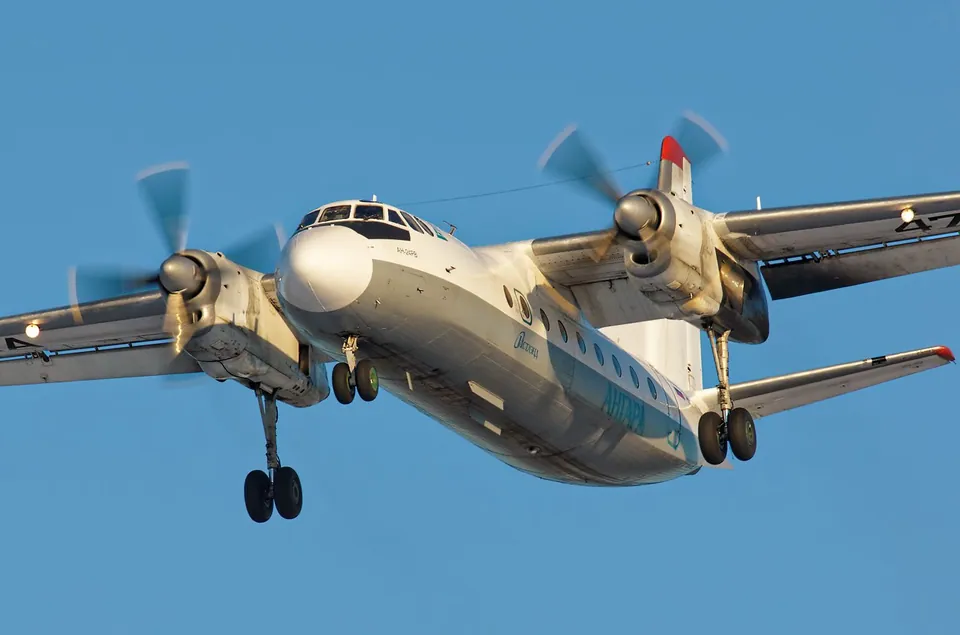
The banner uses a display crop. This photograph is shown uncropped here. It does not by itself establish the cause.
What happened
On 24 July 2025, Angara Airlines Flight 2311 struck trees and wooded terrain while manoeuvring for an instrument approach to Tynda. All 48 people aboard the Antonov An-24 RV died. MAK's final investigation found that the crew used QFE-based target heights while their altimeters were set to QNH, placing the aircraft approximately 600 metres below the intended altitude.
The final report identifies a mismatch between the altitude reference of the selected flight heights and the pressure setting actually used. Inadequate preparation, ineffective cockpit checking, unavailable secondary-radar altitude information and suppression of audible terrain warnings contributed.
Sources for this section
Angara 2311 final report, page 8Interstate Aviation Committee (MAK) / final / Final report, PDF and printed page 8; Russian original, English paraphrase
Angara 2311 final report, page 9Interstate Aviation Committee (MAK) / final / Final report, PDF and printed page 9; Russian original, English paraphrase
Angara 2311 final report, page 10Interstate Aviation Committee (MAK) / final / Final report, PDF and printed page 10; Russian original, English paraphrase
Angara 2311 final report, page 13Interstate Aviation Committee (MAK) / final / Final report, PDF and printed page 13; Russian original, English paraphrase
Angara 2311 final report, page 14Interstate Aviation Committee (MAK) / final / Final report, PDF and printed page 14; Russian original, English paraphrase
Angara 2311 final report, page 16Interstate Aviation Committee (MAK) / final / Final report, PDF and printed page 16; Russian original, English paraphrase
Angara 2311 final report, page 17Interstate Aviation Committee (MAK) / final / Final report, PDF and printed page 17; Russian original, English paraphrase
Angara 2311 final report, page 108Interstate Aviation Committee (MAK) / final / Final report, PDF and printed page 108; Russian original, English paraphrase
Angara 2311 final report, page 110Interstate Aviation Committee (MAK) / final / Final report, PDF and printed page 110; Russian original, English paraphrase
Angara 2311 final report, page 111Interstate Aviation Committee (MAK) / final / Final report, PDF and printed page 111; Russian original, English paraphrase
Angara 2311 final report, page 113Interstate Aviation Committee (MAK) / final / Final report, PDF and printed page 113; Russian original, English paraphrase
Angara 2311 final report, page 114Interstate Aviation Committee (MAK) / final / Final report, PDF and printed page 114; Russian original, English paraphrase
Angara 2311 final report, page 116Interstate Aviation Committee (MAK) / final / Final report, PDF and printed page 116; Russian original, English paraphrase
Angara 2311 final report, page 117Interstate Aviation Committee (MAK) / final / Final report, PDF and printed page 117; Russian original, English paraphrase
1,741 words / about 8 minutes to read. Based on final investigation findings.
A delayed journey to Tynda
Angara Airlines Flight 2311 was a scheduled passenger service through the Russian Far East. Its planned route on 24 July 2025 ran from Khabarovsk through Blagoveshchensk to Tynda. The aircraft was an Antonov An-24 RV registered RA-47315. It carried 42 passengers, four operating crew and two airline engineering specialists. Those specialists were travelling with the aircraft to support maintenance at airports without personnel authorised to maintain the type. All 48 people aboard died when the aircraft struck wooded terrain near Tynda.
The flight began with preparation at Khabarovsk. The crew received weather and navigation documents, passed the required medical checks and left for Blagoveshchensk at 07:36. They landed there at 08:22. The captain had assigned the first officer to fly while he monitored the aircraft and handled communication. The final report also records that the first officer was undertaking supervised training towards command. These arrangements matter because the investigation later examined how the pilots checked each other's altitude decisions.
At Blagoveshchensk, the onward departure was postponed because conditions at Tynda did not meet the airline's approach minimum. The captain received another weather consultation at 10:56 and then decided to continue. Before departure the aircraft was refuelled. Its recorded takeoff weight and centre of gravity were within the flight manual limits. The report therefore describes a flight that had been delayed for weather, then dispatched after a further assessment, rather than an aircraft simply pressing on without a weather decision.
The final leg left Blagoveshchensk at 11:21. The An-24 cruised towards Tynda at flight level 160, approximately 4,900 metres on the standard pressure setting, with the autopilot engaged. All times in this account are the local times used in the investigation report, UTC plus nine hours. The approach sequence unfolded in daylight, but the investigators classified the conditions during the accident as instrument meteorological conditions. The distinction matters: daylight did not provide a reliable visual escape from the terrain hazard.
Sources for this section
Angara 2311 final report, page 8Interstate Aviation Committee (MAK) / final / Final report, PDF and printed page 8; Russian original, English paraphrase
Angara 2311 final report, page 9Interstate Aviation Committee (MAK) / final / Final report, PDF and printed page 9; Russian original, English paraphrase
Angara 2311 final report, page 10Interstate Aviation Committee (MAK) / final / Final report, PDF and printed page 10; Russian original, English paraphrase
Two ways of measuring the same altitude
The crew first contacted Tynda tower at 12:16:42 and gave an estimated landing time of 12:50. The controller provided weather information and assigned the BELIM 2 A arrival followed by the NDB approach to runway 06. The aircraft was approaching an airport where correct use of the pressure setting and the published altitude references was essential. The final investigation found that the pressure set on the pilots' altimeters and the reference used for their selected heights did not match.
QNH and QFE describe different altimeter reference settings. QNH makes an altimeter indicate altitude above mean sea level. QFE uses the pressure at the airfield reference level, so the indication corresponds to height above that level. At an elevated airport, these numbers differ substantially. A height above the airport cannot be substituted directly for an altitude above sea level. The report's central finding was that this substitution effectively occurred during Flight 2311's arrival.
The controller gave the crew QNH information, including its value expressed in millimetres of mercury. The An-24's metric instruments and the airport's published procedures created a further translation task involving metres, feet and pressure units. The investigation did not reduce this to a simple arithmetic error by one person. It examined training, the presentation and use of the procedure values, the controller's pressure information and the absence of effective cross-checking in the cockpit.
At 12:41:37 the captain reported at flight level 110. Tynda cleared the aircraft along BELIM 2 A and down to 5,600 feet on QNH. At 12:42:12 the first officer announced a descent to 1,100 metres. The final report explains that approximately 1,105 metres was the procedure's height relative to the airport on QFE, while the QNH altitude was approximately 1,707 metres, or 5,600 feet. Treating the lower number as a QNH altitude placed the aircraft substantially below the intended level.
Sources for this section
Angara 2311 final report, page 10Interstate Aviation Committee (MAK) / final / Final report, PDF and printed page 10; Russian original, English paraphrase
Angara 2311 final report, page 13Interstate Aviation Committee (MAK) / final / Final report, PDF and printed page 13; Russian original, English paraphrase
Angara 2311 final report, page 14Interstate Aviation Committee (MAK) / final / Final report, PDF and printed page 14; Russian original, English paraphrase
Angara 2311 final report, page 114Interstate Aviation Committee (MAK) / final / Final report, PDF and printed page 114; Russian original, English paraphrase
Checks that agreed with each other but not with the procedure
The crew set 752 millimetres of mercury and checked their indicated height. At 12:43:30 the controller updated the QNH to 751 millimetres, also giving 1,002 hectopascals. The pilots then checked the new setting. Fifteen seconds later the controller offered QFE for comparison, and the captain accepted the information: 699 millimetres of mercury. The voice record did not establish that the pilots changed their main altimeters to that QFE setting. Examination of the captain's instrument supported a setting of approximately 750 to 751 millimetres.
The pilots did perform checks. Their instruments agreed, and they repeated the pressure-setting checklist after the update. But agreement between two instruments did not demonstrate agreement between the pressure reference and the target heights. This is a particularly important feature of the accident. A repeated check can confirm a consistent mistake if it asks whether both displays match, without establishing whether the displayed value is being interpreted against the correct reference.
At 12:50:08 the captain reported crossing the approach beacon at 1,100 metres. The report calculates that flying at that indicated QNH altitude meant the aircraft was roughly 616 metres below the corresponding QFE-based target. Its height relative to the airport was approximately 484 metres. The controller told the crew to turn right and continue the published approach. The descent then continued using another low target that carried the same reference mismatch.
At 12:50:54 the first officer called the next approach height as 745 metres. The corresponding published values were approximately 740 metres on QFE and 4,400 feet, or 1,341 metres, on QNH. With the altimeters still using QNH, the lower target represented a height of only about 129 metres relative to the airport. The final report considered alternative explanations of how the pilots interpreted the chart, but both led to the same essential mismatch and lack of effective mutual correction.
Sources for this section
Angara 2311 final report, page 13Interstate Aviation Committee (MAK) / final / Final report, PDF and printed page 13; Russian original, English paraphrase
Angara 2311 final report, page 14Interstate Aviation Committee (MAK) / final / Final report, PDF and printed page 14; Russian original, English paraphrase
Angara 2311 final report, page 108Interstate Aviation Committee (MAK) / final / Final report, PDF and printed page 108; Russian original, English paraphrase
Angara 2311 final report, page 110Interstate Aviation Committee (MAK) / final / Final report, PDF and printed page 110; Russian original, English paraphrase
Angara 2311 final report, page 113Interstate Aviation Committee (MAK) / final / Final report, PDF and printed page 113; Russian original, English paraphrase
A low circuit without an altitude safety net
The aircraft crossed the beacon and turned towards a heading opposite the landing direction as it built the approach manoeuvre. Airport surveillance cameras recorded it through breaks in the cloud. Analysis of those images supported a flight height of approximately 185 metres above the airport reference level, corresponding to approximately 800 metres on QNH. These were reconstructed values, not a complete flight-data-recorder trace. The report distinguishes the evidence used to estimate them.
The controller could follow the aircraft's position but did not have the normal secondary-radar information needed to monitor its altitude. The airport's secondary surveillance channel was inoperative, leaving no aircraft tracking label with altitude at the controller's workstation. The final report identifies this missing independent altitude check as a contributing factor. A visible radar position did not mean that the controller could see how dangerously low the aircraft had become.
At 12:54:14 the controller warned that the aircraft's manoeuvre was too narrow and the crew began a correction towards the next turn. The last recorded primary-radar return was at 12:56:28, about 13.5 kilometres from the airport reference point. The aircraft was still manoeuvring for the runway 06 approach. The final report does not describe a completed landing approach followed by a conventional second approach; the supported description is a collision during construction of the instrument approach manoeuvre.
The aircraft also had a terrain-warning system. The investigation's modelling concluded that its audible warnings had most likely been suppressed using the sound-inhibit control before the final sequence. Suppression conflicted with the airline's operating requirements. This conclusion carries the report's probability language because it was reconstructed from evidence, rather than observed directly by a surviving witness. The loss of an audible warning was another weakened layer of protection as the aircraft continued at an unsafe height.
Sources for this section
Angara 2311 final report, page 14Interstate Aviation Committee (MAK) / final / Final report, PDF and printed page 14; Russian original, English paraphrase
Angara 2311 final report, page 16Interstate Aviation Committee (MAK) / final / Final report, PDF and printed page 16; Russian original, English paraphrase
Angara 2311 final report, page 110Interstate Aviation Committee (MAK) / final / Final report, PDF and printed page 110; Russian original, English paraphrase
Angara 2311 final report, page 111Interstate Aviation Committee (MAK) / final / Final report, PDF and printed page 111; Russian original, English paraphrase
Angara 2311 final report, page 114Interstate Aviation Committee (MAK) / final / Final report, PDF and printed page 114; Russian original, English paraphrase
The final seconds and the search
Between 12:56:34 and 12:56:39 the cockpit recorder captured the radio-altimeter alert. Examination found its selected threshold at 45 metres. The final report places contact with trees on a hilltop shortly afterwards, damaging the right wing. From 12:56:41 to 12:56:44 the recorder captured terrain-warning voice messages calling attention to altitude and proximity to the ground. Those warnings arrived in the final seconds of the recording.
Examination of the left engine's fuel-control indication was consistent with takeoff power. The investigators considered it most likely that the crew began the prescribed climb response and advanced the power levers. The right engine's corresponding component was destroyed, preventing the same examination. The report therefore does not provide a complete measured description of both engines' final settings. It supports an attempted recovery, with the uncertainty attached to that reconstruction.
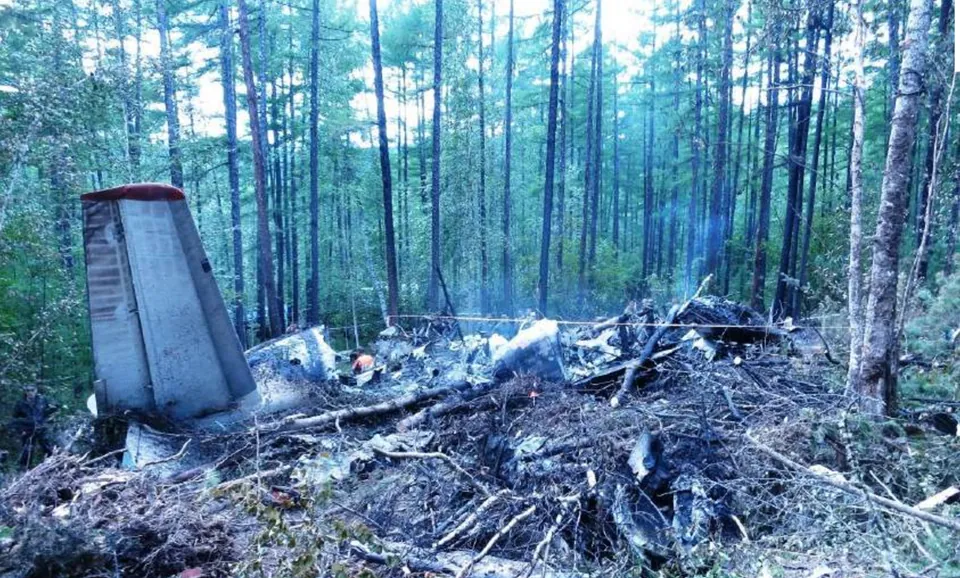
The cockpit recording ended at 12:56:44 as the aircraft collided with obstacles and terrain. The accident destroyed the An-24 and the subsequent ground fire consumed the wreckage. Repeated radio calls from the controller brought no response. An airport alarm was declared at 13:06:50. A search helicopter located the fire and aircraft fragments at 15:26. No signal from the aircraft's emergency beacon was recorded by the international satellite search-and-rescue system.
The casualty table records four operating crew, 42 passengers and two other persons killed. The last category refers to the airline engineering specialists aboard, not people on the ground. The total of 48 therefore represents everyone in the aircraft. There were no survivors. Keeping that distinction clear prevents a misleading suggestion that the report's separate category for other persons added ground casualties to the total.
Sources for this section
Angara 2311 final report, page 17Interstate Aviation Committee (MAK) / final / Final report, PDF and printed page 17; Russian original, English paraphrase
Angara 2311 final report, page 111Interstate Aviation Committee (MAK) / final / Final report, PDF and printed page 111; Russian original, English paraphrase
What the completed investigation concluded
MAK completed the investigation on 29 January 2026. Its conclusion attributes the accident to the mismatch between the QNH setting actually used on the barometric altimeters and the QFE reference used for the selected flight heights. The resulting flight was approximately 600 metres below the intended altitude and ended in contact with trees and terrain. These are completed investigative findings.
The contributing factors extended beyond the immediate height selection. The report identifies inadequate readiness for operations at airports using QNH, the controller's unsolicited QNH value in millimetres of mercury, lack of cockpit checking of pressure and target-height compatibility, the controller's inability to monitor altitude through secondary radar and suppression of audible terrain warnings. The report expressly treats these factors as an unordered combination, not a ranked list of blame.
The safety recommendations address those same layers. They call for additional assessment of operating aircraft with limited feet-based altitude displays into QNH airports, consideration of a terrain-warning preflight check, assessment of risk when controllers lack altitude-bearing surveillance labels and stronger pressure-setting and altitude-report monitoring. Recommendations also cover air-traffic personnel training and meteorological observation practices.
For Angara, the report recommends further training on approach-chart heights, QNH and QFE operations, weather decisions, altimeter setting and checking, approach-height monitoring, radio-altimeter thresholds, terrain-warning response and crew resource management. These are recommendations recorded in the final report. Their inclusion here does not imply that every measure has been implemented. The case illustrates how compatible instruments, correctly interpreted chart values and an independent altitude check must work together.
Sources for this section
Angara 2311 final report, page 114Interstate Aviation Committee (MAK) / final / Final report, PDF and printed page 114; Russian original, English paraphrase
Angara 2311 final report, page 116Interstate Aviation Committee (MAK) / final / Final report, PDF and printed page 116; Russian original, English paraphrase
Angara 2311 final report, page 117Interstate Aviation Committee (MAK) / final / Final report, PDF and printed page 117; Russian original, English paraphrase
Angara 2311 final report, page 9Interstate Aviation Committee (MAK) / final / Final report, PDF and printed page 9; Russian original, English paraphrase
08:22 local (UTC+9)Stop at Blagoveshchensk
The aircraft landed; onward departure was delayed for Tynda weather.
Sources for this section
Angara 2311 final report, page 9Interstate Aviation Committee (MAK) / final / Final report, PDF and printed page 9; Russian original, English paraphrase
11:21 local (UTC+9)Final leg departed
After a further weather assessment the flight departed for Tynda.
Sources for this section
Angara 2311 final report, page 10Interstate Aviation Committee (MAK) / final / Final report, PDF and printed page 10; Russian original, English paraphrase
12:41:37 local (UTC+9)Approach clearance
Tynda cleared descent to 5,600 feet on QNH.
Sources for this section
Angara 2311 final report, page 13Interstate Aviation Committee (MAK) / final / Final report, PDF and printed page 13; Russian original, English paraphrase
12:43:30 local (UTC+9)Pressure update
The controller provided QNH 751 millimetres of mercury; QFE 699 followed.
Sources for this section
Angara 2311 final report, page 14Interstate Aviation Committee (MAK) / final / Final report, PDF and printed page 14; Russian original, English paraphrase
12:50:54 local (UTC+9)Lower target selected
The crew called 745 metres, a QFE-based height used against a QNH setting.
Sources for this section
Angara 2311 final report, page 110Interstate Aviation Committee (MAK) / final / Final report, PDF and printed page 110; Russian original, English paraphrase
12:56:34-44 local (UTC+9)Warnings and impact
Radio-altimeter and terrain voice warnings were recorded before the aircraft struck terrain.
Sources for this section
Angara 2311 final report, page 17Interstate Aviation Committee (MAK) / final / Final report, PDF and printed page 17; Russian original, English paraphrase
15:26 local (UTC+9)Wreckage located
A search helicopter found the fire and aircraft fragments.
Sources for this section
Angara 2311 final report, page 17Interstate Aviation Committee (MAK) / final / Final report, PDF and printed page 17; Russian original, English paraphrase
Sequence overview
Documented stages in reading order. This overview does not imply a settled chain of causes.
1
First leg departed
The aircraft left Khabarovsk for Blagoveshchensk.
Sources for this section
Angara 2311 final report, page 9Interstate Aviation Committee (MAK) / final / Final report, PDF and printed page 9; Russian original, English paraphrase
2
Pressure update
The controller provided QNH 751 millimetres of mercury; QFE 699 followed.
Sources for this section
Angara 2311 final report, page 14Interstate Aviation Committee (MAK) / final / Final report, PDF and printed page 14; Russian original, English paraphrase
3
Wreckage located
A search helicopter found the fire and aircraft fragments.
Sources for this section
Angara 2311 final report, page 17Interstate Aviation Committee (MAK) / final / Final report, PDF and printed page 17; Russian original, English paraphrase
Geographic context
Khabarovsk, original departure
Blagoveshchensk, intermediate departure
Tynda, planned destination
Approximate airport reference positions, for geographic orientation only. Markers do not show the recorded flight track or exact impact position. Basemap: Natural Earth, public domain.Sources for this section
Angara 2311 final report, page 8Interstate Aviation Committee (MAK) / final / Final report, PDF and printed page 8; Russian original, English paraphrase
Angara 2311 final report, page 9Interstate Aviation Committee (MAK) / final / Final report, PDF and printed page 9; Russian original, English paraphrase
Questions readers ask
Was a final report issued?
Yes. MAK completed its investigation on 29 January 2026 and published a Russian-language final report.
Sources for this section
Angara 2311 final report, page 8Interstate Aviation Committee (MAK) / final / Final report, PDF and printed page 8; Russian original, English paraphrase
Why was the aircraft too low?
The pilots used heights referenced to QFE while their barometric altimeters used QNH. MAK found an altitude discrepancy of approximately 600 metres.
Sources for this section
Angara 2311 final report, page 114Interstate Aviation Committee (MAK) / final / Final report, PDF and printed page 114; Russian original, English paraphrase
Were any fatalities on the ground?
The final casualty table accounts for all 48 occupants: four operating crew,42 passengers and two airline engineering specialists. It does not add ground fatalities.
Sources for this section
Angara 2311 final report, page 17Interstate Aviation Committee (MAK) / final / Final report, PDF and printed page 17; Russian original, English paraphrase
Radio-altimeter and terrain voice warnings were recorded before the aircraft struck terrain.
Sources for this section
Angara 2311 final report, page 17Interstate Aviation Committee (MAK) / final / Final report, PDF and printed page 17; Russian original, English paraphrase
What the evidence can and cannot establish
Incomplete flight-data recording
The flight-data recorder's magnetic medium was destroyed by fire. Reconstruction therefore also used the cockpit recording, surveillance and wreckage evidence.
The final report considers two interpretations of how the crew selected their targets. Both produce the same incompatible use of QNH and QFE; precise cockpit interpretation should not be stated as uniquely established.
Sources for this section
Angara 2311 final report, page 113Interstate Aviation Committee (MAK) / final / Final report, PDF and printed page 113; Russian original, English paraphrase
Implementation status
Recommendations are documented, but this account does not independently establish completion of each recommended action.
Sources for this section
Angara 2311 final report, page 116Interstate Aviation Committee (MAK) / final / Final report, PDF and printed page 116; Russian original, English paraphrase
Angara 2311 final report, page 117Interstate Aviation Committee (MAK) / final / Final report, PDF and printed page 117; Russian original, English paraphrase
Safety follow-up
A recommendation does not establish implementation. Actions are described at the dates of the linked records.
Altimeter and procedure compatibility
MAK recommended assessing the risk of QNH/feet operations with aircraft whose altitude displays do not adequately support them.
Sources for this section
Angara 2311 final report, page 116Interstate Aviation Committee (MAK) / final / Final report, PDF and printed page 116; Russian original, English paraphrase
Independent altitude monitoring
The recommendations address surveillance without aircraft altitude labels and controller monitoring of pressure-setting and altitude reports.
Sources for this section
Angara 2311 final report, page 116Interstate Aviation Committee (MAK) / final / Final report, PDF and printed page 116; Russian original, English paraphrase
Crew training
The airline was advised to provide further training on pressure references, approach heights, terrain warnings and mutual monitoring.
Sources for this section
Angara 2311 final report, page 117Interstate Aviation Committee (MAK) / final / Final report, PDF and printed page 117; Russian original, English paraphrase
Read alongside
Related subjects for further reading. These links do not imply identical causes.
Search the indexed investigation documents. Their preliminary or final status is shown with the results. Other statements linked below may not be indexed.
Sources and transparency
Source status checked on 5 October 2026. This account has not undergone independent expert review. Official statements, interim documents and final findings are labelled separately.
Angara 2311 final report, page 117
Interstate Aviation Committee (MAK) / final
Open original source. Specific page references appear with the supporting sections above.
MAK investigation record: An-24 RV RA-47315
Interstate Aviation Committee / final
Open original source. Specific page references appear with the supporting sections above.
Links open the publisher's original records. Source copyright and reuse terms apply.
Kevin Murphy writes the incident accounts on AirlineIncidents.com, out of a long interest in aviation safety and the lessons each investigation leaves behind.
Prepared by AirlineIncidents editorial desk. Published 5 October 2026 from the sources linked above. Later documents may revise earlier factual accounts.

.jpg)